
About the show
First 72 Hours After a Crash: A 5-Minute Repair Roadmap
When the accident dust settles you have a small window to protect your safety, your vehicle’s value, and your ability to get a quality repair. In this five-minute monologue Crash walks drivers through exactly what to do — and what not to do — in the first 72 hours after a collision. You’ll get a straight, shop-side perspective on collecting key documentation, talking to the insurance company without undermining your repair options, spotting signs of hidden damage, and how to pick parts and paint choices that protect safety and resale value. This episode focuses on immediate, practical actions listeners can take alone or with a tow, plus the red flags that justify calling a trusted body shop. The goal: reduce stress, avoid common mistakes, and give drivers clear next steps so their repair timeline and outcome stay in control.
Hosted by Javier Sosa
58 episodes
First 72 Hours After a Crash: A 5-Minute Repair Roadmap
When the accident dust settles you have a small window to protect your safety, your vehicle’s value, and your ability to get a quality repair. In this five-minute monologue Crash walks drivers through exactly what to do — and what not to do — in the first 72 hours after a collision. You’ll get a straight, shop-side perspective on collecting key documentation, talking to the insurance company without undermining your repair options, spotting signs of hidden damage, and how to pick parts and paint choices that protect safety and resale value. This episode focuses on immediate, practical actions listeners can take alone or with a tow, plus the red flags that justify calling a trusted body shop. The goal: reduce stress, avoid common mistakes, and give drivers clear next steps so their repair timeline and outcome stay in control.
Decoding Your Repair Estimate: Know What You're Really Paying For
Every line on a repair estimate can feel like alphabet soup — labor, OE parts, alignment, code colors, sublet charges. In this 5-minute episode Crash walks drivers through how to read a collision repair estimate, what common line items mean, where insurers and shops differ, and the three quick questions to ask before you approve work. Listeners will learn to spot missing safety repairs, unnecessary add-ons, and when a cheap part could cost more later. The episode ends with a concise, ready-to-use checklist listeners can use on the phone while talking to adjusters or shops. Practical, jargon-free, and focused on protecting safety and value, this episode helps Houston-area drivers stop guessing and start asking the right questions the moment an estimate lands in their inbox.
Repair, Sell, or Total? A Practical Guide to Choosing What Happens After a Crash
After a crash you get three paths: fix the car, take a total-loss payout, or sell it as-is. This episode walks Houston drivers through a practical decision process: how insurers calculate a total loss, the real costs that matter (safety repairs, hidden frame damage, and future resale), when a repair is the smarter choice, and when letting go preserves your wallet and safety. Hosted by Crash from Sosa Automotive, the monologue cuts through industry jargon with examples drivers can use on the spot — a simple formula to compare repair estimates to vehicle value, red flags that mean safety should trump savings, and how parts, warranties, and OEM choices change outcomes. By the end listeners will know the exact questions to ask their estimator and insurer so they can choose confidently and protect both their safety and their money.
You Have the Right to Choose: How to Pick a Body Shop That Actually Protects Your Car
After an accident you’ll get advice from every direction — including insurance reps who may push a shop that’s convenient for them, not you. In this focused, practical episode Crash explains why the right shop matters for safety, resale value, and peace of mind, and gives a short, usable script and seven questions you can ask the moment you’re choosing where to repair your vehicle. You’ll learn how to spot red flags (warranties that don’t exist, vague parts language, no frame certifications), what documentation to collect, and how to tell your insurer you’re exercising your choice without escalating conflict. Solid, non-technical guidance aimed at Houston-area drivers who want straight answers before, during, and after the repair — so you leave the lot confident your car will be fixed right.
Aftermarket Parts: What Your Insurance Means for Safety, Fit, and Value
Many drivers hear the phrase “we’ll use aftermarket parts” and panic — or worse, stay quiet. In this focused, practical episode Crash explains, in plain language, the real differences between OEM, aftermarket, and remanufactured parts, why those differences matter for safety and appearance, and how insurance language can hide tradeoffs. You’ll get specific questions to ask when an estimate arrives, quick scripts to use on calls with adjusters or shops, and a simple decision checklist that balances cost, safety, and long-term value. The goal: give Houston drivers the confidence to spot red flags, advocate for the right parts for their vehicle, and avoid being pressured into choices that could cost more down the road.
After the Respray: A 5-Minute Guide to Protecting Your Repair Paint and Preserving Value
You just got your car back from a collision repair — the paint looks great, but what now? In this focused five-minute episode Crash walks drivers through a simple, shop-approved aftercare routine that protects a fresh respray, avoids common mistakes that damage new paint, and preserves the vehicle’s safety and resale value. Listeners will learn what to avoid in the first days, how to wash and block contaminants, when to use wax or sealant, how to document the finish for insurance or resale, and which problems require a return to the shop. The episode gives clear, actionable steps you can follow in the first week, first month, and long-term, plus what questions to ask your repair shop before you drive away. This is straight, practical advice for anyone who wants their repair to last — and to protect the investment they just made.
While Your Car's in the Shop: A Practical 5-Minute Plan for Transportation, Bills, and Peace of Mind
After an accident the repairs are only part of the headache—transportation, unexpected charges, and confusing insurance processes add stress fast. In this focused, practical episode Crash lays out a clear, persuasive plan drivers can use the moment their vehicle goes into a body shop. You’ll get straight answers about rental coverage options (insurance, credit card, shop-provided), when towing and storage fees are legitimate, how to avoid paying for unapproved work, and simple questions that keep insurers and shops accountable. The goal: minimize downtime, protect your wallet, and keep your car’s safety and value front and center. This episode gives Houston-area drivers a short, confident checklist they can act on immediately—and points to resources at Sosa Automotive for help if questions or disputes come up.
Under the Surface: How to Spot Hidden Frame & Structural Damage After a Crash
Many accidents cause damage you can't see: bent rails, misaligned subframes, or repaired welds that compromise safety and resale value. In this five-minute episode Crash walks drivers through how shops check for structural damage, the simple signs you can spot at pickup, and the exact questions to ask your estimator so you know whether your car is truly safe. You'll learn what straightening measurements, frame racks, and OEM repair procedures mean — in plain English — and when to insist on written documentation or a second opinion. This episode ends with a short checklist you can use at the shop and a clear call to visit Sosa Automotive's website for downloadable inspection prompts and local Houston resources. No scary jargon — just straight answers so you leave confident the fix protects safety and value.
Drive-Home Checklist: Inspecting Your Car Before You Leave the Body Shop
When your car comes out of a collision shop, the moment you drive it home is the most important test. In this 5-minute episode Crash gives a clear, step-by-step inspection checklist drivers can use at pickup: what to look for on paint and panel gaps, simple door/trunk alignment checks, quick mechanical and fluid checks, a short test-drive routine, and the exact documentation and calibration proof to demand for ADAS and safety systems. Listeners leave with language to use with the shop, three red flags that should pause a handover, and a calm plan to request fixes or follow-up checks. This episode arms Houston-area drivers with practical, shop-side advice so their repaired vehicle is safe, looks right, and keeps its value — all without technical confusion.

When Your Car's Brain Gets Hurt: Understanding ADAS, Sensors, and Calibration After a Crash
Modern cars rely on more than metal and paint: cameras, radar, ultrasonic sensors, and steering-angle sensors are part of your vehicle’s safety system. In this five-minute episode Crash explains, in plain English, how those systems can be affected by a collision, why a visual-looking repair isn’t enough, and the real-world steps shops take to diagnose and calibrate ADAS (advanced driver-assistance systems). You’ll get a simple checklist of questions to ask your repair shop, what documentation to collect for your claim, and concrete signs a calibration was performed correctly. The goal: protect your family’s safety, avoid surprise liability, and preserve resale value — without technical overwhelm. Visit sosaautomotive.com for resources and a printable ADAS pickup checklist.
What's on Your Title? Understanding Salvage, Rebuilt, and Branded Titles After a Crash
After a crash most drivers worry about repairs and costs — fewer know how a title brand can change a car’s future. In this focused, 5-minute monologue Crash explains the common title brands (salvage, rebuilt, flood, non-repairable), how and why insurers assign them, and what those labels mean for safety inspections, registration, resale, and insurance coverage. Listeners get concrete, shop-friendly steps: the photos, receipts, and inspection reports to collect; the phrases to use when talking to adjusters and body shops; and what a reputable repair shop should document to protect your car’s value. Practical and jargon-free, this episode helps drivers turn a messy accident into clear documentation that preserves safety and resale options — so you can make smarter choices, avoid surprises, and know what to ask for when repairs are finished.
Collect the Evidence: The One-Call Checklist for Photos, Paperwork, and Proof After a Crash
After a crash the right photos and paperwork can make the difference between a smooth repair and a fight with insurance. In this concise, persuasive five-minute episode Crash lays out a simple, repeatable routine: the exact shots to take at the scene, the documents and receipts to collect, how to capture VINs and vehicle condition, what to record from witnesses, and the fastest way to timestamp and back up everything. You’ll also get a short script for talking to other drivers and police, plus a prioritized list of what to send first to your insurer and to Sosa Automotive so repairs and claims don’t stall. This episode gives practical language to use, common mistakes to avoid, and a clear next step—so listeners leave confident they’ve preserved safety, claim leverage, and resale value.
Decoding the Estimate: Read Your Collision Repair Bill Like a Pro
Many drivers get an estimate and feel lost — labor hours, parts codes, sublets, supplements, and insurance adjustments blur together. In this five-minute episode Crash breaks down a typical collision repair estimate line-by-line so you know exactly what you’re being charged for and where to push back. You’ll learn what labor hours mean, why parts are listed as OEM or aftermarket, how paint and blending show up on the bill, what "sublet" and "supplements" really are, and which line items affect safety and resale. Crash gives exact questions to ask your estimator, red flags that justify a second opinion, and a short checklist to bring when you pick up the car — all in plain language and with a persuasive focus on protecting safety, value, and your wallet. By the end you’ll be able to read an estimate with confidence and take control of the repair process; visit sosaautobody.com for printable checklist and sample phrases.
When the Estimate Changes: Understanding Supplements and How to Avoid Surprise Repair Bills
You dropped your car off for repairs and got an estimate — then the shop calls and the total jumps. That’s a supplement: additional work discovered after teardown, new parts, or damage that wasn’t visible at first. In this persuasive, five-minute monologue Crash breaks down what a supplement is, why it’s a normal part of collision repair, and how drivers can protect themselves from surprise costs and delays. You’ll learn what documentation to ask for, when supplements are legitimate, how insurers typically handle them, and exact questions to keep your repair transparent and focused on safety and value. This episode arms Houston drivers with the language and checklist to stay in control when estimates change, so you don’t get stuck accepting poor repairs or unexpected bills.
How Much Did Your Crash Cost in the Long Run? A Practical Guide to Diminished Value Claims
After a repair, your car may be safe and look good—but crashes often leave a financial mark called diminished value. In this focused, persuasive episode Crash walks drivers through what diminished value actually means, who can claim it, and the straightforward documentation and conversations that improve your chances with insurers and buyers. Listeners will get a clear, step-by-step approach: how to gather evidence at the scene and during repairs, when to request an independent appraisal, what language to use with insurers and shops, and realistic expectations for outcomes. By the end you'll know the three must-do actions to protect your vehicle’s resale value and how Sosa Automotive can help verify repairs so you can make a stronger diminished value case.
Parts Paper Trail: How to Confirm What’s Replacing Your Car After a Crash
After a collision, the parts picked for your repair affect safety, warranties, and resale value — yet most drivers never see proof of what actually goes on their car. In this persuasive five-minute monologue Crash walks listeners through a focused, practical process to identify OEM, aftermarket, and recycled parts on an estimate, what exact documentation to ask for (part numbers, invoices, packing labels, and photos), and three simple checks to confirm parts at pickup. You’ll get ready-made scripts to use with your shop and insurer when you need a specific part, plus steps to preserve proof for resale or disputes. No technical deep dive — just clear actions a Houston driver can take immediately to keep their vehicle safe and their repair honest.
Insurance 'Preferred' Shops — Should You Take the Deal?
Many drivers are steered toward an insurer’s 'preferred' or direct repair program (DRP) shop after a crash—and it's sold as the easy, faster option. In this five-minute monologue Crash breaks down exactly what a DRP is, how insurance-pay arrangements can shape repair choices, and the tradeoffs drivers should know before agreeing. You’ll get a clear, practical checklist of six questions to ask the shop and insurer, a short script to keep your right to choose a body shop, and the red flags that mean you should pause. This episode is designed to help Houston drivers make an informed call fast: keep safety top of mind, prevent surprise parts or coverage decisions, and protect your car’s appearance and resale value. No jargon—just straightforward advice you can use the next time an adjuster calls.
You Pick the Shop: How to Stand Your Ground When Insurers Push
After a crash, your choice of repair shop affects safety, warranty, and resale value—yet many drivers feel pushed toward an insurer-recommended vendor. In this five-minute episode Crash explains, in plain language, why you have the right to choose, how insurers commonly try to steer repairs, and the practical steps that keep control in your hands. You’ll get a short, reliable checklist for picking a shop that protects safety-critical systems; the exact words to use on the phone or in email to prevent being shuffled; what to demand in writing; and a simple escalation path if the insurer resists. This episode is designed to build confidence: Houston drivers will finish knowing how to protect their vehicle’s safety and value, avoid needless surprises during a claim, and call the shop they trust first.
On the Clock: A 5-Minute Repair Playbook for Rideshare, Delivery, and Fleet Drivers
When your car is how you earn, a collision isn’t just a repair—it's lost pay, angry customers, and a confusing paper chase. This episode walks rideshare, delivery, and small-fleet drivers through a compact, practical playbook: what to do on-scene, how to report to platforms and employers, what questions to ask insurers and fleet reps, and how to choose repairs that minimize downtime without sacrificing safety or resale value. Crash explains the difference between personal and commercial claim traps, rental and loss-of-earnings options drivers should insist on, and a short but rigorous drive-back checklist to avoid being put back on the road unsafely. By the end, drivers will have clear next steps they can use immediately—and know exactly when to call Sosa Automotive for a fast, trustworthy repair that gets them earning again.

Before You Drive It Home: The Final-Repair Checklist Every Driver Needs
Crash walks listeners through a focused, practical acceptance checklist to use the moment you pick up a repaired vehicle. In five persuasive minutes he covers visual signs (panel gaps, paint texture, color match), mechanical and safety checks (fluids, brakes, lights, seatbelts, airbag indicator, ADAS behavior), paperwork to demand (parts receipts, OEM versus aftermarket disclosures, warranty language, calibration records), a short guided test drive, and exact phrases to use if something’s wrong. The episode gives shop-side context so drivers know which issues affect safety and resale value versus cosmetic fixes, plus clear next steps: document it, request a teardown or recalibration, and loop in your insurer if needed. Listeners finish with confidence and a concrete action plan — plus an invitation to visit Sosa Automotive for a printable checklist, sample email scripts, and help scheduling a post-repair inspection.
Rentals and Repairs: Stop the Coverage Gap Before It Costs You
After a crash, a rental car is often the lifeline that keeps your life moving — until coverage ends and the repair still isn’t finished. In this 300-second monologue, Crash explains how rental reimbursement actually works, the paperwork that keeps extensions approved, and the exact questions and scripts drivers should use with insurers and shops to avoid surprise bills. Listeners will learn to recognize policy limits, document repair delays the shop can confirm, ask for supplements or extensions the right way, and protect themselves if an insurer or shop drops communication. Practical, shop-side advice and sample language make this actionable for any driver calling from the tow lot, the rental counter, or their kitchen table. Walk away with a short checklist and the confidence to keep a rental covered until your vehicle is truly road-ready.
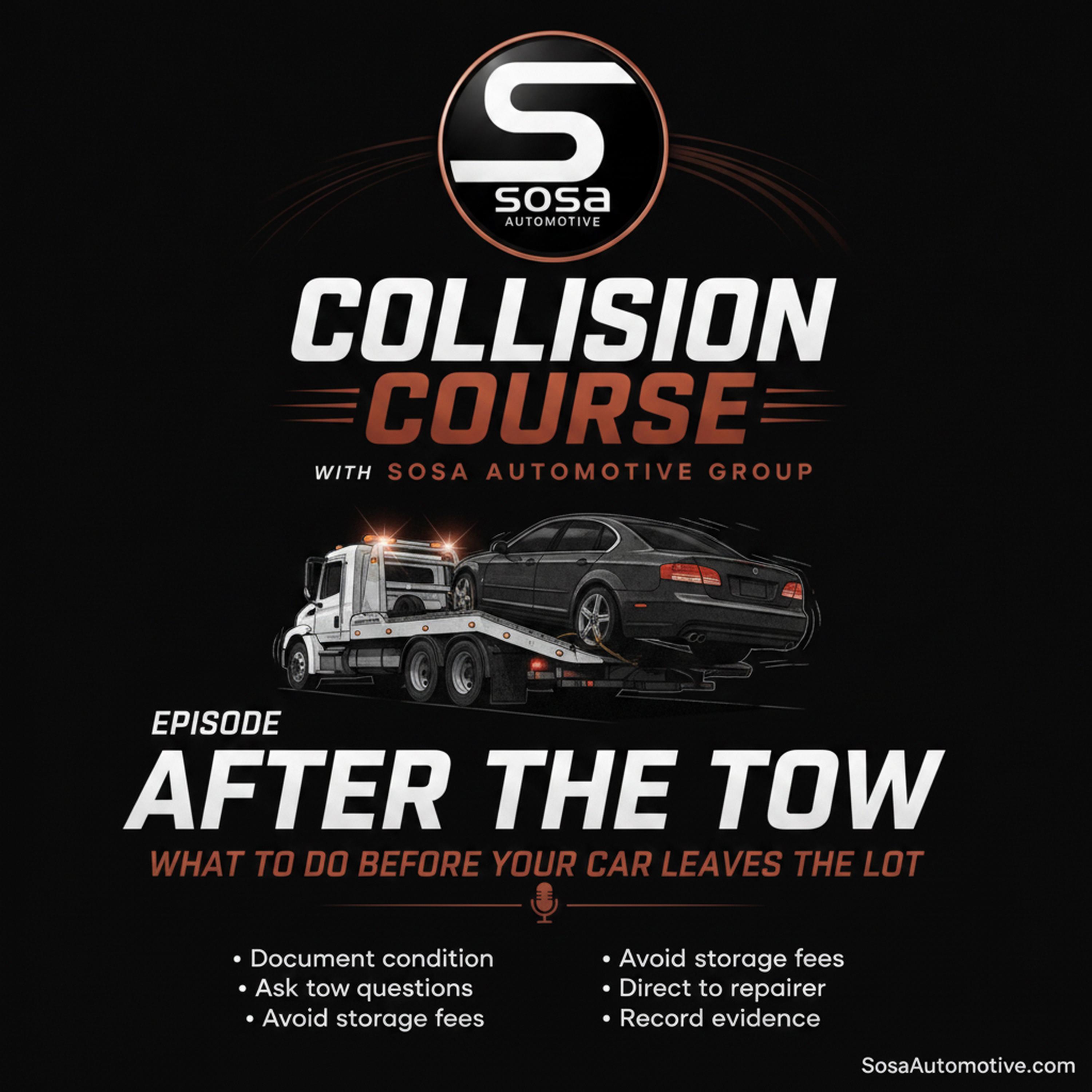
After the Tow: What to Do Before Your Car Leaves the Lot
When a crash ends with a tow, most drivers think their work is done — but that’s when important opportunities and risks start. In this 5-minute monologue Crash walks Houston drivers through the exact steps to take the moment their car is towed: how to document the vehicle’s condition, which questions to ask the tow operator, how to avoid surprise storage fees, when and how to direct the tow to your chosen repair shop, and what to record for your insurance claim and future resale value. You’ll get a practical, shop-side checklist you can use on the phone or at the tow yard so you don’t lose rights, money, or evidence. The episode finishes with the exact phrasing to lock in shop authorization and a quick reminder to visit SosaAutomotive.com for printable checklists and local support.
When Your Insurance Calls It a Total Loss: 5 Steps to Protect Value
Few things feel more final than an insurance company calling your car a “total loss.” In this five-minute episode Crash cuts through the jargon and gives five clear, shop-side steps drivers can take the moment they hear that word—so they protect safety, maximize payout, and avoid mistakes that quietly reduce resale value. You’ll get a plain-English explanation of how insurers calculate settlement, the exact photos and documents that make your case stronger, when buyback/salvage options make sense (and when they don’t), how to verify the insurer’s fair-market-value math using comparable listings, and the negotiation points to protect rental, gap, and diminished-value concerns. This episode is short, persuasive, and built for drivers who need straight answers fast. By the end you’ll know what to ask your adjuster, what to bring for a shop inspection, and when to call Sosa Automotive for a second opinion.
Why Your Repair Estimate Changes After Teardown
A vehicle can look repairable from the outside while concealed damage waits underneath the bumper, behind a headlamp, or near structural mounting points. That is why a collision estimate may change after disassembly, and it does not automatically mean a shop is overcharging you. In this episode, Crash explains the difference between an initial estimate and a supplement, what technicians look for during teardown, and how insurers and repairers document newly discovered damage. Drivers will learn which estimate changes are safety-related, which questions to ask before approving additional work, how supplements can affect the schedule, and what warning signs suggest poor communication. The goal is simple: replace surprise with a clear process so you can make informed decisions without delaying necessary repairs. Before authorizing work, use these practical questions and visit the Sosa Automotive website to learn how our team helps Houston-area drivers understand the repair process.
Rental Car Reality Check: Avoid Surprise Bills While Your Car Is in the Shop
A rental car can make a stressful repair manageable, but one unclear assumption can leave a driver paying for days, upgrades, fuel, damage, or an entire rental out of pocket. In this practical monologue, Crash explains how to read the rental-related parts of an insurance policy, distinguish coverage limits from shop estimates, and confirm who authorizes the rental and who extends it if repairs take longer than expected. Listeners will learn which questions to ask before accepting a vehicle, why the cheapest available car may not meet their needs, what to document at pickup and return, and how to communicate when a repair timeline changes. The episode also clarifies what a body shop can explain versus what only an insurer or rental company can confirm. By the end, drivers will have a simple rental handoff checklist and a calmer plan for keeping transportation available without creating an avoidable bill. The episode closes by inviting Houston-area drivers to visit the Sosa Automotive website for collision repair guidance and contact information.
Before You Sign: The Post-Repair Test Drive Checklist
The final handoff is not just a quick walkaround and a signature. In this five-minute episode, Crash gives drivers a practical, shop-side checklist for deciding whether a repaired vehicle is ready to leave the facility. Listeners will learn how to compare the repaired areas with the original damage, inspect panel gaps and paint transitions, test lights, windows, locks, mirrors, warning indicators, and safety features, and take a careful test drive without creating a new problem. The episode also explains what questions to ask about unfinished items, warranties, alignment, road noise, water leaks, and the final repair invoice. Most importantly, drivers will hear why it is reasonable to report a concern before accepting the vehicle—and how a professional shop should respond. The result is a calm, repeatable handoff routine that helps protect safety, confidence, and vehicle value. For more straight answers, visit the Sosa Automotive website.
Read Your Collision Estimate Like a Pro: Seven Lines That Matter
A collision estimate can look like a confusing list of codes, abbreviations, and dollar amounts, but it is really a plan for restoring your vehicle. In this five-minute monologue, Crash walks drivers through seven sections that deserve attention: the damage description, repair versus replacement decisions, labor categories, parts sources, paint operations, calibration or measurement requirements, and possible supplements. Listeners will learn why a low total does not always mean a better deal, which missing details can create delays, and how to distinguish a clear estimate from a vague promise. The episode also explains what an estimate can and cannot guarantee, why hidden damage may change the final scope, and how to ask for updates without sounding confrontational. By the end, drivers will have a simple conversation guide they can use with a shop and insurer before authorizing work, helping them make informed choices while protecting safety, timeline, and vehicle value.
Photo Estimate or Proper Inspection? Know What Your Camera Cannot See
Many drivers are asked to send damage photos before anyone sees the vehicle in person. That can be a useful first step, but a picture cannot reveal everything a collision may have changed. In this five-minute episode, Crash explains what photos can document clearly, including visible dents, broken lights, and damaged panels, and what they may miss, such as shifted brackets, suspension problems, sensor damage, leaks, or structural concerns. Listeners will learn when a photo estimate is reasonable for initial planning, when to request a hands-on inspection, and why an estimate can change after parts are removed. The episode also provides a short list of questions to ask an insurer or repair shop before approving work. The goal is not to reject technology; it is to help drivers use it wisely so convenience does not replace a complete safety evaluation.
Totaled Does Not Mean Worthless: Understanding Your Insurance Valuation
A total-loss decision can feel like the end of the conversation, but it is really the beginning of an important financial decision. In this five-minute episode, Crash explains the difference between repair cost, actual cash value, salvage value, and the amount an insurer offers. Drivers will learn what information commonly affects a valuation, why comparable vehicles matter, how mileage and condition can change the number, and what to review before accepting an offer. The episode also covers loan balances, deductibles, personal belongings, replacement transportation, and the choice between keeping or releasing a totaled vehicle. Listeners will receive a practical question list for requesting the valuation report and challenging missing or inaccurate details without turning the process into a confrontation. The goal is not to promise a specific settlement, but to help Houston-area drivers slow down, verify the facts, and make a confident decision after a serious crash.
Before the Keys Change Hands: Documenting Your Car at Drop-Off
Dropping off a damaged vehicle can feel like the biggest step in the repair process, but many misunderstandings begin before the first part is removed. In this episode, Crash explains how to make a clear, calm vehicle handoff that protects your expectations without turning the conversation into a confrontation. Drivers will learn what to photograph, which areas and warning lights to document, how to record mileage and fuel level, why personal belongings should be removed, and what to confirm on the repair order. The episode also explains the difference between crash-related damage and pre-existing wear, why a walkaround with the shop matters, and how to ask for clarification when the intake notes do not match what you see. This practical routine helps customers and repair professionals start with the same information, reducing surprises and creating a smoother path from drop-off to delivery.
Deductible Decoded: Who Pays, When, and What Your Shop Can Explain
Your deductible is one of the most confusing parts of a collision claim, especially when the estimate is still changing and multiple parties are involved. In this episode, Crash explains what a deductible actually is, when it is typically collected, why it can differ from the repair total, and how coverage, fault, and claim type may affect the conversation. Drivers will learn the difference between an insurance payment and their out-of-pocket responsibility, what questions to ask before authorizing work, and why a shop should clearly document every payment expectation. The episode also addresses warning signs such as promises to hide or waive a deductible without a legitimate basis, while avoiding legal or policy-specific advice. Listeners leave with a simple deductible checklist they can use with their insurer and repair shop, helping them budget confidently and avoid uncomfortable surprises at pickup.
The Repair Warranty Decoder: What It Covers, What It Does Not, and How to Use It
A repair warranty can sound reassuring, but many drivers do not know what it actually protects, how long coverage lasts, or where to turn when something does not look or feel right. In this straightforward monologue, Crash explains how to review a collision repair warranty before leaving the shop. Listeners will learn the difference between workmanship coverage, parts warranties, paint-related concerns, and issues caused by unrelated wear or a later accident. The episode also covers why written documentation matters, which questions to ask about exclusions, and how to report a concern without assuming the worst. Rather than promising that every problem is automatically covered, this guide helps drivers understand the shop’s responsibilities, the parts supplier’s role, and the practical steps for getting an issue evaluated. By the end, listeners will have a simple warranty conversation checklist that can protect their confidence, time, and investment after repairs are complete.
Factory Fit or Smart Alternative? How to Evaluate Replacement Parts After a Crash
After a collision, a replacement part can affect more than the final price. It may influence fit, appearance, corrosion protection, sensor placement, structural performance, warranty coverage, and your vehicle’s long-term value. In this episode, Crash explains the practical differences between original equipment manufacturer, aftermarket, and recycled parts without turning the decision into a confusing brand debate. You will learn which questions to ask about safety-critical components, body panels, lights, glass, and trim; how a shop evaluates quality and availability; why the cheapest option is not always the best value; and how to understand what your insurance estimate actually specifies. The episode also shows how to request clear documentation when a non-OEM part is proposed and when a shop should pause to confirm fit or function. By the end, drivers will have a simple conversation checklist they can use with an insurer and repair shop. Visit the Sosa Automotive website to learn more and get trusted collision repair guidance before approving parts.
The Repair Status Translator: What Your Body Shop Should Tell You, When
A collision repair can feel stressful even when nobody explains anything incorrectly—because “still waiting,” “insurance is reviewing it,” and “almost done” do not tell you what happens next. In this practical monologue, Crash gives drivers a simple communication system for staying informed without becoming difficult or overwhelmed. You will learn the essential questions to ask at drop-off, after teardown, when additional work is discovered, while parts or approvals are pending, and before final delivery. The episode also explains which updates are meaningful, why a promised completion date can change, and how to document decisions so conversations with the shop and insurer stay aligned. Rather than encouraging constant calls, this guide helps you agree on useful update points and recognize when a delay requires action. By the end, listeners will have a concise repair-status checklist they can use to protect their time, expectations, and confidence throughout the process.
The Invisible Repair: Why Your Car May Need Calibration After a Crash
Modern vehicles may use cameras, radar, and sensors for automatic braking, lane assistance, blind-spot alerts, parking support, and other safety features. After a collision, those systems can be affected even when the visible damage seems minor or the replacement bumper looks flawless. In this straightforward monologue, Crash explains what calibration is, why it may be needed after damage near a bumper, windshield, mirror, wheel, or suspension, and how a driver can tell whether it was considered during the repair plan. You will learn the difference between a warning light and a completed safety check, which questions to ask about scan results and road tests, and why a vehicle should not be released with unresolved safety-system concerns. The episode avoids technical overload and gives listeners a practical handoff checklist. Visit Sosa Automotive’s website to learn more and connect with a collision repair team before a small-looking repair becomes a serious safety question.
The Pickup Test Drive: Five Checks Before You Accept a Collision Repair
Picking up your vehicle after collision repair can feel like the finish line, but the handoff is also your best opportunity to confirm that the work is complete and understandable. In this practical monologue, Crash walks drivers through a calm, five-part pickup routine: inspect the repaired area in good light, compare panel alignment and paint appearance, check lights and controls, review warning messages and safety features, and take a careful short drive when appropriate. You will also learn which questions to ask about the final invoice, replaced parts, unfinished items, and warranty process—without treating a minor cosmetic concern like a safety emergency or ignoring a serious one. The episode explains what to document, when to call the shop, and why a clear final conversation protects both driver confidence and vehicle value. Before your next repair pickup, save this checklist and visit the Sosa Automotive website for a trusted local resource.
Your Collision Paper Trail: The Records That Protect Your Repair
After a crash, people often focus on getting the vehicle repaired and forget how important the paper trail can be. In this episode, Crash explains what to save, when to save it, and how to organize it without becoming an insurance expert. You will learn how to keep the incident details, photos, claim information, estimates, approvals, parts decisions, repair updates, receipts, and final paperwork connected in one clear record. The episode also shows how to compare documents, identify unanswered questions, and request written clarification when a phone conversation leaves you uncertain. This is not about arguing with an insurer or overwhelming your body shop; it is about making sure everyone is working from the same information. Drivers will leave with a practical documentation routine they can use after a collision and a short list of questions to ask before authorizing work. For local guidance, the episode points listeners to Sosa Automotive’s website.
The Paint Match Myth: Why Your Car's Color Looks Different After Repair
Paint mismatch is one of the most common complaints after collision repair, and it's rarely a simple mistake. In this episode, Crash explains the real reasons a repaired panel can look slightly different — from factory paint codes and natural fading to metallic flake orientation and the type of light you're standing under. He breaks down why professional shops use blending techniques to make repairs disappear, and why a perfect match on a swatch card doesn't always mean a perfect match on your car. You'll learn the red flags that signal a poor paint job, the exact questions to ask your estimator before work begins, and how to evaluate the finish when you pick up your vehicle. If you're worried about your car looking like a patchwork after an accident, this episode gives you the straight answers you need to feel confident and avoid expensive do-overs.
Totaled or Repairable? How Insurers Decide What Your Car Is Worth
After a serious accident, one of the biggest questions is whether your car will be repaired or declared a total loss. Many drivers are shocked when the insurance company says 'totaled'—and even more confused about how that number was calculated. In this episode, we break down the total loss process in plain language. You'll learn what threshold means, how your car's actual cash value is determined, and why the payout offer isn't just about what you paid. We'll also cover what happens if you still owe money on a loan, when gap insurance helps, and whether you have options to negotiate or keep the salvage vehicle. Most importantly, you'll know the mistakes to avoid that can cost you money. By the end, you'll have a clear action plan and the confidence to handle a total loss conversation with your insurer. If you're facing this situation or just want to be prepared, Sosa Automotive is here to help you navigate the process.
The Supplement: Why Your Repair Estimate Can Change After Work Starts
You approved the estimate, the shop started work, and then the number changed. That call can feel like a trap—but in collision repair, it's often the sign of a thorough shop doing its job. In this episode, Crash explains the supplement: an updated cost request sent to your insurance company when hidden damage is discovered after the initial estimate. You'll learn why modern cars almost always hide damage behind panels, what a legitimate supplement looks like, and how to respond when your shop calls with new findings. Most importantly, you'll get the exact questions to ask so you can stay informed, avoid surprises, and protect your right to a complete, safe repair. If you've ever worried that an estimate was too low or a final bill was too high, this episode gives you the straight answer from the body shop side of the process. By the end, you'll understand why a supplement is not a scam—and how to handle it with confidence.
The Other Driver's Adjuster: Why Their Friendly Call Isn't on Your Side
After a crash, the other driver's insurance company may call you within hours. The voice sounds friendly, even concerned. But that adjuster is not there to help you; they're there to settle the claim for as little as possible. In this episode, Crash explains why the other driver's adjuster is not your ally, how a casual 'quick statement' can hurt your repair, and what to say when the call comes. You'll learn the exact phrases to avoid, the questions to ask instead, and the simple way to redirect the adjuster to your repair shop. You'll also learn why you should never sign a release or accept a fast payout before your car is fully inspected. This episode gives you a calm, practical script for the most stressful phone call after an accident, so you can protect your repair, your safety, and your vehicle's value.
OEM vs Aftermarket Parts: What Your Estimate Isn't Telling You
After an accident, your repair estimate will often list parts as OEM or aftermarket. Most drivers skip that line, but it can change how your car fits, drives, handles, and holds its value. In this episode, Crash explains the real difference between original equipment manufacturer parts and aftermarket alternatives, what insurance companies typically cover, and why the lowest-priced part may not be the smartest choice. You'll learn how to read the parts section of your estimate, what questions to ask your body shop before approving repairs, and why you have a voice in what goes into your vehicle. This isn't a sales pitch for expensive parts — it's a practical guide to making an informed decision. By the end, you'll know how to spot potential fit and safety issues, understand warranty implications, and feel more confident when talking to your insurer or repair shop. If you're a driver who wants straight answers before, during, and after a repair, this episode will help you protect both your car and your wallet.
The Repair Warranty Nobody Reads: What Your Collision Shop Should Guarantee
When you pick up your car from a collision repair shop, the handshake feels good and the paint looks perfect. But what happens if the finish starts to peel in six months? What if a repaired panel begins to corrode? Most drivers never think about the repair warranty until it's too late. In this episode, Crash from Sosa Automotive gives you a plain-English tour of collision repair warranties. You'll learn the difference between a shop's workmanship warranty and a parts manufacturer's warranty, what a quality repair guarantee typically covers and what it quietly excludes, and why 'lifetime warranty' isn't always as strong as it sounds. You'll also get the exact questions to ask before authorizing work, so you can walk into any body shop with confidence. Whether you're in Houston or anywhere else, this episode will help you protect your car, your wallet, and your peace of mind after a repair. Because a repair is only as good as the promise behind it.
The 24-Hour Rule: Why You Should Never Sign an Insurance Check Right Away
When the insurance adjuster hands you a check on the spot after an accident, it feels like relief. But signing it right away could mean waiving your right to a proper repair, accepting a lowball estimate, or unknowingly agreeing to aftermarket parts you didn't want. In this episode, Crash explains the '24-Hour Rule' — a simple waiting period that gives you time to review the estimate, understand what's actually covered, and make sure your repair is done right. You'll learn what signing that check really means, how to negotiate for OEM parts if you want them, and why a rushed payout often leads to hidden damage, diminished value, and a car that's never quite the same. If you've ever felt pressured to cash a check or sign a release after a crash, this episode gives you the confidence to slow down, ask the right questions, and protect your vehicle's safety and resale value.
The Paint Code Mystery: Why Your Car's Color Isn't What You Think
Ever wonder why a repaired panel never quite looks right, even under a bright sun? It's not just about the paint color — it's about the paint code, the finish, and the way light hits your car's surface. In this episode, Crash breaks down the hidden world of automotive paint matching. He'll explain what a paint code is, why two cars with the same color name can look completely different, and how factors like UV exposure, clear coat, and factory blends affect the final result. You'll learn why a quality shop won't just spray a single can of factory color and call it done, and what questions to ask to make sure your repair blends seamlessly. Whether you're dealing with a fender bender or a full repaint, this episode gives you the straight talk you need to protect your car's appearance and value.
The Test Drive Nobody Tells You About: How to Check a Repair Before You Pay
You just got your car back from the body shop. The paint looks shiny and the bumper looks new — but is that really a quality repair? Most drivers have no idea what a properly repaired car should look like, feel like, or sound like when they pick it up. In this episode, we walk you through the 10-minute inspection that professional collision experts use to judge their own work — and that you can use to protect your investment. From checking panel gaps and door alignment to looking for paint overspray, listening for rattles, and verifying the color match in direct sunlight, we break down exactly what matters and what doesn't. If you've ever picked up a repaired car and wondered if it was done right, this episode gives you the checklist to know for certain — before you pay your deductible or accept the keys.
The Silent Killer in Your Trunk: Why a Malfunctioning Airbag Is More Dangerous Than the Crash Itself
Most drivers assume their airbags will work when they need them most. But after any collision — even a minor fender bender — your airbag system can be silently compromised, and a cheap repair or overlooked code can turn a survivable crash into a deadly one. In this episode, Crash breaks down the hidden dangers of airbag system failures, from cut clock springs and corroded sensors to the growing problem of counterfeit airbag parts. You'll learn exactly what to ask your body shop to prove your airbags are truly safe, how to spot the difference between a proper repair and a shortcut that could cost you your life, and why the cheapest estimate might be the most expensive mistake you ever make. If you drive a car that's been in any kind of accident — or you want to be prepared before it happens — this episode gives you the straight answers you need to protect yourself, your passengers, and your peace of mind.
The 3 A.M. Tow Truck Trap: Why Your Car's Destination Matters More Than the Damage
In this episode, Crash breaks down one of the most overlooked decisions after an accident: where the tow truck takes your car. Most drivers assume any nearby shop is fine, but the choice of destination can quietly steer you toward a low-quality repair, hidden fees, and weeks of delays. You'll learn why tow truck drivers often push certain lots, how to spot the difference between a storage facility and a collision repair shop, and the exact questions to ask before the truck leaves the scene. Crash shares a simple, repeatable system for taking control of the tow — even at 3 A.M. — so you protect your vehicle's safety, your repair timeline, and your wallet. If you've ever felt stuck after a fender bender, this episode gives you the playbook to make the smartest call before your car even leaves the street.
The Photo Evidence Trap: Why Your Camera Roll Can Make or Break Your Repair
In this episode, we're talking about the photos you take (or don't take) after an accident. Most drivers snap a few pictures and think they're covered. But the truth is, the photo evidence you collect in the first 30 minutes can be the difference between a fast, fair repair and a nightmare of denials, delays, and hidden damage. I'm going to walk you through exactly what to photograph, how to photograph it, and why doing this one thing right can protect your car, your safety, and your wallet. You'll learn the five critical shots most drivers miss, how to capture damage that doesn't look like damage, and why a simple time-stamped photo can back up your side of the story. Whether you've never been in an accident or you're a daily commuter, this episode gives you a simple, repeatable system to document any incident like a pro. Because when it comes to collision repair, what you capture on your phone matters just as much as what happens in the shop.
The Silent Price Tag: Why Your Choice of Repair Shop Determines Your Car's Future Value
When the dust settles after an accident, most drivers focus on one thing: getting their car looking normal again. But the repair shop you choose has a secret, long-term impact that most drivers never think about. The quality of the repair — the parts used, the paint process, the structural alignment — doesn't just affect how your car looks today. It determines your car's resale value, trade-in price, and safety years down the road. In this episode, Crash from Sosa Automotive pulls back the curtain on how repair choices silently shape your vehicle's future worth. Learn why OEM parts matter beyond the warranty, what paint matching really means for your car's appearance, and how a poorly executed repair can leave hidden damage that shows up on a Carfax report or inspection. More importantly, you'll walk away with the exact questions to ask any body shop before you hand over the keys, so you can protect your investment and avoid a car that loses thousands before you even drive it off the lot. This is the episode that turns a stressful repair into a smart financial decision.
The Appraisal Gap: Why the Paper Estimate and the Real Repair Are Two Different Numbers
When you get an estimate after a crash, it looks official — a number on paper that's supposed to match what your repair will cost. But here's the truth that most drivers never hear: that first estimate is often incomplete by design. It's a starting point, not a final bill. In this episode, Crash breaks down why insurance estimates regularly miss hidden damage, why supplement approvals are a normal part of the process, and what happens when the shop finds something the appraiser didn't. You'll learn the three most common items that get missed, why a shop that refuses to ask for a supplement might be cutting corners, and the exact questions to ask your shop so you're never surprised by an extra charge. If you've ever wondered why the final bill doesn't match the estimate, this episode gives you the straight answers you need to protect your wallet and your car.
The Paper Trail Trap: Why a Signed Work Order Is Your Best Protection After a Crash
After a crash, you're handed a work order and told to sign. Most drivers sign without reading, and that single signature can quietly shift costs, delay repairs, or even void your protection. In this episode, Crash breaks down the anatomy of a work order — what those line items really mean, which sections protect you, and which ones can cost you thousands if you ignore them. You'll learn the three clauses every driver should look for before signing, why verbal promises don't hold up, and the exact questions to ask when something looks off. This isn't about distrusting your shop — it's about being an informed partner in your own repair. Whether you're in the parking lot after a fender bender or sitting at home reviewing a digital estimate, this episode gives you the confidence to sign with clarity and avoid the hidden traps in the fine print.
The Calibration Question: Why Your Car's Safety Systems Need a Second Look After a Crash
Modern cars are packed with advanced safety technology: radar cruise control, lane departure warnings, automatic emergency braking, blind spot monitoring, and cameras that help you park. After any collision — even a minor fender bender — these systems can be knocked out of calibration without a single visible scratch. Insurance estimators often miss this hidden damage because it's electronic, not metal. If a repair shop only fixes the obvious dents and panels, you could be driving a car that looks fine but has a blind spot where your blind spot monitor used to be. In this episode, Crash explains why post-crash calibration is non-negotiable, how to check if your repair estimate includes it, and what questions to ask your shop to make sure your safety tech is truly back online. You'll learn the difference between a visual repair and a functional repair, and why skipping this step can cost you far more than money.
The Parts Delay Playbook: How to Keep Your Repair Moving When the Industry Hits a Snag
When your car is in the shop, the words "waiting on parts" can feel like a dead end. But parts delays don't have to mean weeks of frustration and confusion. In this episode, Crash breaks down the real reasons parts get held up — from supply chain hiccups to backordered safety components — and gives you a simple playbook to keep your repair on track. You'll learn the three questions to ask your shop the moment a delay is mentioned, why some parts take longer than others, and how a good shop plans ahead to avoid surprises. You'll also hear what you can do on your end to speed things up, like confirming part availability before work begins and understanding the difference between OEM and aftermarket timelines. By the end, you'll know exactly what to expect, what to ask, and how to protect your time and your vehicle's value when the parts pipeline slows down. Straight answers, no jargon — just the info you need to stay in control of your repair.
The Diminished Value Dilemma: Why Your Car Is Worth Less After a Crash Even After a Perfect Repair
You got your car fixed, it looks perfect, and you think the nightmare is over. But here's the truth nobody tells you: the moment your car has a documented accident history, its market value drops — even if the repair was flawless. This episode breaks down the diminished value dilemma, what it is, why insurance companies rarely volunteer to pay it, and the exact steps you can take to file a diminished value claim in Texas. You'll learn how to document your car's pre-accident condition, how to gather evidence that supports your claim, and what to say when the adjuster gives you the runaround. If you've ever worried about losing money on a trade-in or resale after a crash, this episode gives you the tools to fight for the value you deserve. Don't leave thousands of dollars on the table — know your rights and make your claim count.
The Tow Truck Tango: Why Where Your Car Goes in the First Hour Decides Your Repair's Fate
Ever wonder why the tow truck shows up faster than the police after a fender bender? It's not a coincidence. In this episode, we break down the 'Tow Truck Tango' — the high-pressure dance that happens in the first hour after a crash when a well-meaning driver signs a form that hands their car to a shop they've never heard of. We'll explain why that signature matters, how tow drivers and unscrupulous shops work together to steer your vehicle (and your claim) in their favor, and the exact five-word phrase that shuts the whole game down. You'll learn the difference between a tow and a storage fee, why 'I'll just have it towed to my cousin's shop' can cost you thousands, and the simple checklist to follow while you're still sitting on the side of the road. This isn't about fear-mongering — it's about giving you the confidence to say 'no thanks' and mean it. When you know the game, you can't be played.
The Paint Match Paradox: Why 'Good Enough' Color Can Hide a Bad Repair
After a crash, most drivers focus on one thing: does the paint match? But here's the secret body shops know — a perfect paint match is the easiest part of the job. The real skill is in the prep work underneath: the sanding, the priming, the blending, and the clear coat. In this episode, Crash explains why a shiny fender can hide rust, peeling, and premature failure, and how a simple magnet test and a look at the door jambs can reveal whether your repair was done right. You'll learn the difference between a respray and a refinish, why cheap shops skip the steps that keep your car's paint looking new for years, and the three questions to ask before you hand over your keys. This is the straight talk you need to protect your car's appearance and its value, because the paint is the last thing a bad repair hides.
The Silent Shortcut: Why Your Repair Estimate Might Be Missing the Structural Work That Keeps You Alive
When you get an estimate after a crash, the number can look great — especially if it's thousands less than another shop quoted. But in collision repair, a low price can mean something far more dangerous than a good deal: it can mean the structural work that protects you in the next crash simply isn't on the paper. In this episode, we pull back the curtain on the silent shortcut some shops take when they skip frame straightening, sectioning, or replacing crush zones with used parts that have already absorbed an impact. You'll learn the three specific line items that should appear on any quality structural repair estimate, why a digital measuring system report matters more than a visual check, and the exact questions to ask your shop to confirm your car's safety systems are truly restored. If you drive a vehicle that's been in a collision — or you want to avoid the trap before it happens — this episode gives you the straight answers you need to protect your car, your wallet, and your life.