
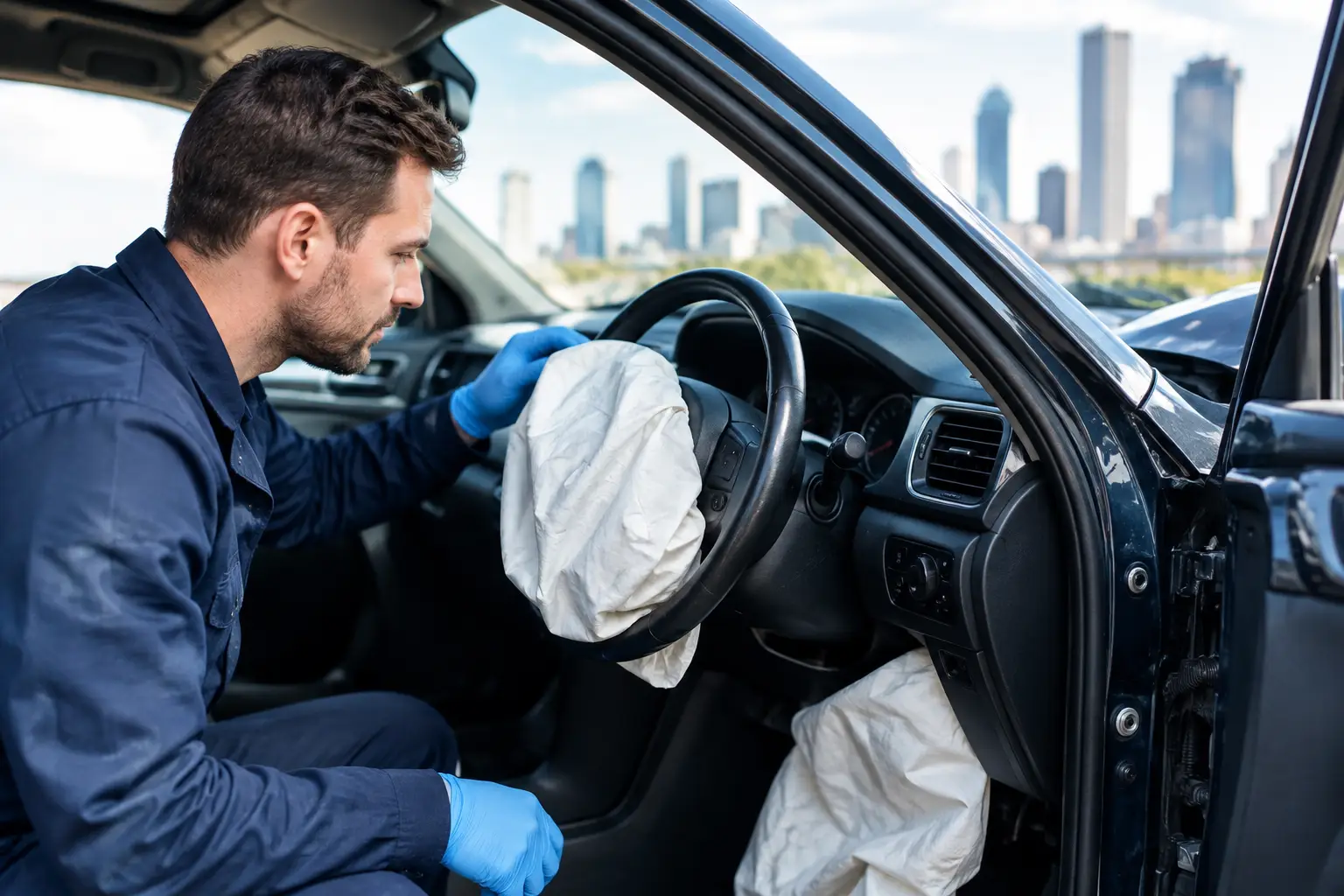
A collision can leave damage that is easy to see - a cracked bumper, dented door, or broken headlight - and safety damage that is not. Are airbags checked after collisions? They should be. A proper collision repair inspection looks beyond the body panels to identify airbag system warnings, seat belt damage, sensor issues, and structural conditions that could affect how your vehicle protects you in another accident.
For drivers in Houston, Stafford, Sugar Land, and Southwest Houston, that inspection matters even after a seemingly minor crash. Airbags are part of a larger Supplemental Restraint System, often called the SRS. The system is designed to work with seat belts, crash sensors, wiring, and control modules. Damage to any of those parts can require professional attention.
Are Airbags Checked After Collisions?
Yes, they should be checked as part of a complete collision repair process. That does not mean every vehicle needs new airbags after every accident. Whether an airbag inspection or replacement is needed depends on where the vehicle was struck, how hard it was hit, whether the airbags deployed, and what the vehicle's diagnostic system reports.
Even when airbags do not deploy, the impact may trigger a fault code or damage a component that helps the SRS operate. A collision technician can scan the vehicle for diagnostic trouble codes and inspect the areas affected by the impact. Depending on the vehicle and crash, this may include the front impact sensors, side-impact sensors, steering wheel airbag, passenger airbag, seat-mounted side airbags, curtain airbags, seat belt pretensioners, wiring connectors, and the airbag control module.
A dashboard airbag light is the clearest sign that the system needs attention, but no warning light does not automatically prove that every component is undamaged. That is why the inspection should be tied to the actual location and force of the collision, not based on appearances alone.
What Happens If the Airbags Deployed?
If an airbag deployed, it generally cannot be reset and used again. The deployed airbag unit must be replaced with the correct part for that vehicle. Related components may also need replacement or inspection, including seat belt pretensioners, trim panels, impact sensors, the clock spring in the steering column, and the SRS control module.
The control module records crash information in many vehicles. Some modules can be properly reset by a qualified service provider, while others require replacement. The right repair depends on the vehicle manufacturer's procedures and the specific damage. A quality repair shop should not guess or simply clear a warning light without addressing the cause.
Airbag replacement is also not a cosmetic repair. A steering wheel cover may look normal after a repair, but the system behind it must be installed correctly and verified. Using the right parts, following manufacturer repair information, and performing required scans are all part of restoring the vehicle safely.
Why Seat Belts Matter in an Airbag Inspection
Airbags and seat belts are designed to work together. In many collisions, the seat belt pretensioner activates to tighten the belt quickly and help hold the occupant in position. A pretensioner can deploy even when a visible airbag does not.
After a crash, a technician should inspect the seat belts for signs of locking, fraying, webbing damage, damaged buckles, or pretensioner activation. A belt that does not retract smoothly or latch securely should not be ignored. This is particularly important after a front-end or side-impact collision, where occupant restraint components may have experienced significant force.
For families, this is one reason not to judge repair needs by exterior damage alone. A bumper can absorb an impact and still transfer force to components behind it. What looks like a repairable fender may be accompanied by a restraint-system issue that needs to be documented and repaired.
Can a Minor Collision Damage Airbag Components?
It can, although not every minor collision causes SRS damage. Low-speed parking lot impacts often result in body damage only. However, modern vehicles have sensors, cameras, radar units, wiring, and other equipment located behind bumpers and around the vehicle. The exact repair needs depend on the vehicle model and point of impact.
For example, a front bumper impact may affect crash sensors or wiring near the radiator support. A side collision can involve door-mounted sensors, seat airbags, curtain airbags, or seat belt components. Damage near the steering column may require attention to the clock spring, which carries electrical signals between the steering wheel airbag and the rest of the system.
The practical answer is that a qualified shop should inspect the affected areas and scan the vehicle rather than assuming the airbags are fine because they did not deploy. A scan is useful, but it is only one part of the process. Physical inspection and manufacturer procedures matter too.
What a Proper Post-Collision Airbag Check Includes
A thorough inspection starts by documenting the accident damage and checking whether the SRS warning light is on. The vehicle is scanned for stored fault codes before repairs begin when possible, then inspected again after repairs are completed. This helps identify issues that may not be visible from the outside.
The technician also checks damaged areas for sensor mounts, wiring harnesses, connectors, and restraint-system components. If the collision required bumper, door, seat, dashboard, steering wheel, or interior trim work, the inspection should consider what safety equipment is located in those areas.
After required parts are repaired or replaced, the vehicle may need a final diagnostic scan and calibration work for related driver-assistance systems. Airbag work and calibration needs vary by vehicle. There is no one-size-fits-all repair plan, which is why an estimate should be based on a hands-on inspection rather than a quick photo alone.
Insurance Claims and Airbag Repairs
Airbag and seat belt repairs are commonly included in collision insurance claims when they are related to the accident. The challenge is that some of the damage is discovered only after the shop begins disassembly. A visible estimate may cover the bumper and paint work, while additional inspection reveals a damaged sensor, deployed pretensioner, or fault code that requires a supplement to the claim.
That is normal in collision repair. The goal is not to rush the vehicle back on the road with only the visible damage fixed. It is to document accident-related damage, communicate the repair needs to the insurer, and complete repairs according to the vehicle's requirements.
Sosa Automotive Group helps customers through this process with free estimates and direct insurance coordination. For a driver already dealing with missed work, rental arrangements, or family schedules, having a local shop handle the repair discussion can take some of the pressure off.
When You Should Schedule an Inspection
Schedule a collision inspection if your airbag light came on after an accident, any airbag or seat belt pretensioner deployed, the vehicle was hit in the front or side, or a seat belt no longer works normally. You should also have the vehicle checked if the steering wheel, dashboard, seats, doors, headliner, or bumper area received impact damage.
Do not rely on an airbag warning light being intermittent or disappearing. Electrical faults can be inconsistent, and clearing a code does not repair damaged parts. Avoid driving a vehicle with a persistent SRS warning light when possible, especially if you are not sure what caused it.
Your vehicle's airbags are meant to be there on one of the worst days you can have behind the wheel. After a collision, give the restraint system the same attention you give the dents and paint. A careful inspection now can help you drive away with more confidence later.