
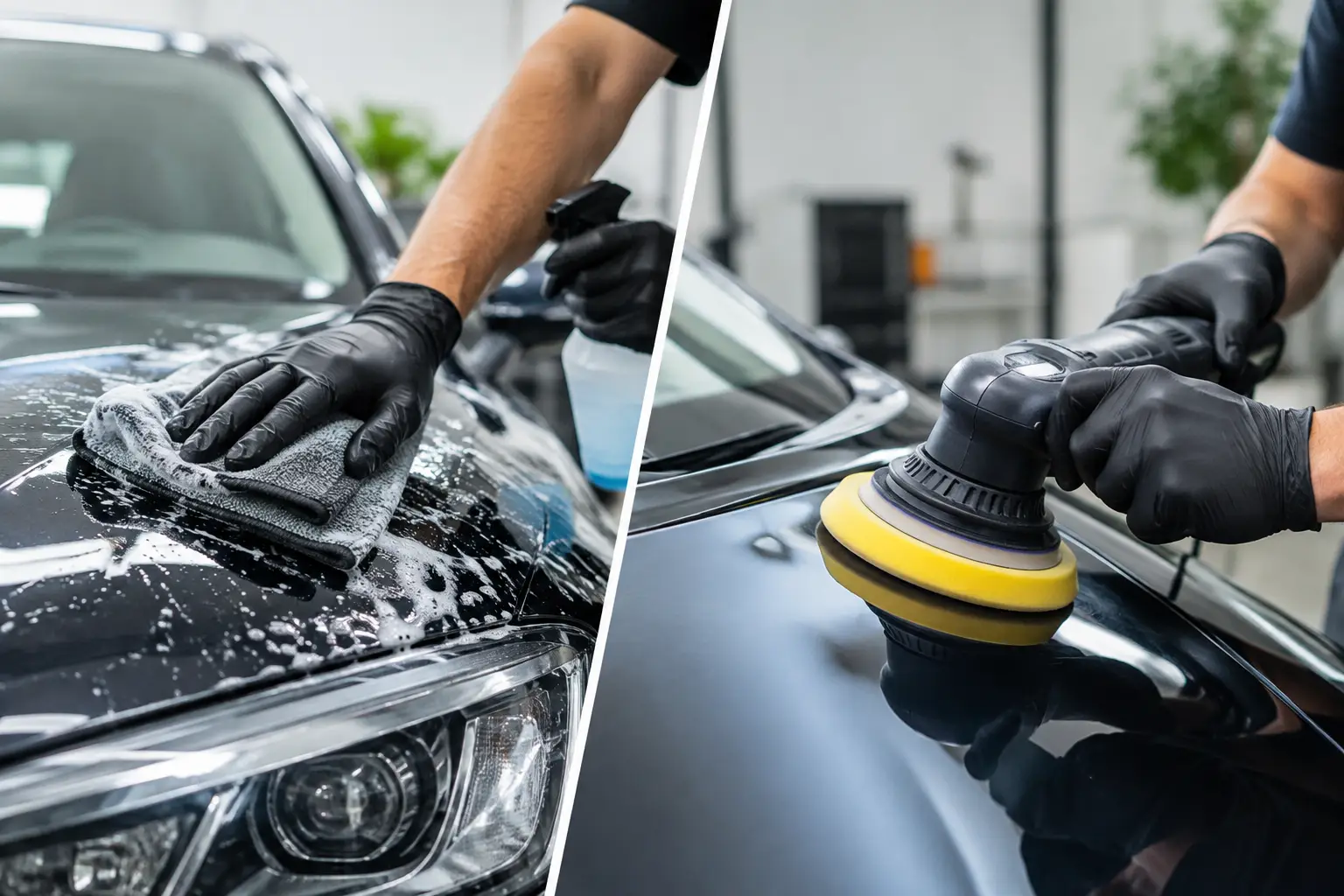
A freshly washed vehicle can look much better, but washing alone will not remove every scratch, swirl mark, or dull area in the finish. When comparing detailing versus paint correction, the right choice comes down to what is actually affecting your vehicle's appearance. One service cleans and protects the finish. The other works to improve defects within the paint itself.
For drivers in Southwest Houston, Stafford, Sugar Land, and Houston 77083, that difference matters. Heat, sun exposure, road debris, automatic car washes, and everyday commuting can all take a toll on a vehicle's exterior. A clear explanation helps you avoid paying for a service that does not address the problem you see.
What Auto Detailing Does
Auto detailing is a thorough cleaning and reconditioning service for the interior, exterior, or both. It goes well beyond a quick drive-through wash. A proper detail may include hand washing, wheel and tire cleaning, interior vacuuming, upholstery cleaning, glass cleaning, trim treatment, and the application of a wax or paint protectant.
The goal is to remove dirt, grime, stains, odors, and contaminants that make a vehicle look neglected. Detailing can bring back a clean, well-kept appearance and help preserve surfaces over time. It is a smart choice for regular vehicle care, preparing a car for sale, or getting your vehicle looking presentable after a busy season of family trips and commuting.
Exterior detailing often includes clay-bar treatment or decontamination. This removes bonded contaminants such as industrial fallout, tree sap, overspray, and brake dust that ordinary washing cannot remove. Afterward, the paint may feel smoother and look brighter.
However, detailing does have limits. Wax can temporarily make light marks less noticeable, but it does not permanently remove scratches or swirls. If the paint has visible circular marks in sunlight, haziness, oxidation, or etched water spots, cleaning alone may not produce the result you want.
What Paint Correction Does
Paint correction is a more specialized process designed to reduce or remove defects in a vehicle's clear coat. Most modern vehicles have a colored base coat protected by a clear outer layer. Fine scratches, swirl marks, and dullness often sit in that clear coat rather than in the color underneath.
A technician evaluates the paint, measures its condition when needed, and uses polishing compounds with machine polishers to level the surface carefully. The process removes a very small amount of damaged clear coat to make the surface more even. As light reflects more evenly, the paint can appear clearer, deeper, and glossier.
Paint correction may help with light to moderate swirl marks, fine scratches, oxidation, buffer trails, holograms, minor paint transfer, and some water spot etching. The results can be dramatic on darker colors, where swirl marks often show up clearly in direct Texas sun.
It is not a repair for every type of damage. Deep scratches that catch a fingernail may extend through the clear coat and into the paint. Paint correction cannot restore missing paint, repair dents, fix cracked bumpers, or correct peeling clear coat. Those concerns may require touch-up work, panel refinishing, dent repair, or collision repair instead.
Detailing Versus Paint Correction: The Main Difference
The simplest way to understand detailing versus paint correction is this: detailing cleans and protects what is there, while paint correction improves the condition of the paint surface.
A detail is often maintenance. Paint correction is restoration. A detail can make a dirty car look clean and cared for in a day. Paint correction requires more time because the work is deliberate and paint condition varies from one panel to another.
Cost also reflects the difference in labor and skill. A basic detail is generally less involved than paint correction. Correction may involve multiple polishing stages, careful masking around trim and edges, inspection under proper lighting, and a final protection step. The exact price should depend on the vehicle's size, paint condition, prior repairs, and the level of improvement you want.
Neither service is automatically better. A newer vehicle with light dust, interior stains, and no visible paint defects may only need detailing. A vehicle that looks dull after repeated automatic washes may benefit from correction before a protective coating or sealant is applied.
When Detailing Is the Better Choice
Detailing makes sense when the main issue is cleanliness rather than paint damage. If your vehicle has muddy carpets, pet hair, food spills, dusty vents, dirty wheels, or road film on the exterior, a detail can make a meaningful difference without unnecessary paint work.
It is also the practical choice for regular upkeep. Houston-area drivers deal with pollen, heavy rain, humidity, construction dust, and intense UV exposure. Scheduling periodic detailing helps keep contaminants from sitting on paint, trim, glass, and interior surfaces for too long.
Choose detailing if the paint still looks generally smooth and glossy once it is clean, or if you simply want a refreshed appearance before a road trip, lease return, sale, or special occasion. Ask what level of exterior protection is included so you know whether you are receiving a wash, wax, sealant, or another finish treatment.
When Paint Correction Is Worth It
Paint correction is worth considering when a clean vehicle still looks tired. You may notice light scratches all over the hood, spiderweb-like swirl marks under parking lot lights, faded-looking paint, or a cloudy finish that does not improve after washing and waxing.
It can also be a good step after improper washing. Stiff brushes, dirty wash mitts, and automated wash equipment can leave behind fine marks that are especially noticeable on black, dark blue, and dark gray vehicles. Correction can improve the finish before you apply longer-lasting paint protection.
For vehicles that have sentimental value, are being prepared for sale, or have recently received body and paint work, paint correction may be the right investment. Still, expectations should be realistic. A professional shop should explain which defects can be improved, which may remain, and whether a panel needs refinishing rather than polishing.
What About Collision Damage and Fresh Paint?
After an accident, it is easy to focus on scratches and scuffs that may actually be signs of more serious damage. A bumper that appears scratched may have broken retainers behind it. A door with paint transfer may also have a dent, alignment issue, or hidden damage near the impact area.
This is where an inspection matters. If damage resulted from a collision, paint correction may not be the first step. The vehicle may need body repair and refinishing to restore both appearance and proper fit. Insurance may also cover qualifying collision repairs, while routine detailing and cosmetic polishing are typically separate services.
Freshly painted panels need time to cure before certain treatments are applied. Your repair shop can advise you on when it is safe to wash, wax, polish, or protect a newly refinished area. Avoid aggressive rubbing, harsh chemicals, and automatic car washes until you receive clear guidance.
At Sosa Automotive Group, customers can request a free estimate for collision-related body and paint concerns, with direct insurance handling available when a claim is involved. That can help separate a simple appearance issue from damage that needs a proper repair plan.
How to Protect the Results
Whether you choose detailing or paint correction, proper washing habits make the result last longer. Use clean wash materials, avoid dry-wiping dusty panels, and rinse away loose debris before touching the paint. Parking in covered areas when possible can also reduce the effects of strong sun, sap, bird droppings, and other contaminants.
A wax, sealant, or coating can add protection after the vehicle has been cleaned or corrected. The best option depends on your budget, how the vehicle is stored, and how much maintenance you are willing to do. Protection will not make a vehicle scratch-proof, but it can make washing easier and help preserve the finish.
If you are unsure which service fits your vehicle, start with the condition you can see after a proper wash. Dirt and stains call for detailing. Swirls, haze, and paint defects may call for correction. Deep scratches, dents, cracked parts, or accident damage deserve a professional body and paint inspection before any cosmetic service is chosen.