
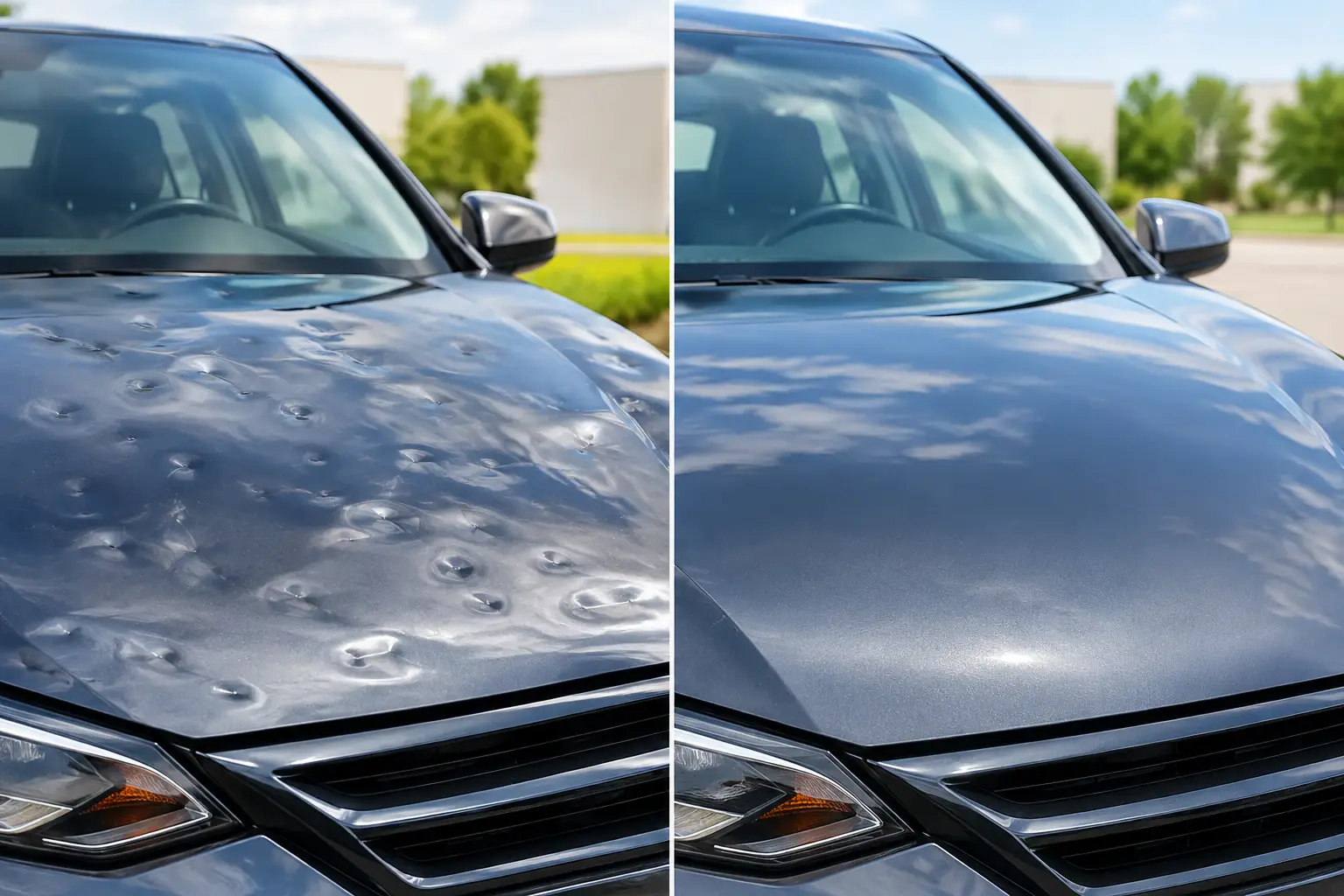
A hailstorm can leave a vehicle looking much worse than it drives. Small dents across the hood, roof, trunk, and doors may not affect how the car runs, but they can lower its appearance, resale value, and protection against future damage. When people search for hail damage repair before after results, they usually want one answer: can my vehicle really look normal again?
In many cases, yes. The right repair method can restore the body panels without unnecessary replacement or repainting. The key is having the damage inspected early, before dents, chipped paint, or insurance deadlines create a bigger problem.
What Hail Damage Looks Like Before Repair
Hail damage is not always obvious from a quick walk around the car. On a bright day, you may see dozens of shallow dimples in the roof or hood. On darker vehicles, the dents can be easier to spot under reflected light. Some damage appears as a few larger impacts, while other vehicles have hundreds of small dents spread across multiple panels.
The most commonly affected areas are horizontal surfaces because they take the direct impact of falling hail. That includes the hood, roof, trunk lid, and sometimes the top edges of the fenders. Mirrors, glass, moldings, and windshield trim can also be damaged during a severe storm.
Before repair, a professional inspection should determine more than the number of visible dents. The shop needs to check whether the paint is cracked, whether metal has stretched, whether a panel can be accessed from behind, and whether any glass or trim needs separate attention. These details determine the repair plan and the cost.
Hail Damage Repair Before and After: What Changes
A quality hail repair should do more than make dents less noticeable. After repair, the panel should look smooth under natural light, overhead shop lighting, and reflected light. The original body lines should remain straight, and the paint should match surrounding panels if refinishing was needed.
For many hail-damaged vehicles, paintless dent repair is the preferred approach. This process uses specialized tools to carefully massage the metal back into position from behind the panel. Technicians may also use controlled pulling methods on the outside of the panel when access is limited. Because the original factory finish remains in place, paintless dent repair can preserve the vehicle's original paint and avoid color-matching concerns.
The before-and-after difference can be dramatic. A roof covered in small dents can look clean again, and a hood that appears rippled in sunlight can return to a smooth finish. However, results depend on the depth of the dents, the location of the damage, the type of metal, and whether the paint was broken.
Deep dents near a sharp body line, panel edge, or brace may require more involved work. If hail cracked the paint or damaged the panel beyond what paintless methods can correct, conventional body repair and refinishing may be the better choice. A trustworthy shop should explain why it recommends one method over another instead of treating every dent the same way.
When Paintless Dent Repair Is a Good Fit
Paintless dent repair often works best when the paint is still intact and the dents are relatively shallow. It is especially useful for newer vehicles with factory paint in good condition. Since there is no filler, sanding, or repainting involved in many cases, this method can reduce repair time and help maintain the original finish.
It is not the right answer for every vehicle. If a panel has cracked paint, severe creasing, torn metal, or damage in an area that cannot be reached safely, the repair may require bodywork and paint services. Aluminum panels can also require a different approach than traditional steel panels.
That is why photos alone rarely tell the full story. They can help begin the conversation, but an in-person estimate gives a clearer picture of what your vehicle needs. A technician can use proper lighting and inspection tools to identify dents that may not show up in a phone photo.
Why Fast Hail Repair Matters in Houston
Houston-area drivers already deal with heat, heavy rain, humidity, and intense sun. If hail damage has chipped or cracked the paint, delaying repair can expose bare metal to moisture. Over time, that can lead to corrosion and more extensive body repair.
There is also the insurance side of the process. Comprehensive auto coverage often includes hail damage, but policy details, deductibles, and claim deadlines vary. It is wise to document the damage as soon as possible with clear photos, note the date of the storm, and contact your insurer before making major repair decisions.
You have the right to choose the repair shop you want to work with. A local shop that handles insurance coordination can help reduce the back-and-forth, explain the estimate, and communicate with the insurer about approved repairs. At Sosa Automotive Group, customers can receive a free estimate and assistance with the insurance process, helping take some pressure out of an already frustrating situation.
What to Look for in a Finished Repair
Do not judge a completed hail repair only from ten feet away. A proper final inspection should include close-up and reflected-light checks. Look across the repaired panel from different angles. The metal should appear even, without visible waves, low spots, high spots, or distorted reflections.
If a panel was painted, the color and gloss should blend naturally with adjacent panels. Pay attention to body lines, trim fitment, and edges around the hood, trunk, doors, and roof. These details matter because they show whether the vehicle was restored carefully rather than rushed through the process.
A few questions are worth asking before you pick up the vehicle. Confirm which panels were repaired, whether paintless dent repair or refinishing was used, and whether any damaged trim or molding was replaced. If insurance was involved, make sure you understand what was approved and what work was completed.
Do Not Let a Minor Dent Turn Into a Bigger Concern
Not every hailstorm creates an emergency, but every damaged vehicle deserves a proper assessment. Light dents may be mostly cosmetic today, yet cracked paint, hidden panel damage, or an unresolved insurance claim can become more complicated with time.
If your car was caught in a storm in Houston 77083, Stafford, Sugar Land, or Southwest Houston, bring it in for a clear, no-pressure estimate. A careful inspection can show you what is repairable, what your insurance may cover, and what it will take to get your vehicle looking like itself again.