
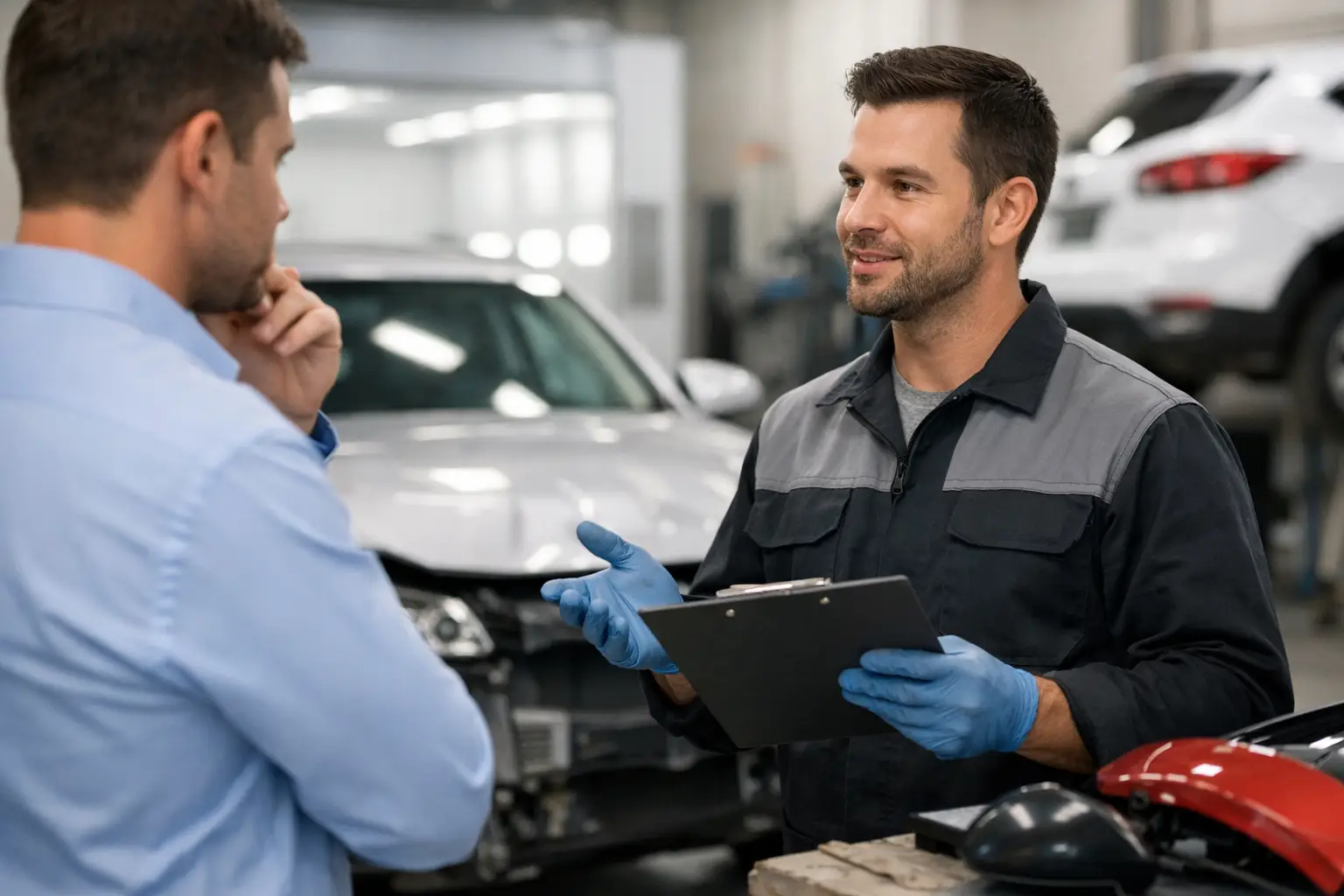
A damaged bumper, broken headlight, or bent door can make one simple question feel urgent: where should you take your car? Asking the best collision repair questions before authorizing work gives you a clearer picture of the shop, the estimate, and what it will take to return your vehicle to safe driving condition. For drivers in Houston, Stafford, Sugar Land, and Southwest Houston, a few direct questions can prevent surprises later.
Why Collision Repair Questions Matter
Collision repair is more than making damage less visible. A proper repair may involve the bumper cover, structural components, suspension, lighting, sensors, paint, and safety systems. What looks like a minor impact from the outside can sometimes reveal additional damage once the vehicle is disassembled.
The right shop should welcome questions and answer them in plain language. You should not feel pressured to approve repairs before you understand the process, your insurance role, or the expected timeline. Clear communication is one of the strongest signs that a repair shop takes your vehicle and your time seriously.
The Best Collision Repair Questions Before You Choose a Shop
1. Do you provide a free written estimate?
Start with the estimate. Ask whether the shop will inspect the damage and provide a written estimate at no charge. A good estimate should explain the visible damage, the anticipated repairs, and whether the price may change if hidden damage is found.
An initial estimate is not always the final repair total. Once a technician removes damaged panels or a bumper cover, they may find broken brackets, damaged absorbers, wiring issues, or structural concerns that were not visible during the first inspection. What matters is how the shop communicates those findings and handles approval for additional work.
2. Will you work directly with my insurance company?
Insurance paperwork can add stress after an accident, especially when you are also arranging transportation and trying to keep up with work or family responsibilities. Ask whether the shop can coordinate with your insurer, submit repair information, and discuss supplements when additional damage is discovered.
You may still need to authorize repairs and pay your deductible, depending on your policy and claim. However, a shop that handles insurance coordination can reduce back-and-forth calls and help keep the repair moving. Ask what information they need from you, such as your claim number, adjuster details, and insurance card.
3. What repairs are included in the estimate?
Do not settle for a total without an explanation. Ask the shop to walk you through the estimate so you understand whether it includes body labor, paint work, replacement parts, mechanical repairs, sensor calibration, and materials.
This conversation is especially useful after a front-end or rear-end collision. Damage behind the exterior panel may affect components you cannot see, including parking sensors, cameras, lights, brackets, or cooling parts. Knowing what is included helps you compare estimates fairly instead of comparing only the bottom-line number.
4. Will you inspect for hidden or structural damage?
A collision can transfer force beyond the panel that appears damaged. Even a low-speed impact may affect mounting points, alignment, suspension pieces, or the structure behind a bumper. Ask how the shop checks for hidden damage and what happens if the inspection reveals more repairs are needed.
The answer should be practical: the shop documents the damage, contacts the insurance company when applicable, and gets the necessary authorization before proceeding. Skipping this step to offer a fast, low quote can lead to incomplete repairs.
5. What type of parts will you use?
Ask whether the estimate calls for original equipment manufacturer parts, aftermarket parts, recycled parts, or a combination. There is not one right answer for every repair. Your vehicle's age, insurance coverage, part availability, and repair needs all affect the decision.
OEM parts are made for the vehicle manufacturer. Aftermarket parts are produced by other companies, while recycled parts are typically undamaged original parts taken from a similar vehicle. A quality shop should explain the options, confirm what your insurer approves, and discuss any fit or availability considerations before ordering parts.
Questions About Safety and Repair Quality
6. Can you repair and calibrate vehicle safety systems?
Many newer vehicles rely on cameras, radar, parking sensors, blind-spot monitoring, lane-assist features, and automatic emergency braking. These systems may need inspection, repair, or calibration after a collision, even when the damage looks limited to a bumper or mirror.
Ask whether the shop identifies these needs during the repair process and how calibrations are handled. This is not an area to guess about. Safety features need to function as intended before your vehicle returns to the road.
7. How will you match the paint color?
Houston sun, heat, and everyday driving can change the appearance of paint over time. A factory paint code is a starting point, but a quality repair often requires color matching and blending into nearby panels so the repaired area does not stand out.
Ask whether the estimate includes necessary blending and whether the shop has a process for checking the match before the vehicle is delivered. Paint work should look consistent in daylight, not merely acceptable under shop lighting.
8. Do you stand behind your collision repairs?
Ask about the shop's warranty and what it covers. A repair warranty may apply to workmanship, paint, or parts, but terms can vary. Get the details in writing and ask who to contact if you notice an issue after pickup.
A dependable repair shop should be available to address reasonable concerns. That matters because some issues, such as an uneven panel gap, warning light, or loose trim piece, may not be obvious until you have driven the vehicle for a few days.
9. Will the repair restore my vehicle to a safe condition, not just improve its appearance?
This question gets to the heart of collision repair. A low price is appealing, but cosmetic work alone is not enough if the impact affected the vehicle's structure, lights, sensors, or driving performance.
Ask the shop what inspections are performed before delivery. You want confidence that the doors, hood, trunk, lights, panels, and safety-related components have been checked as part of the finished repair. If your vehicle pulls, shakes, shows warning lights, or has uneven tire wear after an accident, mention it during the estimate.
Questions About Timing, Updates, and Pickup
10. How long will the repair take?
Repair timelines depend on the damage, insurance approvals, parts availability, and the amount of paint or mechanical work involved. A small dent repair may take far less time than a collision that requires parts orders, frame measurement, paint blending, and calibration.
Ask for a realistic timeline rather than a promise that sounds good. Also ask what could delay the work. Parts availability is often the biggest variable, and a straightforward answer is better than being left without updates.
11. How will you keep me updated?
A vehicle in the shop can disrupt your commute, school drop-offs, appointments, and work schedule. Ask whether the shop will call or text you with updates, particularly when parts arrive, new damage is found, or the completion date changes.
You do not need constant messages, but you should know who to contact and when you can expect to hear from the shop. Good communication is especially valuable when an insurance supplement extends the timeline.
12. What should I check when I pick up my vehicle?
Before leaving, take a few minutes to look over the repaired area with a staff member. Check the paint color in natural light if possible, open and close repaired doors or panels, test lights and features related to the damaged area, and look for warning lights on the dashboard.
Ask for a copy of the final invoice, warranty information, and any instructions for caring for fresh paint. If something does not look or feel right, bring it up before you leave. A professional shop would rather answer the question immediately than have you drive away uncertain.
Choose a Local Shop That Answers Clearly
The best repair experience is not always the one with the quickest verbal quote. It is the one where you understand the work, know how your insurance claim is being handled, and feel comfortable asking for updates. For more than 20 years, Sosa Automotive Group has helped local drivers with collision repair, body work, paint services, free estimates, and insurance coordination.
After an accident, bring your photos, insurance information, and questions to the estimate. A shop that takes the time to answer them is more likely to take the same care with your vehicle.