
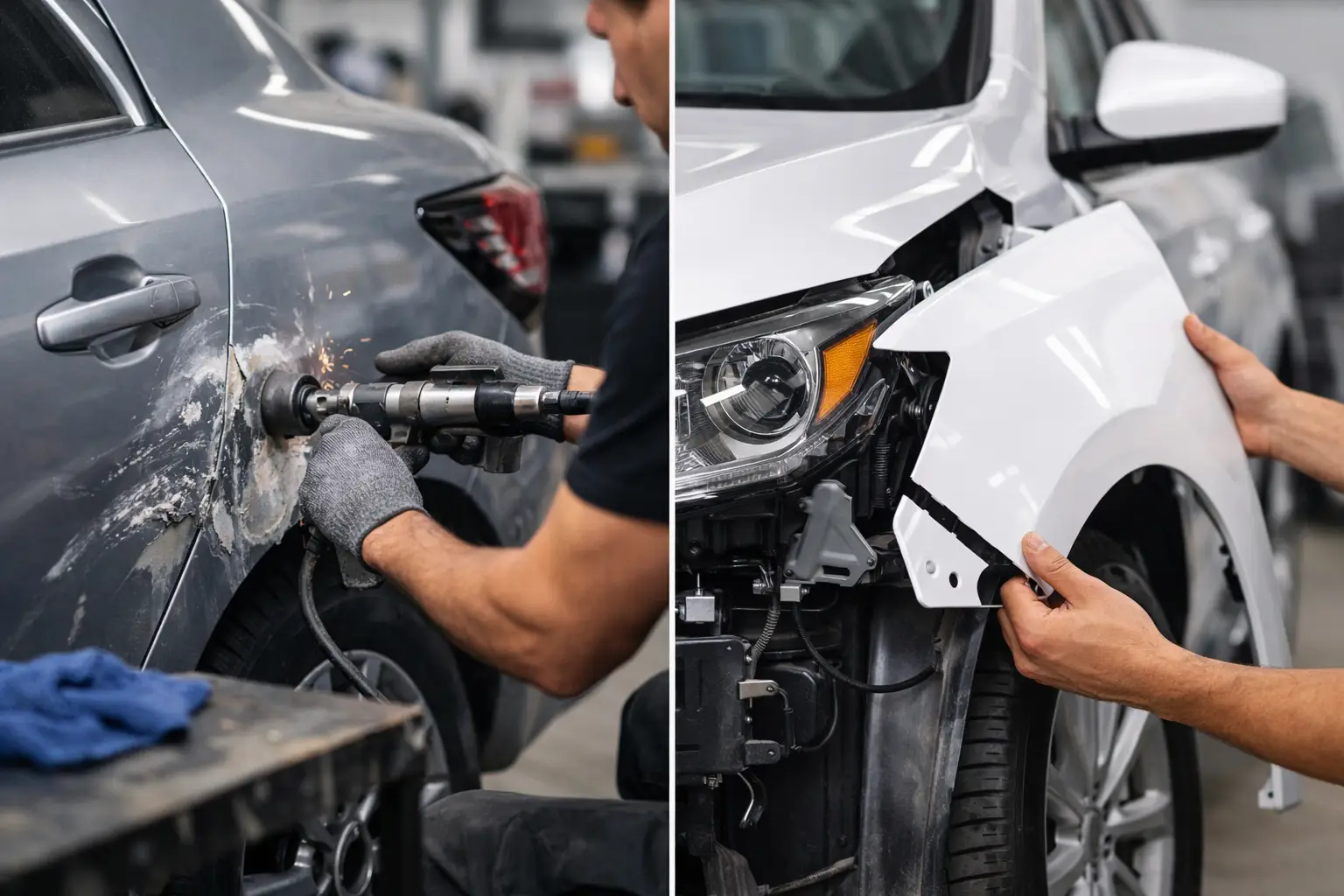
A damaged fender can look like a simple cosmetic problem. A bent door, crushed bumper, or creased quarter panel can be more complicated. The body repair vs replacement decision affects your vehicle’s safety, appearance, repair time, insurance claim, and long-term value. The right answer depends on the damage behind the surface, not just what is visible in the parking lot.
For drivers in Houston, Stafford, Sugar Land, and Southwest Houston, a proper inspection is the best place to start. A collision repair shop should look beyond scratches and dents to check mounting points, panel alignment, sensors, corrosion risk, and the materials used in your vehicle’s body.
What Is the Difference Between Body Repair and Replacement?
Body repair means restoring the original vehicle panel when it can safely return to its intended shape and function. This may involve dent pulling, metal finishing, plastic repair, filler work in limited areas, refinishing, and paint blending. Repair is often a good choice for a shallow dent, a minor crease, a scraped bumper cover, or damage that has not weakened the panel.
Replacement means removing a damaged part and installing a new, recycled, or approved aftermarket component when appropriate. Common replacement items include bumpers, fenders, hoods, doors, lights, grilles, mirrors, and damaged structural parts. Replacement is not automatically better than repair. It is the better choice when the existing part cannot be restored safely, reliably, or to an acceptable fit and finish.
A professional estimate should explain which option is recommended and why. That gives you a clearer picture of the work your vehicle needs instead of leaving you to judge the repair from a photo or a quick glance.
When Auto Body Repair Makes Sense
Repair can be the practical choice when damage is limited and the panel still has its original strength. Keeping the original factory panel can also help preserve factory fit, seams, and corrosion protection, provided the repair is completed correctly.
For example, paintless dent repair may be possible when a dent has not broken the paint and the back of the panel is accessible. A bumper cover with a small crack or gouge may be repairable if its tabs, mounting areas, and internal structure are intact. A door or fender with a minor dent may also be repaired and refinished without replacing the entire part.
Repair may reduce parts costs and avoid delays caused by part availability. That can matter after a Houston-area accident, especially when a needed component is on backorder. It can also reduce unnecessary waste when a panel is still serviceable.
Still, a lower initial estimate should not be the only reason to repair a panel. Excessive pulling, reshaping, or filler can create problems later if the damage is too severe. The goal is not simply to make the vehicle look better. It is to restore it properly.
Signs a Panel May Be Repairable
A panel is more likely to be repairable when it has minor dents, light creases, surface scratches, or limited damage away from critical mounting and safety areas. The metal or plastic should not be torn, heavily stretched, cracked beyond repair, or rusting from the inside out.
The repair technician also needs to consider access. A dent may look small from the outside but sit in a difficult area with braces, wiring, side-impact components, or reinforcement behind it. Modern vehicles often place more systems behind exterior panels than drivers realize.
When Replacement Is the Safer Choice
Replacement is usually recommended when a part has lost its ability to protect occupants, attach correctly, or support other vehicle systems. Severe collision damage can stretch metal, crack plastic, deform mounting points, or distort the shape of a panel enough that repair would compromise fit and function.
A bumper may need replacement after a collision if its cover is torn, its retaining tabs are broken, or the impact damaged the reinforcement bar, absorber, brackets, or sensor locations behind it. A door may need replacement if side-impact protection, hinges, latches, window tracks, or internal structure have been affected. A hood should not be repaired casually if it no longer latches and aligns correctly.
Replacement can also be the wiser choice when rust has penetrated deeply or when an old repair is failing. Bubbling paint around a wheel arch may be more than a paint issue. If corrosion has weakened the metal, covering it with filler and paint will not stop the problem for long.
For structural components, the decision must follow manufacturer repair procedures. Frames, unibody sections, reinforcements, and areas near airbags or seat belt mounting points require precise measurements and approved methods. This is not the place for shortcuts.
Safety Systems Change the Body Repair vs Replacement Decision
Many newer vehicles use cameras, parking sensors, radar, blind-spot monitoring, lane-assist equipment, and other advanced driver-assistance systems. A small impact near a bumper, mirror, windshield, grille, or quarter panel can affect equipment that needs inspection and, in some cases, calibration after repairs.
The vehicle’s material also matters. High-strength steel, aluminum, and mixed-material designs do not all respond to damage in the same way. Some parts can be repaired only in certain areas. Others may require replacement because heating, pulling, or straightening them could reduce their designed strength.
This is why a quality collision estimate may change after disassembly. Hidden damage is common. Once the bumper cover, trim, or damaged panel is removed, the shop can see brackets, reinforcements, wiring, and structural areas that were not visible at the first inspection. A trustworthy shop communicates those findings clearly and works with the insurance company when a supplement is needed.
How Insurance Affects the Decision
Insurance companies generally consider the cost of parts, labor, paint materials, vehicle age, and the recommended repair procedures. They may approve repair when it is safe and cost-effective, or replacement when repairing the damaged part would cost more or fail to restore the vehicle correctly.
You should not feel pressured to choose a repair that you do not understand. Ask whether the estimate includes all necessary operations, including scanning, sensor calibration, paint blending, corrosion protection, and alignment checks when needed. Those details can make a major difference in the quality of the completed repair.
A local shop that handles insurance coordination can reduce some of the stress after an accident. Sosa Automotive Group provides free estimates and can work directly with insurers, helping customers understand the repair plan while their claim moves forward.
Cost, Time, and Vehicle Value
Repair often costs less than replacement, but not always. Labor-intensive dent repair, extensive refinishing, and blending adjacent panels can add up. On the other hand, a replacement part may be expensive, unavailable, or require substantial preparation and painting before installation.
Repair time also depends on more than whether a part is fixed or replaced. Parts availability, insurance approval, hidden damage, paint curing, and calibration requirements can all affect the schedule. A shop should give you realistic expectations rather than promising an exact completion date before the full scope of damage is known.
As for vehicle value, a clean, properly documented repair generally matters more than whether every damaged panel was repaired or replaced. Poor panel gaps, mismatched paint, warning lights, wind noise, water leaks, or visible bodywork can hurt confidence in a vehicle. Proper workmanship helps protect its appearance and usability over time.
Questions Worth Asking Before Approving Work
Before repairs begin, ask whether the damaged panel can safely be repaired, what makes replacement necessary if it is recommended, and whether any hidden damage is likely. It is also reasonable to ask how the paint will be matched, whether nearby panels need blending, and if cameras or sensors require calibration.
If used or aftermarket parts are proposed, ask about their condition, fit, warranty, and whether they are appropriate for your vehicle. Not every part has the same role. A cosmetic trim piece and a safety-related component should not be evaluated by the same standard.
The best body repair vs replacement decision is the one that restores your vehicle’s safety, fit, finish, and everyday reliability without paying for work it does not need. After an accident, take the time to get a thorough estimate and choose a repair plan you can understand and trust.