
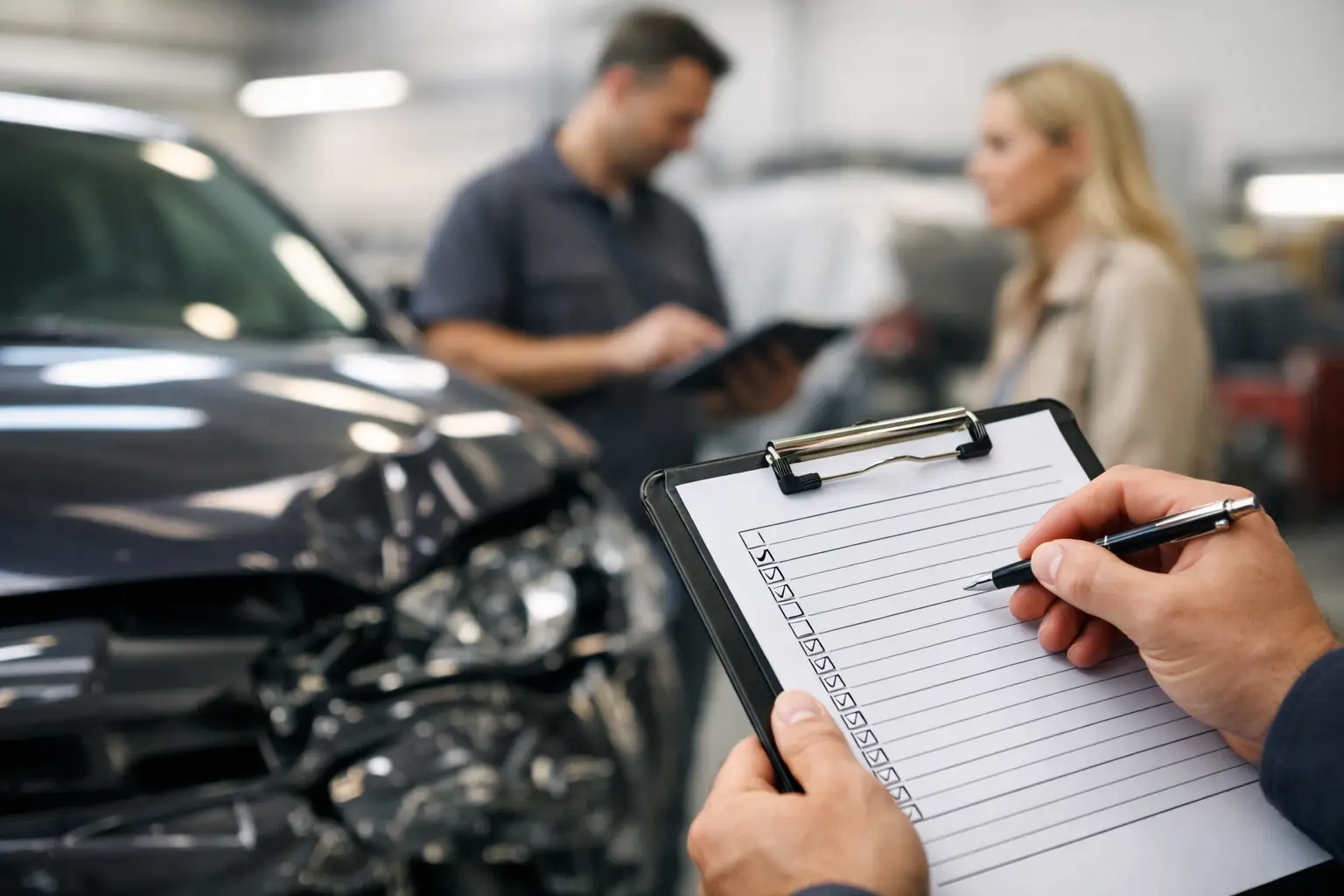
After an accident, most drivers look at a repair estimate for one thing first - the total. That number matters, but a good body shop estimate checklist goes deeper. The real question is whether the estimate clearly explains what your vehicle needs, what your insurance may cover, and what the shop will actually do to restore it safely.
If you are comparing estimates in Houston, Stafford, Sugar Land, or Southwest Houston, the goal is not just to find the lowest price. It is to make sure nothing important is missed. A cheap estimate that leaves out hidden damage, calibration work, or paint materials can cost more later in delays, supplements, or repairs that do not fully address the collision.
Why a body shop estimate checklist matters
A collision estimate is part repair plan, part cost breakdown, and part communication tool between you, the shop, and the insurance company. When it is detailed and accurate, the repair process usually moves with fewer surprises. When it is vague, customers often end up confused about timing, coverage, and what is included.
That is why a checklist helps. It gives you a practical way to review the estimate line by line, ask better questions, and feel more confident before authorizing repairs. This is especially helpful if you are dealing with insurance at the same time and already trying to manage work, family, and transportation.
What should be on a body shop estimate checklist?
Start with the basics. The estimate should list your name, vehicle year, make, model, VIN when available, mileage, and the date of inspection. It should also identify the damaged area of the vehicle clearly. If the wrong trim level or options are listed, the estimate can be off from the beginning.
Next, look for a clear breakdown of parts, labor, paint, and materials. A professional estimate should not feel like a guess. It should show what panels or components are being repaired, replaced, removed, installed, refinished, or blended. If a line item is unclear, ask what it means in plain language.
You should also check whether the estimate notes visible damage only or whether the shop expects additional damage after disassembly. That distinction matters. In many collision repairs, especially around bumpers, fenders, hoods, and rear body panels, hidden damage is common. A shop that explains this upfront is usually being more transparent, not less.
Vehicle and customer information
Make sure the estimate has accurate contact information, vehicle details, and claim information if insurance is involved. Small mistakes here can slow down approvals or parts ordering. If the vehicle has driver assistance features, sensors, cameras, or special trim packages, those should be noted as well.
Damage description and repair method
The estimate should show which parts will be repaired and which will be replaced. That difference affects both cost and repair quality. In some cases, repairing a panel is reasonable and efficient. In others, replacement is the better option for safety, fit, or finish. It depends on the location and severity of the damage.
You also want to see labor operations described clearly. Terms like repair, replace, remove and install, refinish, and blend should line up with the damage. If the estimate simply lists a total without showing how the work is being calculated, that is a red flag.
Parts type and quality
Not all parts are the same, and this is one of the most important sections to review. The estimate should identify whether parts are OEM, aftermarket, recycled, or reconditioned. Each has a place in collision repair, but the right choice depends on your vehicle, your insurance policy, your budget, and the specific part being replaced.
For example, some customers prefer OEM parts for fit and manufacturer consistency. Insurance carriers may approve aftermarket or recycled parts in some situations. That does not automatically mean the repair is poor, but you should know what is being used and why. A trustworthy shop will explain the trade-offs instead of rushing past them.
Paint work and finish details
Paint work should include more than a basic color charge. A proper estimate may include refinish labor, paint materials, surface prep, masking, and blending adjacent panels when needed. Blending is often necessary to match color across neighboring panels, especially on metallic, pearl, or faded finishes.
If the estimate leaves out blend panels but the damage is near an area where color match could be affected, ask about it. A lower number can look appealing until the final result does not match the rest of the vehicle.
Structural, mechanical, and safety-related items
A good estimate should account for anything affected by the collision, not just what is visible from the outside. Depending on the impact, this may include suspension components, cooling parts, lights, brackets, impact absorbers, or structural areas behind the panel damage.
Modern vehicles also have sensors, cameras, and advanced driver assistance systems that may need scanning, calibration, or reset procedures after repair. If your car has lane departure warning, blind spot monitoring, adaptive cruise control, or parking sensors, ask whether pre-repair and post-repair scans are included. These are not optional details on many newer vehicles.
Questions to ask when reviewing the estimate
You do not need to know collision repair terminology to ask smart questions. Start with the practical ones. Ask what damage is confirmed now, what might be found after teardown, and what happens if more damage is discovered. Ask whether the estimate includes scans, calibrations, paint blending, and all required materials.
It is also worth asking how the shop handles insurance supplements. Supplements are common when hidden damage is found, but the process should be explained clearly. If a shop handles insurance communication directly, that can save you time and reduce stress.
You should also ask about parts availability and repair timeline. A very accurate estimate can still lead to delays if a key part is backordered. That does not always reflect poorly on the shop, but clear communication matters.
Comparing two estimates without getting misled
Two estimates for the same vehicle can look very different. One may appear lower simply because it includes less detail, fewer procedures, or cheaper parts. Another may be higher because it accounts for proper repair steps from the start. Price matters, but estimate quality matters just as much.
When comparing estimates, do not focus only on the grand total. Compare line items. Are both shops replacing the same parts? Are both including calibration and scans? Are both identifying the same paint work? Are labor hours similar? If one estimate is much shorter or less detailed, ask why.
This is where experience counts. A shop that has handled collision repair for years often knows where hidden damage shows up, what insurers typically require, and how to write a more complete estimate from the beginning. That does not guarantee the final bill will never change, but it usually means fewer avoidable surprises.
Insurance and estimate approval
If you are using insurance, remember that the first estimate is not always the last word. Insurance companies may write an initial estimate based on visible damage only. Once the shop begins disassembly, additional repair needs may be documented and submitted for approval.
That process is normal. What matters is whether the shop explains it clearly and keeps you informed. Direct insurance handling can make a big difference here, especially when you are already dealing with transportation issues and claim paperwork. For many local drivers, convenience is not a bonus. It is part of choosing the right shop.
Choosing the right shop after the estimate
The estimate is only one part of the decision. You are also choosing the team that will repair your vehicle. Look for a shop that explains the work in plain English, answers questions without pressure, and is realistic about repair time. Free estimates are helpful, but clarity and follow-through matter more than a fast printout.
For drivers in Southwest Houston, Stafford, Sugar Land, and the 77083 area, local reputation still counts. A family-owned shop with years of collision repair experience and insurance coordination can often provide the kind of direct, practical service people need after an accident. That is one reason many customers turn to Sosa Automotive Group when they want repairs explained clearly and handled professionally.
A strong estimate should leave you feeling informed, not rushed. If you use this body shop estimate checklist as your guide, you will be in a better position to spot missing items, ask the right questions, and choose a repair shop that treats your vehicle - and your time - with care.