
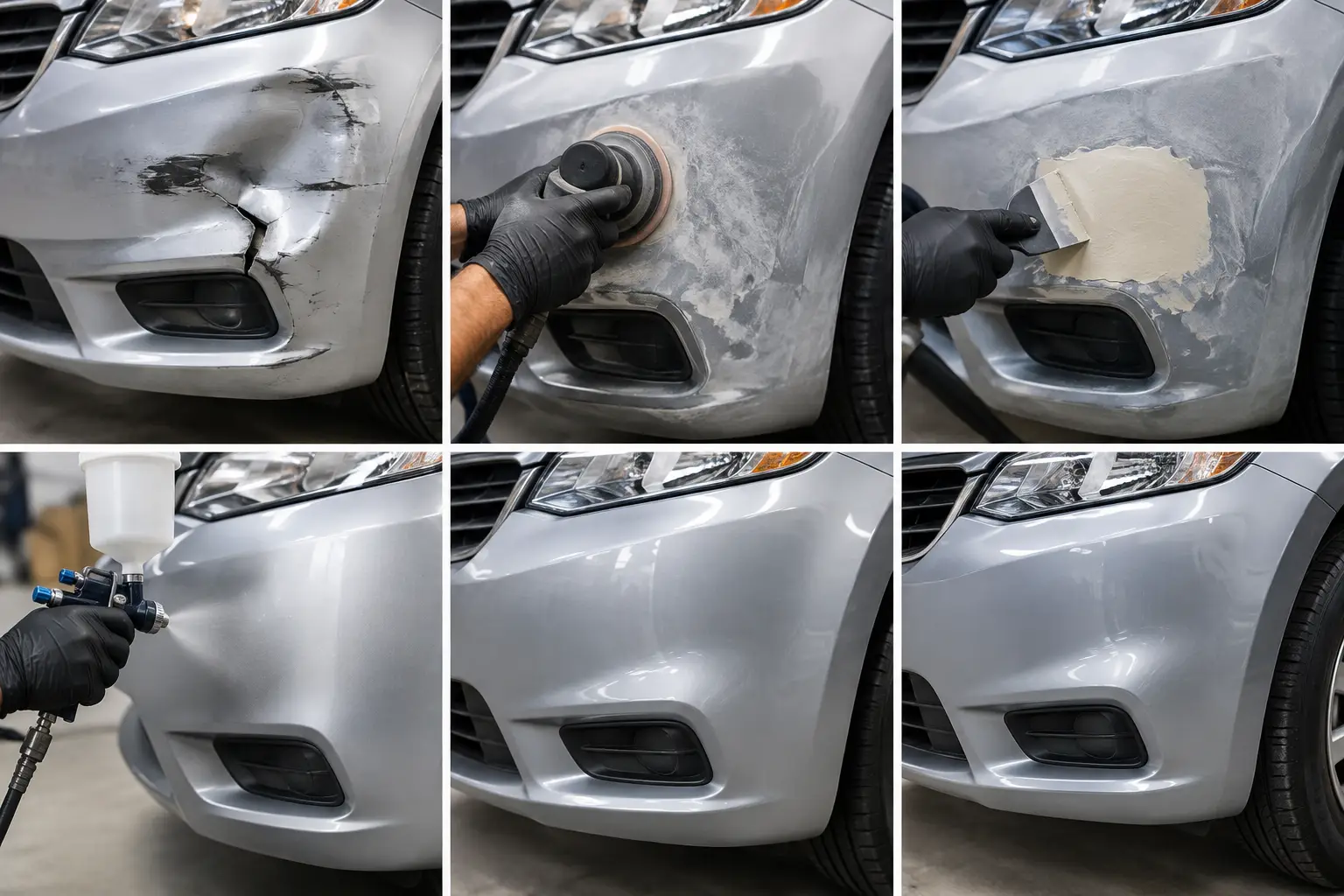
A parking-lot bump can leave behind more than an annoying scuff. It can crack a bumper cover, loosen mounting points, damage hidden brackets, or affect parking sensors. This bumper repair example shows how a professional body shop decides whether a damaged bumper can be repaired or needs replacement, and what Houston-area drivers can expect along the way.
A realistic bumper repair example
Imagine a late-model SUV that is backed into a concrete post at low speed. The rear bumper has a six-inch crease near the corner, several deep paint scratches, and a small split in the plastic close to the wheel opening. The vehicle drives normally, but one parking sensor occasionally gives a false warning.
From the outside, this may look like a simple paint job. A proper inspection tells a fuller story. The technician checks the bumper cover, reinforcement bar, absorber material, mounting tabs, lower trim, sensor locations, wiring, and the panels around the bumper. The goal is not just to make the surface look better. It is to restore fit, appearance, and the safety-related parts behind the cover.
In this case, the bumper cover itself may be repairable if the split is limited, the mounting tabs are intact, and the plastic has not stretched beyond a reliable repair. The sensor issue could be caused by a shifted sensor bracket, a loose connector, or damage to the sensor itself. Those items need to be addressed before the bumper is refinished.
What the repair process looks like
Once the estimate is approved, the repair begins by removing the bumper cover. Removal gives the technician access to hidden damage that cannot be seen with the bumper installed. It also prevents overspray on nearby panels and allows sensors, trim, lamps, and wiring to be handled correctly.
The damaged area is cleaned and sanded to remove loose paint and prepare the plastic. For a repairable crack or split, the technician uses the appropriate plastic repair materials and reinforcement method for that bumper type. The repaired area is shaped until it matches the original contour. Deep scratches and low spots are leveled with compatible repair products, then block-sanded for a smooth finish.
After the bumper surface is straight, it receives primer and is sanded again to prepare for color. The bumper is painted to match the vehicle, then clear-coated for gloss and protection. Depending on the vehicle’s color, age, and the location of the repair, blending into an adjacent panel may be recommended. This is especially common with metallic, pearl, and faded colors, where painting only one panel may leave a visible difference in certain light.
Before reinstallation, the shop inspects or replaces damaged brackets and confirms that sensors and wiring are secure. After the bumper is back on the vehicle, panel gaps are checked, parking sensors are tested, and any required calibration procedures are performed. A bumper that looks good but has a warning light or unreliable safety feature is not a finished repair.
When bumper repair makes sense
Repair is often a good option when the bumper has surface scratches, paint transfer, a shallow dent, or a limited crack in an area that can be reinforced properly. Repairing an original bumper cover can be more cost-effective than replacing it, particularly when the damage is localized and the surrounding brackets and components are undamaged.
The decision depends on more than the size of the scratch. The location matters. A crack near a mounting tab, sensor opening, or area that carries stress may be less suitable for repair. So does the bumper material. Most modern bumper covers are plastic, but different plastics require different repair methods and materials.
A skilled repair can preserve the vehicle’s appearance without replacing a part unnecessarily. Still, repair is not always the lower-cost or better long-term choice. If the bumper is badly stretched, torn in multiple places, warped by heat, or missing mounting tabs, replacement can provide a more dependable result.
When replacement is the better choice
Replacement is generally recommended when damage affects the bumper’s structural support pieces, sensor mounts, or the way the cover attaches to the vehicle. A bumper cover may also need replacement if it has extensive cracking, severe deformation, or previous repairs that have failed.
In the SUV example, the recommendation could change quickly if the inspection finds a broken reinforcement bar behind the cover. That bar helps manage impact energy in a collision. It is not a cosmetic part, and it should not be ignored simply because the exterior damage appears minor.
Replacement may also make more sense when an original equipment bumper is available at a reasonable cost and labor to repair a heavily damaged cover would approach the cost of a new one. A trustworthy body shop should explain that trade-off clearly rather than automatically choosing the most expensive option.
Why sensors and hidden damage change the estimate
Modern bumpers often hold parking sensors, radar equipment, cameras, blind-spot monitoring components, fog lights, reflectors, and wiring harnesses. Even a low-speed impact can shift one of these parts enough to affect its operation.
That is why an accurate estimate sometimes requires partial disassembly. A visual estimate is a starting point, but hidden damage can only be confirmed once the bumper cover comes off. If additional damage is found, the repair plan may need to be updated for insurance approval.
For vehicles equipped with advanced driver-assistance features, calibration may be required after a bumper repair or replacement. This is not an optional cosmetic step. If a sensor or radar component has been moved, damaged, or replaced, calibration helps ensure the system works as designed.
How insurance can apply to bumper damage
If another driver caused the accident, their liability coverage may pay for the repair. If you caused the damage or cannot identify the responsible driver, collision coverage may apply if your policy includes it. Your deductible and the repair cost will help determine whether filing a claim makes financial sense.
Take clear photos before cleaning the damage, including close-up photos and wider photos that show the vehicle’s full rear or front end. Keep the other driver’s information and any incident report if one is available. A repair shop can prepare a written estimate and communicate with the insurance company about the needed work.
For drivers in Southwest Houston, Stafford, Sugar Land, and Houston 77083, having a local shop handle insurance coordination can remove a major part of the stress. Sosa Automotive Group provides free estimates and can work directly with insurance carriers while the repair details are being finalized.
What affects bumper repair time
A small scuff repair may be completed relatively quickly, while a cracked bumper with sensor damage can take longer. The biggest variables are parts availability, insurance authorization, paint curing time, hidden damage, and whether calibration is needed.
Paint work should not be rushed. Proper surface preparation, primer application, color matching, and clear coat curing all affect how the repair looks months later, not just on pickup day. If a replacement bumper arrives unpainted, the shop must also prepare and refinish it before installation.
Ask the shop for a realistic timeline based on the damage they can confirm, while understanding that disassembly may reveal additional needs. Clear communication is more useful than a quick promise that cannot be kept.
What to ask before approving the work
Start by asking whether the bumper cover can be safely repaired or whether replacement is recommended, and why. Ask whether the estimate includes brackets, absorbers, sensors, trim, paint materials, blending, and calibration where applicable. These details help prevent surprises and show whether the repair plan accounts for the full condition of the vehicle.
Also ask how the shop will verify sensor operation after reassembly and whether there is any hidden damage that can only be confirmed after the bumper comes off. A clear answer is a good sign that the repair is being handled carefully rather than treated as a quick cosmetic fix.
A damaged bumper does not always mean a major repair, but it deserves more than a glance and a can of touch-up paint. A free professional estimate can show whether your vehicle needs a focused repair, a replacement part, or attention to components you cannot see from the driveway.