
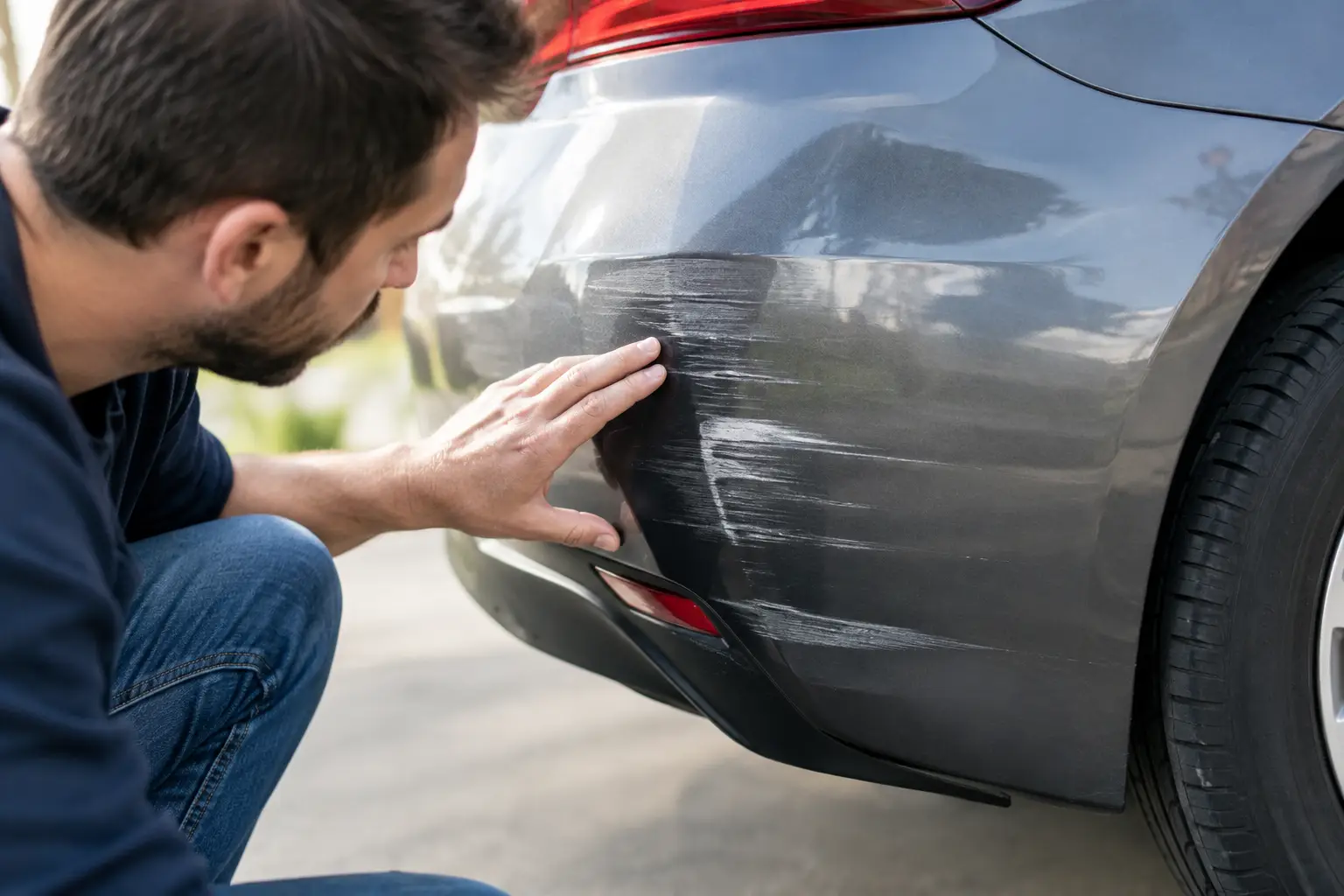
A parking-lot scrape can look minor from a few feet away, but the bumper often tells a different story up close. White paint transfer, dull marks, gouges, and peeling clear coat can make an otherwise dependable vehicle look neglected. The right approach to bumper scuff removal depends on whether the damage is sitting on top of the paint or has cut through it.
For drivers in Southwest Houston, that distinction matters. A quick polish may improve a light scuff, but trying to buff a deep scrape can leave the area uneven, thin the surrounding finish, or hide damage that needs proper repair. Knowing what you are looking at helps you make a practical decision before spending money on a temporary fix.
What a bumper scuff actually means
Not every mark on a bumper is damage to your vehicle’s paint. Many low-speed contacts leave paint transfer behind, especially when your bumper brushes against another car, a painted post, a shopping cart, or a garage wall. That transferred material can look dramatic, but it may come off without repainting.
A true scuff is different. It occurs when friction damages the clear coat, color coat, or plastic surface underneath. Modern bumpers are usually made from flexible plastic, so they can absorb a light impact without cracking. That flexibility is useful, but it also means the paint can stretch, scrape, or separate from the bumper cover.
Start by looking at the area in good light. If the mark feels smooth and seems to sit on the surface, it may be transfer or light clear-coat damage. If your fingernail catches in the scratch, if you can see black plastic or a different color below the finish, or if the bumper is dented or split, the repair is likely more involved.
When bumper scuff removal can be simple
Light surface marks are often the best candidates for a basic correction. A technician may first wash and decontaminate the area, then carefully remove transfer with an appropriate cleaner. If the clear coat has only light haze or shallow scratching, machine polishing can restore much of the gloss.
This type of repair has a clear advantage: it can preserve the original paint and may be faster than refinishing a full section. It is also the right choice when the finish has not been broken. The trade-off is that polishing cannot replace paint that is missing, and it cannot make a deep groove disappear.
Be cautious with household products and aggressive rubbing compounds. Some online tricks can dull the clear coat, stain textured plastic trim, or create a shiny patch that does not match the rest of the bumper. What looks better immediately after a driveway repair may become more noticeable in direct Texas sunlight.
Signs your bumper needs paint repair
Bumper scuff removal usually requires paint repair when the scrape reaches beyond the clear coat. Exposed plastic, visible primer, peeling paint, or a rough gouge are strong signs that polishing alone will not be enough. A repaired area also needs to be properly prepared so the new finish bonds to flexible bumper material and holds up over time.
The repair process may involve sanding the damaged area, smoothing minor gouges, applying adhesion products and primer, matching the vehicle’s color, and applying clear coat. Depending on the location and color, a body shop may blend the paint into adjacent areas to avoid a visible difference between old and new paint.
Color matching deserves special attention. White, silver, pearl, metallic, and tri-coat finishes can be difficult to match with a small touch-up bottle. Age, sun exposure, and previous repairs can slightly change how the original paint looks. A professional refinish is not simply about covering the scuff. It is about restoring a finish that looks right from different angles and in different light.
Damage behind the bumper cover
A scuff can sometimes be the only visible clue of a harder impact. If the bumper is loose, misaligned, cracked, pushed inward, or has gaps near the fender or trunk, have it inspected. The bumper cover may have damaged clips, brackets, absorbers, or sensors behind it.
This is especially relevant on newer vehicles with parking sensors, blind-spot monitoring, cameras, or radar equipment. Cosmetic damage may be only part of the repair. A shop should check the affected area and discuss whether any sensor inspection or calibration is needed.
Should you use a DIY kit or visit a body shop?
DIY products can be reasonable for very light paint transfer or small clear-coat scuffs on an older vehicle, particularly if you are comfortable accepting an imperfect result. They are less reliable for deep scratches, metallic colors, textured bumper surfaces, and damage near sensors or body lines.
Touch-up paint can protect a small exposed spot from looking worse, but it rarely creates the smooth, even appearance of a professional repair. The paint may not match exactly, and built-up touch-up material can be more noticeable than the original scratch. It is best viewed as a short-term cosmetic measure, not a full restoration.
A body shop is generally the better choice when you want the bumper to look right, when damage is larger than a small spot, or when there may be impact-related issues underneath. An estimate lets you compare the repair options before committing. In some cases, spot repair makes sense. In others, refinishing a larger portion of the bumper provides a more consistent result.
Will insurance cover a scuffed bumper?
Insurance coverage depends on how the scuff happened and the terms of your policy. If another driver caused the damage, their liability coverage may apply. If the damage resulted from a collision with an object, your own collision coverage may apply after your deductible.
For a small cosmetic repair, it is worth comparing the estimate with your deductible before filing a claim. If the repair cost is close to or below the deductible, paying directly may be simpler. If there is cracking, sensor damage, or other hidden damage, the total can be higher than it first appears, making an insurance claim more practical.
Keep photos of the damage, note the date and location, and avoid delaying an inspection if the bumper is loose or cracked. A local repair shop can provide a clear estimate and help explain what the repair involves. If you decide to file a claim, a shop experienced with insurance coordination can also reduce some of the back-and-forth.
How to protect the repair after the work is done
Once the bumper has been repaired or refinished, give the new paint time to cure according to the shop’s instructions. Avoid harsh chemicals, abrasive cleaners, and automated car washes with stiff brushes during the initial curing period. Hand washing with a clean mitt and mild automotive soap is the safer choice.
Parking habits can also prevent repeat damage. Pulling into a space slowly, leaving room near concrete stops, and using camera or sensor guidance can help. Houston-area parking lots are busy, and many bumper scuffs happen during ordinary errands rather than major accidents.
At Sosa Automotive Group, drivers can request a free estimate for bumper damage and get straightforward guidance on whether the finish can be corrected, repaired, or needs more extensive body work. A small scuff should not create unnecessary stress, but it also should not be dismissed if the paint is broken or the bumper no longer fits correctly. Getting an experienced set of eyes on it is often the fastest way to move forward with confidence.