
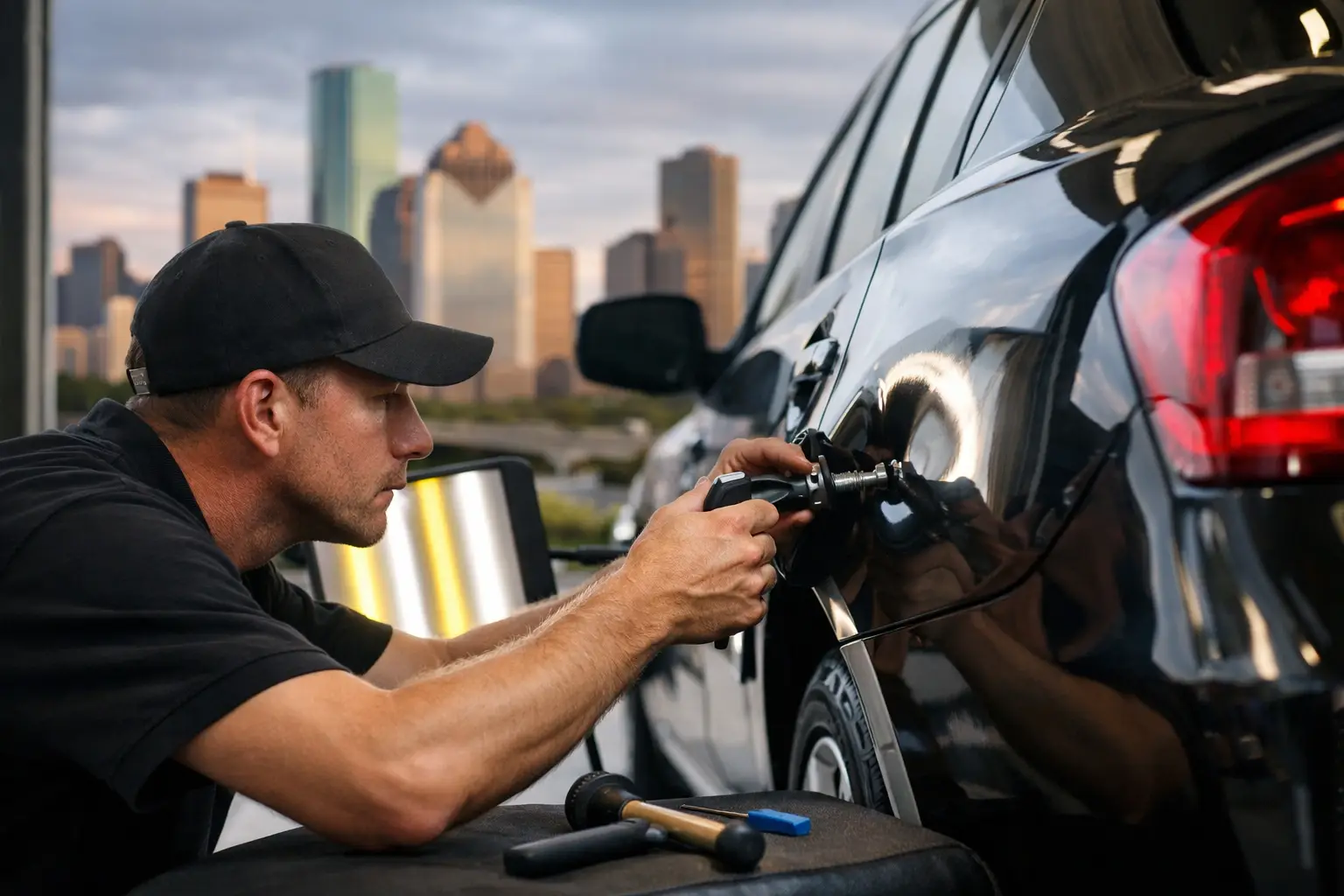
A shopping cart door, a tight parking space, or a sudden hailstorm can leave a dent that is hard to ignore every time you walk up to your vehicle. This car dent repair guide helps Houston-area drivers understand what kind of damage they have, which repairs make sense, and when it is smarter to let a qualified body shop take over.
A dent is not always just cosmetic. Damage near a door edge, wheel opening, bumper mount, sensor, or body line can affect how parts fit and function. The right repair depends on the dent’s location, depth, paint condition, and whether the impact caused hidden damage behind the panel.
Car Dent Repair Guide: Start With the Damage
Before deciding on a repair, look at the panel in good daylight and from several angles. A shallow, rounded dent with unbroken paint is very different from a sharp crease that has stretched the metal or cracked the finish.
Paintless dent repair may be a good option when the metal is not badly stretched and the paint remains intact. This process uses specialized tools to carefully work the panel back into shape from behind or, in some cases, pull the dent outward from the exterior. It can preserve the factory paint and often takes less time than conventional body repair.
Conventional dent repair is usually the better choice when there is a crease, paint damage, a deep impact, or limited access behind the panel. The technician may reshape the metal, use body filler where needed, prime the repaired area, and refinish the panel to restore its appearance and protection.
The size of a dent matters, but it is not the only factor. A small dent on a sharp body line can be more difficult to repair than a larger, smooth dent in the middle of a door. Likewise, plastic bumpers respond differently from steel or aluminum panels and may need a different repair approach.
When You Can Wait and When You Should Act
A minor door ding with no chipped paint is usually not an emergency. Still, getting an estimate soon can help you make a clear decision before the damage becomes another item on a growing repair list.
Do not put off an inspection if bare metal is exposed. Houston heat, humidity, and rain can speed up corrosion once the protective paint layer is broken. Rust can spread beneath the paint, turning a small repair into a larger bodywork job.
You should also schedule a professional inspection promptly if the dent affects any of the following areas:
- A door that sticks, will not latch, or has a gap around its edge
- A bumper that is loose, split, or sitting out of position
- A fender near a tire that may rub during turns or over bumps
- A panel near parking sensors, cameras, lights, or radar components
- Any area damaged in a collision where you also notice steering, suspension, or warning-light concerns
These issues can point to more than a surface dent. Even a low-speed impact can bend brackets, break clips, damage inner panels, or move parts that need proper alignment.
Avoid DIY Dent Repair Shortcuts
Online dent-removal videos make some repairs look simple. A suction cup, glue tab, heat gun, or hot water method may appear to work on a shallow dent, but the result depends heavily on the panel material and the location of the damage.
The biggest risk is creating a worse problem. Excessive pulling can distort the panel, stretch the metal, or pop the dent too far outward. Heat can damage modern paint finishes, plastic parts, wiring, adhesives, and nearby sensors. Glue-pulling tools can also lift weak or previously repaired paint.
A do-it-yourself attempt may be reasonable only for a very minor dent on an older vehicle when you are comfortable accepting an imperfect result. It is generally not worth the risk on a newer vehicle, a leased vehicle, a vehicle with premium paint, or a dent on a body line or panel edge.
Do not use dry ice, boiling water, or improvised tools on painted body panels. These methods can cause paint cracking or create damage that is harder to repair cleanly. Saving a little money upfront is rarely a good trade if the panel later needs filler and repainting.
What a Professional Dent Repair Estimate Should Cover
A clear estimate should explain the type of repair recommended and why. It should identify whether paintless dent repair is possible or whether the panel needs conventional bodywork and paint.
For painted repairs, ask whether the estimate includes preparation, primer, color matching, clear coat, and blending into adjacent panels if necessary. Blending is sometimes needed because paint color can vary with age, sun exposure, and the original factory finish. It is not an upsell by default - it can be the difference between a repair that stands out and one that looks natural.
The estimate should also account for removing and reinstalling trim, handles, lights, liners, sensors, or other parts needed to access the damage correctly. Skipping proper disassembly may save time, but it can leave rough edges, missed damage, or an incomplete repair.
At Sosa Automotive Group, local drivers can request a free estimate and get help with the repair process, including insurance coordination when collision damage is involved. For families and commuters in Southwest Houston, Stafford, Sugar Land, and Houston 77083, that support can remove a major source of stress after an accident.
Insurance Claims for Dent and Collision Damage
If another driver caused the damage, take photos before cleaning or attempting any repair. Photograph the dent from close range and farther back, include the surrounding panel, and note the date, location, and other driver’s information if applicable.
Whether you should file a claim depends on your deductible, the repair cost, and the circumstances of the incident. A small dent that costs less than or close to your deductible may be simpler to pay for directly. A larger dent with damaged paint, broken parts, or collision-related concerns may justify opening a claim.
You have the right to choose the repair shop you want to use. An insurance company may suggest a network facility, but the repair decision should be based on the shop’s experience, communication, repair plan, and ability to stand behind the work. A good body shop can document visible damage, identify related repair needs, and communicate with the insurer if additional damage is found during disassembly.
Keep in mind that an initial insurance estimate is not always the final repair amount. Some damage cannot be seen until trim, bumpers, or panels are removed. When that happens, the shop submits documentation for the additional work rather than cutting corners to fit an incomplete estimate.
Protecting Your Vehicle After the Repair
Once the dent is repaired and painted, follow the shop’s care instructions. Fresh paint needs time to cure. Avoid harsh chemicals, abrasive polishing, and automatic car washes with aggressive brushes until the recommended curing period has passed.
For the long term, regular washing helps remove road film, tree sap, and contaminants that can dull the finish. If you park outside often, try to avoid crowded spaces, keep distance from loose carts, and be mindful of areas with heavy hail exposure during storm season. These habits will not prevent every dent, but they reduce the everyday risks.
The best next step is usually simple: get the dent looked at before guessing at a fix. A straightforward estimate can tell you whether the repair is quick and paint-free or whether the damage needs more careful body and paint work to protect your vehicle properly.