
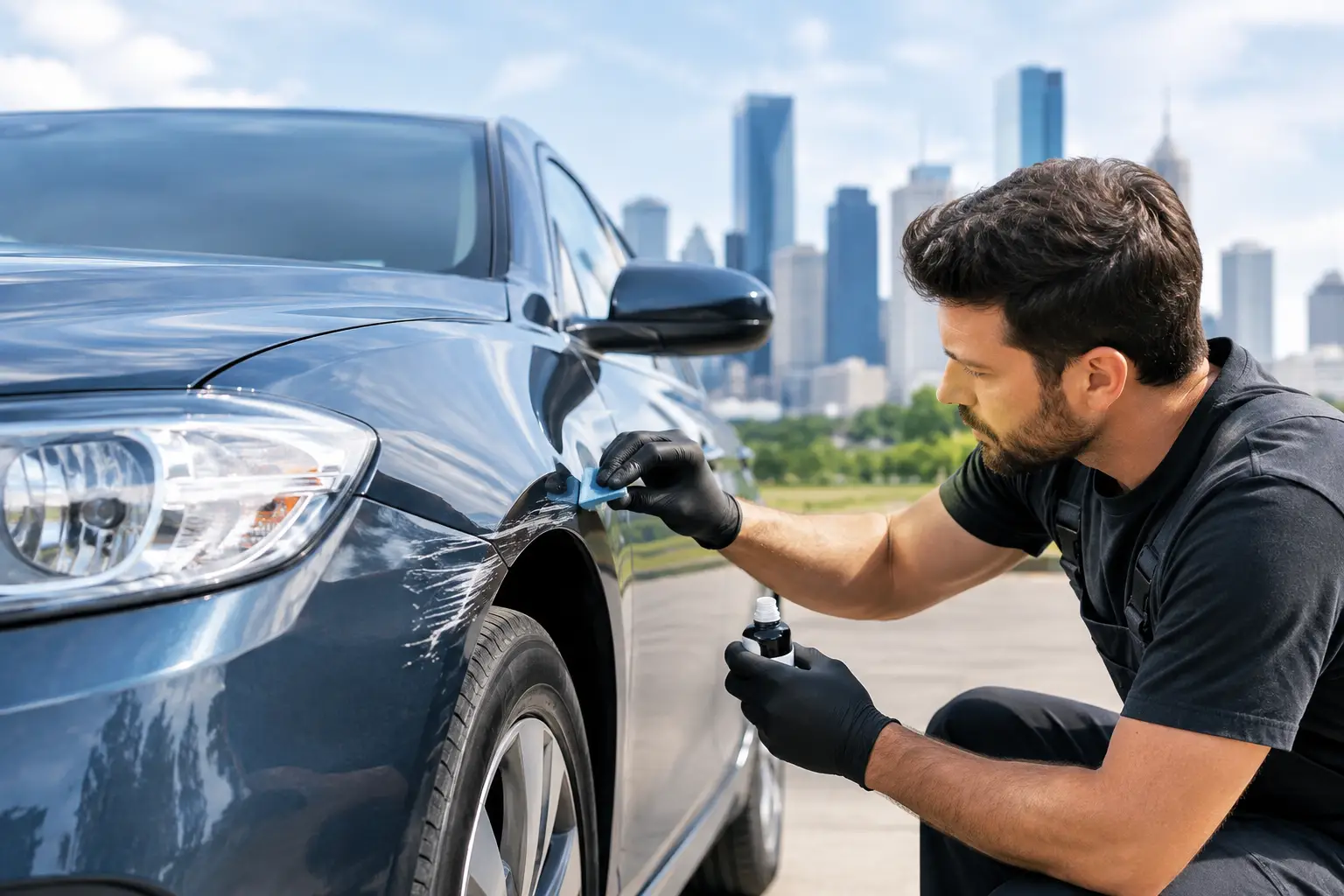
A door ding at the grocery store, a bumper scrape in a crowded parking lot, or paint damage after a collision can make a reliable vehicle look neglected fast. This car paint repair guide helps Houston-area drivers understand what kind of damage they have, what repair may be needed, and when a professional body shop is the better choice.
Paint repair is not always just about appearance. Exposed metal can rust, cracked paint can spread, and damage around a bumper, fender, or door may point to a deeper issue underneath. Taking a close look early can help you avoid a larger repair later.
A Car Paint Repair Guide Starts With the Damage
The right repair depends on how far the damage goes. A mark that looks like a scratch may only be paint transfer from another vehicle. In other cases, the scratch has cut through the clear coat, color coat, and primer. Those repairs require different materials, preparation, and time.
Start by washing the affected area with regular car soap and water. Dirt can make a shallow mark appear worse than it is. Once the panel is clean, look at the damage in good light and run a fingernail gently across it. If your nail does not catch, the damage may be limited to the clear coat or surface transfer. If it catches, the scratch is likely deeper.
Paint transfer is often a different color than your car and may sit on top of the finish. Light scuffs can sometimes be improved with professional polishing. Do not assume every mark can be buffed out, though. Aggressive polishing can thin the clear coat and create uneven shine.
A scratch that shows white, gray, black, or bare metal needs more attention. White or gray may be primer. Black may be plastic on a bumper or a coating beneath the paint. Bare metal should be protected promptly, especially during Houston's wet weather, because moisture can start corrosion where the paint seal has failed.
Know When a Touch-Up Is Enough
Touch-up paint can work well on very small chips, such as rock chips on a hood or a pinpoint scratch away from high-visibility areas. Its main job is to seal the damaged spot and reduce the chance of rust. It is not usually the best way to make a repair disappear completely.
For a successful touch-up, the surface must be clean, dry, and free of rust. The correct factory paint code matters more than simply choosing a color that looks close. Even with the right code, paint can vary slightly with age, sun exposure, and previous repairs.
A DIY touch-up is reasonable when the damage is small and you are comfortable with a repair that may remain visible up close. It is less suitable for a long key scratch, a chipped edge on a door, damage across several panels, or any area where the paint has lifted or rust has begun.
Spray-can repairs can be tempting because they seem quick and inexpensive. The trade-off is that matching the color, blending the edges, controlling overspray, and recreating a smooth finish take real skill. A repair that starts as a small spot can leave a noticeable patch if the panel is not prepared and refinished correctly.
When Professional Paint Repair Makes More Sense
Professional repair is the practical choice when the damage reaches primer or metal, covers a large area, includes a dent, or happened in an accident. A body shop can assess the panel beneath the paint instead of treating only the visible mark.
For example, a scraped bumper may need more than paint if the plastic is torn, the mounting tabs are loose, or sensors were affected. A dented fender can require metal shaping and filler work before any color is applied. Painting over damage without correcting the panel first can leave the repair visible and may lead to peeling later.
A proper paint repair commonly involves cleaning and sanding the area, repairing the panel, applying primer when needed, matching the color, blending adjacent areas if necessary, and applying clear coat. The panel then needs time to cure before final polishing. The exact process depends on the vehicle, paint type, location of the damage, and condition of the surrounding finish.
Color matching is particularly important on pearl, metallic, and tri-coat finishes. These colors can look different depending on how the paint is sprayed and viewed in sunlight. A qualified shop uses paint-matching tools and spray-out testing to get as close as possible before refinishing the vehicle.
Do Not Ignore Damage After a Collision
After a collision, paint damage is often the most obvious part of the problem, but it may not be the only part. A cracked bumper cover, misaligned hood, uneven door gap, or broken headlight mount can affect the vehicle's appearance, operation, and safety.
Take photos before cleaning or attempting a repair, particularly if you may file an insurance claim. Document the overall vehicle, close-ups of each damaged area, and the accident scene if it is safe to do so. This gives your insurance company and repair shop a clearer picture of the damage.
You do not have to settle for a quick cosmetic fix when an accident caused the problem. Ask for a complete estimate that addresses body damage, paint work, and related parts. If hidden damage is found after disassembly, that is not unusual. Modern vehicles have components behind bumper covers and panels that cannot be fully inspected from the outside.
For drivers dealing with an insurance claim, having a repair shop that can communicate with the insurer can reduce some of the stress. Keep your claim number, adjuster information, and photos available when requesting an estimate.
Houston Weather Changes How You Should Protect Paint
Houston heat, humidity, strong sun, highway debris, and sudden rain can all be tough on a vehicle's finish. Once clear coat or paint is damaged, the surface has less protection from those conditions.
Wash bird droppings, tree sap, bug residue, and road grime off as soon as practical. These contaminants can stain or etch the clear coat when they sit in direct heat. Use a clean microfiber towel and proper automotive cleaning products rather than household cleaners, which can dull or damage the finish.
Wax or paint sealant can help protect intact paint, but it will not fix scratches, chips, peeling clear coat, or oxidation. If clear coat is failing, the durable solution is usually to refinish the affected panel. Adding wax may improve the appearance briefly, but it cannot restore a failing paint layer.
Parking in a garage or shaded area helps when available, but regular care still matters. Keep a safe distance from construction trucks and gravel haulers, avoid parking close to shopping cart returns, and inspect the vehicle after road trips. Small chips are much easier to manage before they become corrosion problems.
Questions to Ask Before Approving a Paint Repair
Before you approve work, make sure you understand whether the estimate covers a spot repair, a full panel refinish, or blending into nearby panels. A lower estimate is not automatically a better value if it leaves visible edges, skips necessary body preparation, or does not address damaged parts.
Ask whether the shop found dents, cracks, rust, or alignment issues in addition to the paint damage. You can also ask how the color will be matched and whether the repair includes a warranty. Clear answers help you compare estimates fairly.
If the vehicle is leased or newer, quality matters even more. Visible mismatched paint or incomplete repairs can affect its value and may create issues at lease return. On an older daily driver, a targeted repair may be the more practical choice. The best approach depends on the vehicle's condition, your budget, and how long you plan to keep it.
A free estimate gives you a starting point without pressure. At Sosa Automotive Group, drivers in Houston, Stafford, Sugar Land, and Southwest Houston can get experienced guidance on collision damage, body work, and paint repair while receiving help with insurance coordination when needed.
The best next step is simple: protect any exposed metal, avoid covering accident damage with a rushed DIY fix, and have a trusted local shop inspect the vehicle before a small paint issue turns into a larger repair.