
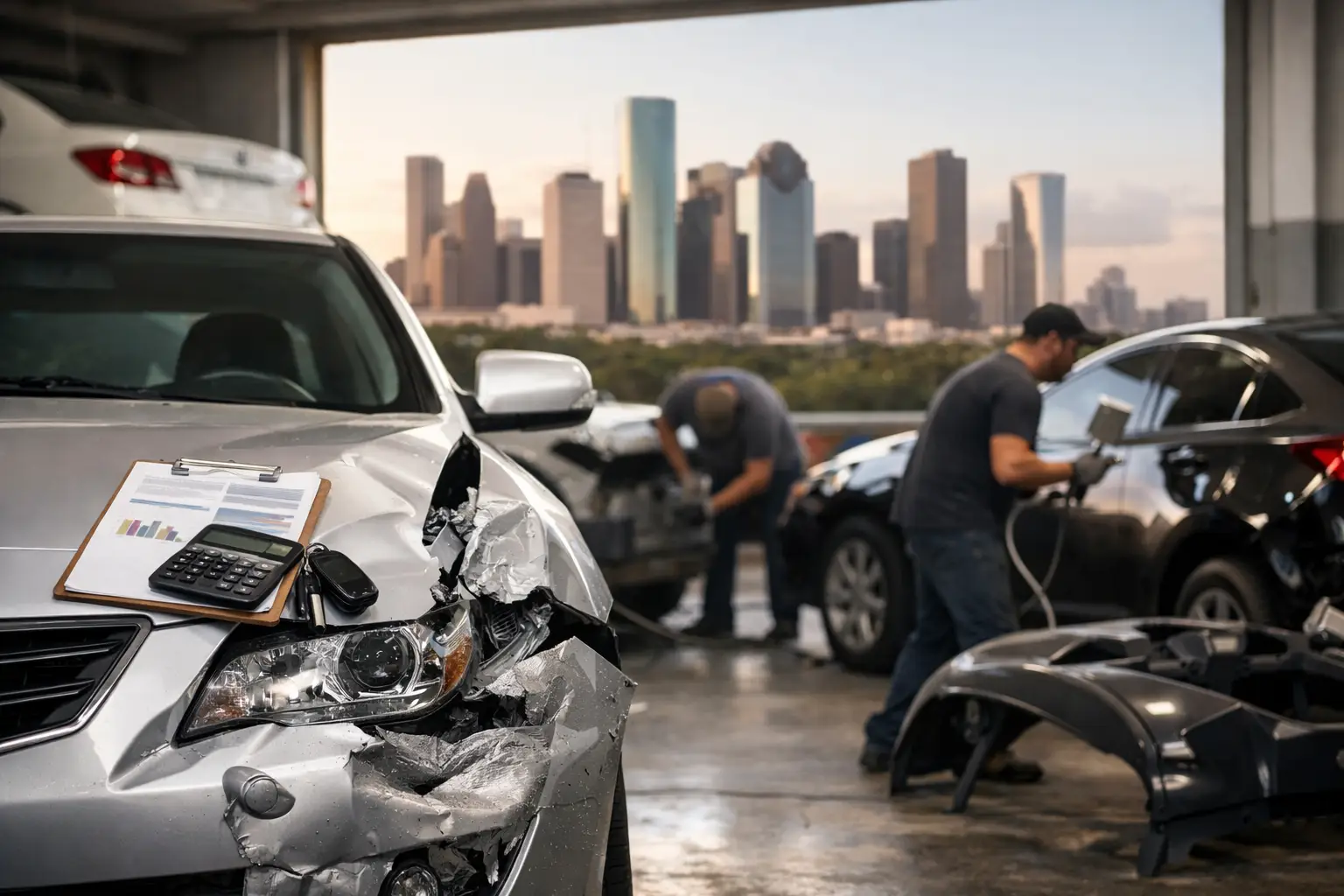
A bumper that looks like a minor scrape can still involve parking sensors, brackets, paint blending, and hidden damage behind the cover. That is why a reliable collision repair cost guide starts with an inspection, not a guess based on what is visible from the driveway.
For drivers in Houston, Stafford, Sugar Land, and Southwest Houston, repair costs can range from a few hundred dollars for light cosmetic work to several thousand dollars after a more serious impact. The right repair depends on your vehicle, the location of the damage, the parts needed, and whether the collision affected safety systems.
What Determines Collision Repair Cost?
Collision repair is not one service with one price. A quality estimate accounts for the parts, labor, materials, paint work, and diagnostic procedures needed to restore the vehicle properly. Two cars with similar-looking damage may require very different repairs.
The first major factor is the damaged area. A dent in a door may be repairable, while a cracked bumper cover or broken headlight may require replacement. Damage near the front or rear of a newer vehicle can also affect cameras, radar sensors, parking assistance, adaptive cruise control, or blind-spot monitoring equipment.
Vehicle make and model matter, too. Parts for a common sedan may be easier to source than parts for a late-model luxury vehicle, truck, hybrid, or vehicle with specialized safety equipment. Aluminum panels, premium paint colors, and advanced electronics can also increase labor time and material costs.
Finally, hidden damage often changes an estimate after the vehicle is taken apart. A bumper cover can hide damage to absorbers, reinforcement bars, mounts, cooling components, or structural pieces. This is not necessarily a sign that the first estimate was wrong. It means the full extent of damage was not visible until disassembly began.
Collision Repair Cost Guide: Common Price Ranges
The following ranges are general planning figures, not a substitute for a free in-person estimate. Houston-area labor rates, vehicle parts availability, and the severity of damage all affect the final cost.
- Paintless dent repair: Often $150 to $800 for small dents where the paint is intact and the panel can be accessed.
- Minor bumper repair and paint: Commonly $500 to $1,500 for repairable scuffs, cracks, or dents that need refinishing.
- Bumper replacement: Often $1,000 to $3,000 or more once parts, paint, sensors, calibration, and labor are included.
- Door, fender, or quarter-panel repair: Usually $800 to $3,500, depending on whether the panel can be repaired or must be replaced.
- Major collision repairs: Can exceed $5,000 when there is frame or structural damage, multiple damaged panels, airbag deployment, suspension damage, or mechanical repairs.
Paint work deserves special attention. Repairing one panel may require blending color into adjacent panels so the finished vehicle has a consistent appearance. This is especially common with metallic, pearl, tri-coat, and sun-faded finishes. A lower price that skips proper prep or color blending may look acceptable at pickup, then show mismatched color, peeling, or rough texture later.
Labor, Parts, and Materials All Matter
An auto body estimate usually includes body labor, paint labor, paint materials, replacement parts, and any necessary mechanical or diagnostic work. Labor is not simply the time spent pulling a dent. It also covers removing trim, protecting surrounding panels, preparing surfaces, masking, sanding, priming, refinishing, reassembling, and checking the completed repair.
Parts may be original equipment manufacturer parts, aftermarket parts, or recycled parts, depending on the vehicle, availability, insurance policy, and your preferences. Each option has trade-offs. OEM parts are designed for the specific vehicle, while aftermarket or recycled parts may help control costs in some situations. A good shop should explain what is being used and why.
Why the First Estimate May Change
Many drivers are concerned when an insurance estimate or initial shop estimate changes. In collision repair, supplements are common because damage behind panels cannot always be confirmed before disassembly.
For example, a front-end impact may appear to need a bumper cover and grille. Once those parts are removed, the shop may find a damaged condenser, broken headlamp bracket, bent reinforcement bar, or sensor that needs replacement. The repair facility documents the additional damage and submits it to the insurer for review when the repair is part of an insurance claim.
The goal should not be to produce the lowest number before anyone looks closely. The goal is to identify the work needed to restore the vehicle safely and correctly. Clear communication throughout the process helps prevent surprises.
How Insurance Affects Your Out-of-Pocket Cost
If you are filing a collision claim, your out-of-pocket expense often depends on your deductible. With a $500 deductible, for example, the insurer may cover approved repair costs above that amount, subject to your policy terms and claim review.
Insurance estimates are often a starting point rather than the final repair plan. If additional collision-related damage is found, the repair shop can work with the insurance company on the supplement process. Keep your claim number, adjuster contact information, and policy details available to help the process move faster.
You can also ask the shop to explain which repairs are insurer-approved, which items may be pending, and whether there are any customer-pay choices. This is particularly helpful when you want to repair unrelated cosmetic damage at the same time as an accident repair.
Sosa Automotive Group provides free estimates and can help coordinate directly with insurance companies, reducing some of the administrative stress after an accident.
Saving Money Without Cutting Corners
The cheapest repair is not always the best value. Skipping a sensor calibration, using poor-quality materials, or accepting incomplete paint preparation can create problems that cost more later. Safety-related repairs should be completed according to the vehicle's needs, not reduced simply to make an estimate look smaller.
There are still practical ways to manage the cost. Start by getting a detailed estimate that separates repair labor, paint work, parts, and necessary procedures. Ask whether a panel can be repaired instead of replaced, but recognize that replacement may be the safer or more durable option when damage is severe.
If you are paying out of pocket, discuss part options before work begins. In some cases, recycled or aftermarket parts can be a reasonable choice. In others, especially where fit, electronics, or safety performance are involved, OEM parts may make more sense. The right answer depends on the vehicle and the damaged component.
Do not delay an inspection if a bumper, hood, door, light, or wheel was hit. Even if the vehicle still drives, loose components, damaged lights, tire contact, fluid leaks, or sensor warnings can point to issues that need prompt attention.
Choosing a Collision Repair Shop in Southwest Houston
Look for a local shop that can inspect both visible and hidden damage, explain the estimate in plain language, and communicate with your insurance company when needed. Experience matters because collision repair involves more than body panels. It can include paint matching, alignment concerns, safety-system diagnostics, and careful reassembly.
Ask how the shop handles supplements, whether it provides written estimates, and what to expect if parts are delayed. A dependable repair process includes updates, not silence. For busy families and commuters, knowing what stage the repair is in can make a difficult week much easier to manage.
Plan for Repair Time, Not Just Repair Cost
Repair time depends on the scope of damage and parts availability. A small paint repair may take a few days, while a larger collision repair can take longer due to inspections, insurance approvals, ordering parts, structural work, paint curing, and final quality checks.
A fast repair is helpful, but rushing the process can compromise the result. Proper repairs take time because the vehicle must be prepared, repaired, refinished, reassembled, and checked before it is returned to you.
After a collision, start with a free professional estimate and ask questions until you understand the repair plan. A clear explanation, a realistic timeline, and proper insurance coordination can turn an uncertain repair decision into a manageable next step.