
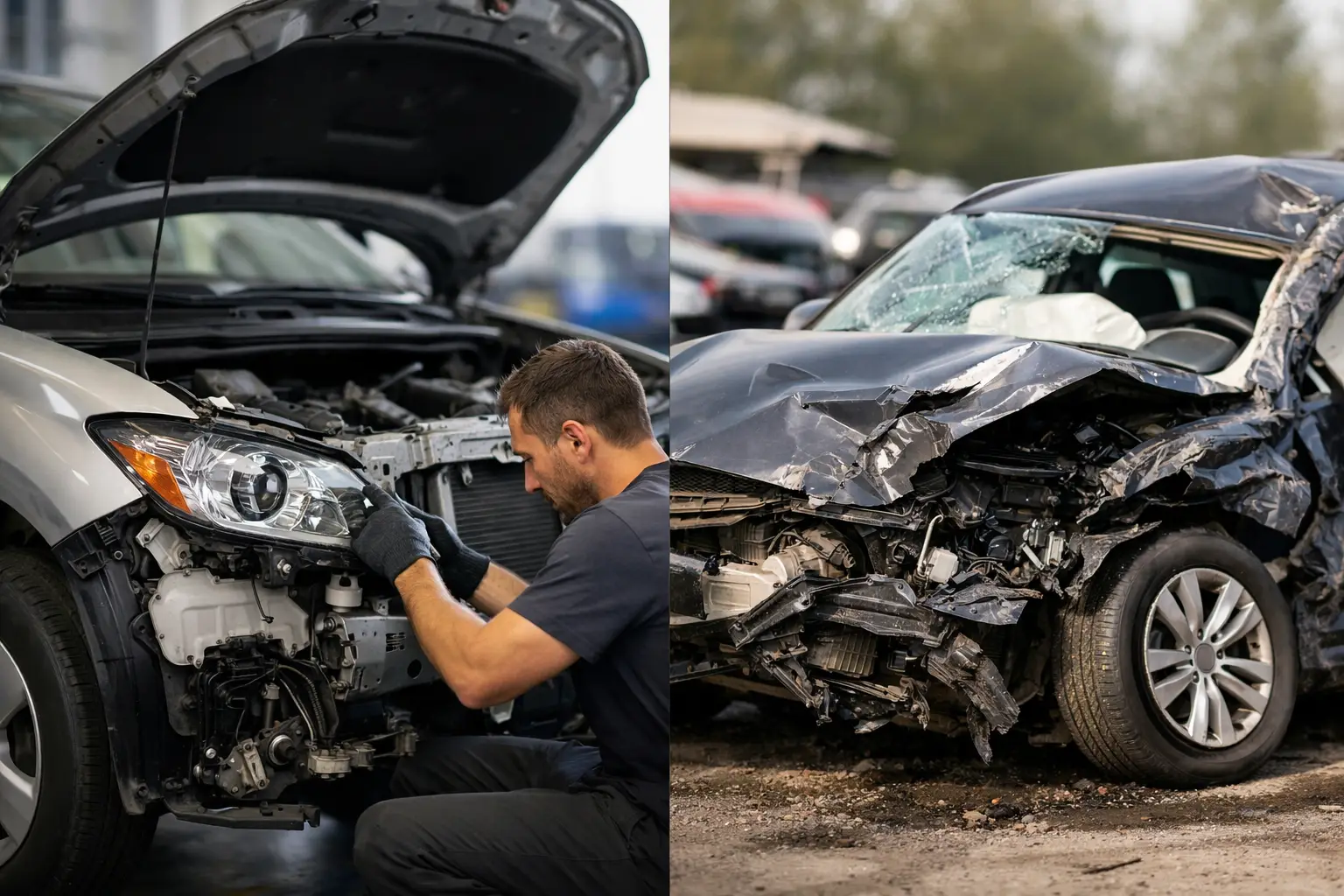
The question usually hits after the tow truck leaves and the first estimate starts to take shape: is this a case of collision repair or total loss? For most drivers, that decision affects everything from insurance paperwork to how soon life gets back to normal. If your vehicle was damaged in Houston, Stafford, Sugar Land, or Southwest Houston, knowing how that call gets made can save time, stress, and costly confusion.
A lot of people assume the answer depends only on how bad the car looks. Sometimes a bumper, fender, and hood can make a vehicle seem beyond repair when the structure is still fixable. Other times, damage that looks minor on the outside can involve frame issues, suspension problems, or hidden safety concerns that push the numbers in the other direction. The real decision comes down to value, repair cost, and whether the vehicle can be restored safely.
How insurers decide collision repair or total loss
Insurance companies do not usually make this decision based on appearance alone. They compare the cost to repair the vehicle against its actual cash value before the accident. Actual cash value is what the vehicle was worth on the local market right before the collision, taking into account age, mileage, condition, options, and prior wear.
If the repair cost gets too close to or exceeds that value, the insurer may declare it a total loss. In some cases, they also include expected supplemental damage. That matters because the first estimate is not always the final number. Once a shop begins disassembly, additional damage is sometimes found behind panels, under the vehicle, or around safety systems.
This is one reason the collision repair or total loss question can stay open for a few days. Early photos and a surface inspection are helpful, but they do not always tell the full story. A proper estimate and insurance review are what move the process forward.
What pushes a vehicle toward repair
A vehicle is more likely to be repaired when its market value is still strong and the damage is limited to areas that can be restored without compromising safety. Newer vehicles, well-maintained vehicles, and popular models often have enough value to justify repairs that might total an older car.
Parts availability also matters. If replacement panels, lights, sensors, and mechanical components are reasonably available, repair may make more sense. The same goes for damage that is concentrated in one section of the vehicle rather than spread across the front, side, suspension, and structural areas.
Good repair planning matters here. A thorough estimate should account for body work, paint work, parts, calibration needs, and labor. That gives both the customer and the insurer a clearer picture of whether the vehicle is a practical repair candidate.
Hidden damage changes the numbers
One of the biggest mistakes drivers make is assuming a low visible damage estimate means the car will definitely be repaired. Modern vehicles have a lot packed behind the exterior panels. Sensors, brackets, airbags, wiring, cooling components, and advanced driver assistance systems can all be affected in a crash.
That means a vehicle that looks repairable in the parking lot may move closer to total loss after teardown. It is frustrating, but it is also common. The goal is not to guess fast. The goal is to make the right call based on complete information.
What pushes a vehicle toward total loss
Older vehicles with lower market value reach the total loss threshold much faster. A car with high mileage, prior damage history, or worn condition may not support the cost of extensive body and structural repair, even if it still runs.
Severe frame damage, airbag deployment, flood exposure, or multiple impact points can also change the decision quickly. These issues often involve more than replacing parts. They can require extensive labor, safety inspections, calibrations, and additional mechanical repairs that add up fast.
There is also a practical side to this. Even when a car can technically be repaired, the insurer may still total it if the economics do not make sense. That can be hard to hear if you know the vehicle has been dependable for years, but the insurance decision is based on value, not sentimental attachment.
Why the first estimate is not the final answer
Drivers often feel stuck when one person says repairable and another says total loss. The reason is simple: early estimates are often written before full disassembly. Once damaged parts come off, a more accurate repair plan can be built.
This is where experience matters. A shop that handles insurance claims every day knows how to document visible damage, likely supplemental damage, and the labor needed to restore the vehicle properly. Clear documentation helps reduce delays and gives the insurer what it needs to make a decision.
For the customer, it also means fewer surprises. Nobody wants to hear one number on day one and a very different number later without explanation. A direct, honest review of the damage is always better than false optimism.
If your car is repairable, what to expect next
If the vehicle is approved for repair, the process usually moves into parts ordering, teardown if needed, body repair, paint work, reassembly, and final inspection. Depending on the accident, there may also be alignments, suspension checks, and calibration of cameras or sensors.
This is where choosing the right shop matters. Collision work is not just about making a car look good again. It is about restoring structural integrity, finish quality, and the systems you rely on every day. That includes things you may never see once the repair is complete.
For local drivers, convenience matters too. Dealing with estimates, adjusters, photos, approvals, and repair updates can wear people down quickly. A shop that works directly with insurance can take a lot of pressure off during a stressful week.
If your car is declared a total loss
A total loss does not always mean the vehicle is destroyed beyond recognition. It means the insurer determined the repair is not economically reasonable based on its value. Once that happens, the insurance company typically calculates a settlement amount based on the vehicle's pre-accident value.
At that stage, paperwork becomes just as important as the damage itself. You may need to review the valuation report, remove personal items, arrange payoff details if there is a loan, and understand how taxes, fees, or deductible issues apply. If something in the valuation looks off, it is worth asking questions early.
This is also the point where many people wish they had clearer guidance at the beginning. The collision repair or total loss decision does not just affect the car. It affects transportation, work schedules, family routines, and replacement planning.
Local damage, local help, faster answers
For drivers in Southwest Houston, one advantage of working with a neighborhood shop is speed and familiarity. A local team understands the urgency. You need a real estimate, clear communication, and help dealing with the insurance side without having to chase updates all over town.
That is why many customers look for a shop that offers free estimates and handles insurance coordination directly. Sosa Automotive Group has built its reputation around that kind of practical support for local drivers who need answers, not added hassle.
How to make the process easier on yourself
Right after an accident, take photos if you can do so safely, report the claim promptly, and avoid assuming the vehicle is either definitely repairable or definitely totaled. Let the estimate and inspection do the work. If the insurer asks where the vehicle should go for evaluation, choosing a trusted collision shop early can help avoid delays.
It also helps to keep your expectations flexible. Sometimes the car is clearly a repair candidate. Sometimes it is clearly a total loss. A lot of cases fall in the middle until the numbers are complete. That does not mean anyone is hiding the answer. It means the shop and insurer are trying to base the decision on the full damage, not a guess.
The best next step is usually the simplest one: get a professional estimate from a shop that knows collision repair, knows insurance procedures, and understands how to move the process along. When you have clear information in front of you, the collision repair or total loss question gets a lot less overwhelming.
After an accident, you do not need perfect knowledge of the claims process. You just need honest guidance, a careful inspection, and a team that treats your time and vehicle like they matter.