
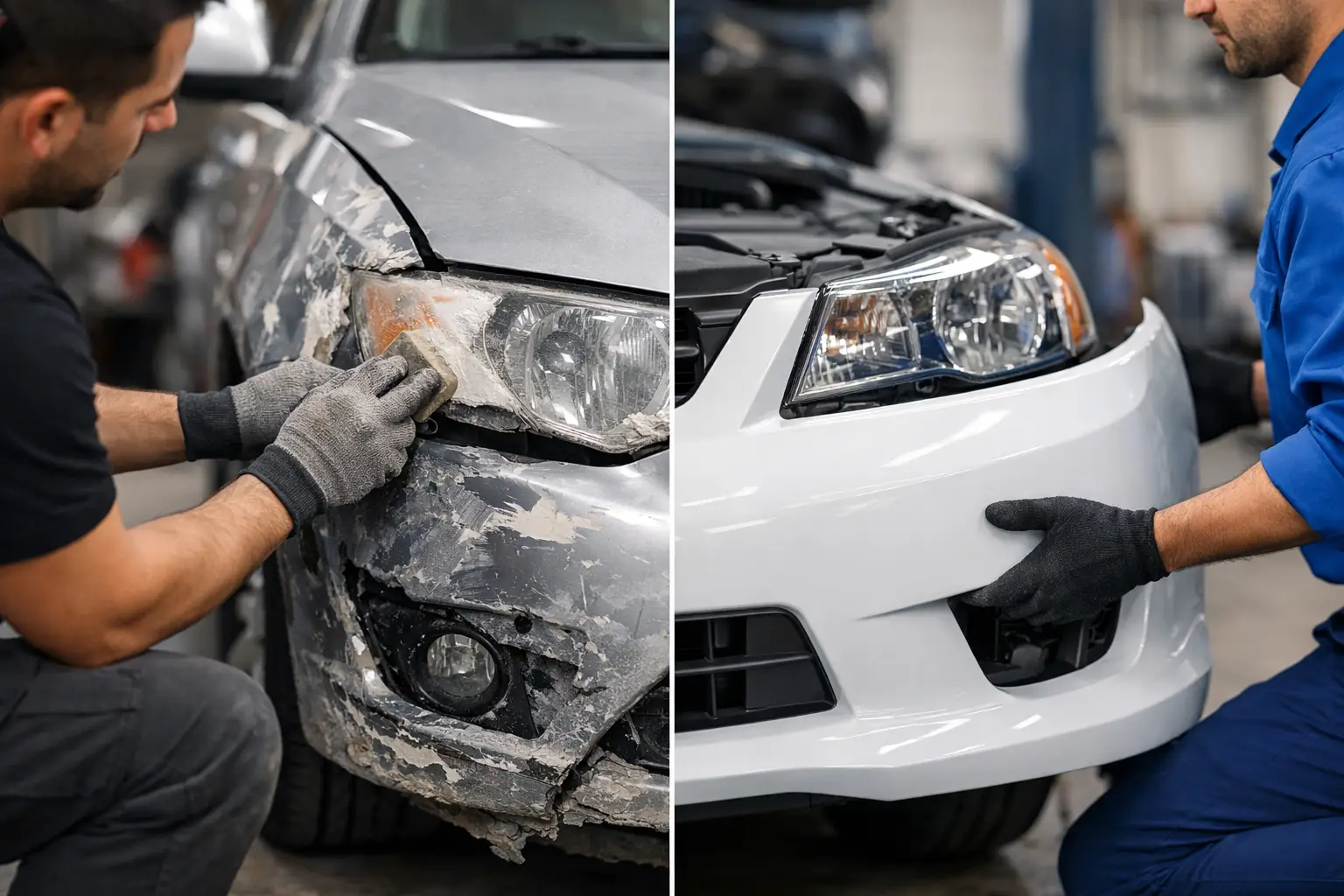
A minor crash on Highway 6 or a parking lot hit in Sugar Land can leave your vehicle looking worse than it really is. The key question is often collision repair vs replacement: can the damaged panel, bumper, or component be restored safely, or does it need to be replaced? The answer affects your vehicle’s safety, appearance, repair time, and insurance claim.
The right choice is not always the least expensive option upfront. A qualified collision shop looks beyond a visible dent or cracked cover to check mounting points, underlying structure, sensors, paint condition, and the way each part is designed to protect you in another impact.
Collision Repair vs Replacement: What Is the Difference?
Collision repair means restoring an existing vehicle part. Depending on the damage, this may involve reshaping metal, repairing plastic, pulling a panel back into alignment, sanding damaged areas, applying body filler where appropriate, and refinishing the surface to match the surrounding paint.
Replacement means removing a damaged part and installing a new, recycled, or approved alternative part. Common replacement items include bumpers, headlights, fenders, doors, hoods, grilles, mirrors, and certain suspension or safety-related components.
Neither option is automatically better. Repair is often an excellent solution when the original part can be restored to its proper shape, strength, and fit. Replacement becomes the better call when damage compromises safety, function, corrosion protection, or the ability to achieve a lasting repair.
When Collision Repair Makes Sense
Repair is frequently possible after low-speed impacts, minor dents, scrapes, shallow creases, and localized paint damage. If a metal panel has not been sharply stretched, torn, or bent near a critical edge, a technician may be able to restore it without replacing the entire part.
For example, a dented fender from a driveway mishap may be repairable if the wheel opening, mounting areas, and inner structure are still sound. A bumper cover with light scuffs or a small crack may also be repaired when the damage is limited and the cover can be restored without affecting its fit or durability.
Keeping the original part can offer real advantages. Original factory panels often fit well because they were made for your specific vehicle. Repairing rather than replacing may also reduce parts delays and control the overall claim cost. For drivers who need their car back for work, school drop-offs, or daily Houston commuting, avoiding a long wait for a part can matter.
Paintless dent repair may be another option for small dents where the paint has not cracked. This process can preserve the original factory finish and may be faster than conventional bodywork. It is not appropriate for every dent, especially those on sharp body lines or areas with stretched metal, but it can be a smart solution when conditions are right.
When Replacement Is the Safer Choice
A part should be replaced when repair cannot return it to safe operation and a proper finish. This is especially true for components that help manage crash energy, support vehicle systems, or contain advanced electronics.
Bumpers are a common example. The painted bumper cover may look like a simple plastic shell, but behind it can be reinforcement bars, absorbers, brackets, radar sensors, parking sensors, and camera equipment. A cover with extensive tearing, broken tabs, severe distortion, or sensor-mount damage may need replacement. Even if the exterior looks manageable, hidden damage behind the cover can change the repair plan.
Replacement is also common for cracked headlights, damaged mirrors, bent door shells, heavily creased hoods, and panels with rust risk after impact. Modern headlights can contain LED assemblies, adaptive functions, and other technology that cannot be safely repaired with a cosmetic fix. A door that no longer closes correctly may involve more than a damaged outer skin - it can affect intrusion protection, window operation, weather sealing, and alignment.
Structural parts deserve particular care. Frame rails, unibody sections, suspension mounting areas, and other load-bearing components require precise measuring and manufacturer-informed repair procedures. If a structural part is beyond repair limits, replacement may be necessary to restore the vehicle’s intended crash performance.
Damage You Cannot See Can Change the Decision
Visible damage tells only part of the story. A bumper may have a small dent while the brackets behind it are bent. A rear-end collision may leave a trunk lid looking uneven because the inner body panel has shifted. A side impact can damage a door, rocker panel, wheel alignment, and sensors at the same time.
That is why a complete estimate may change after disassembly. The first inspection identifies what is visible, while removing a bumper cover, trim piece, or damaged panel can reveal additional damage. This is not a shop changing course without reason. It is part of finding the full scope of the repair before your vehicle is reassembled.
For newer vehicles, calibration is another consideration. Cameras, blind-spot monitoring, lane-assist features, parking sensors, and radar systems may need inspection and recalibration after a collision or after certain parts are removed and installed. A repair is not complete just because the paint looks good. The systems that help you drive safely need to work correctly, too.
How Cost and Insurance Affect the Choice
Cost matters, but it should be considered alongside quality and safety. Repairing a panel may cost less than replacing it, particularly if the part is expensive or difficult to source. In other cases, extensive labor to straighten, fill, block, and paint a damaged part can cost more than a replacement panel.
Parts availability can also affect the timeline. New original equipment parts may take longer to arrive, while a repair may allow work to move forward sooner. Conversely, a panel with severe damage may require so much labor that replacement is more efficient and provides a better result.
Insurance estimates are based on the documented damage and the approved repair process. If hidden damage is found, the shop may submit a supplement to the insurer for the additional necessary work. Clear photos, detailed estimates, and direct communication help keep the process moving.
You do not have to make this decision alone. A good collision shop can explain why a part is being repaired or replaced, what type of replacement part is proposed, and how the choice affects the estimate. If a recommendation is unclear, ask for a plain-language explanation before authorizing work.
Questions to Ask Before Approving Repairs
Before repairs begin, ask whether the damage affects safety systems, whether there is likely to be hidden damage, and whether any sensors or cameras will require calibration. It is also reasonable to ask whether the proposed work will preserve proper panel gaps, paint protection, and corrosion resistance.
If replacement is recommended, ask what part type will be used. Depending on the vehicle, estimate, and insurer, the shop may discuss original equipment, aftermarket, or recycled parts. The best option depends on fit, availability, warranty considerations, and the vehicle’s condition. The goal should be a safe, properly functioning repair, not simply the fastest cosmetic fix.
You should also ask about the expected repair timeline. Parts delays, insurance approvals, additional damage found during disassembly, and calibration requirements can all affect when your vehicle is ready. A straightforward answer helps you plan transportation and avoid surprises.
Choose a Shop That Looks Beyond the Surface
The best collision repair decision comes from a thorough inspection, not a guess based on a photo or the size of a dent. Experienced technicians evaluate the damaged area, the components behind it, vehicle safety features, and the condition needed for a dependable repair.
For drivers in Houston, Stafford, Sugar Land, and Southwest Houston, Sosa Automotive Group provides free estimates and can help handle insurance communication after an accident. With more than 20 years of local experience, the focus is on restoring vehicles carefully and explaining the work in clear terms.
Whether your vehicle needs a skilled repair or a replacement part, the right next step is a complete estimate from a shop that treats safety, fit, and long-term quality as seriously as the paint finish. Getting clear answers early can make a stressful collision feel far more manageable.