
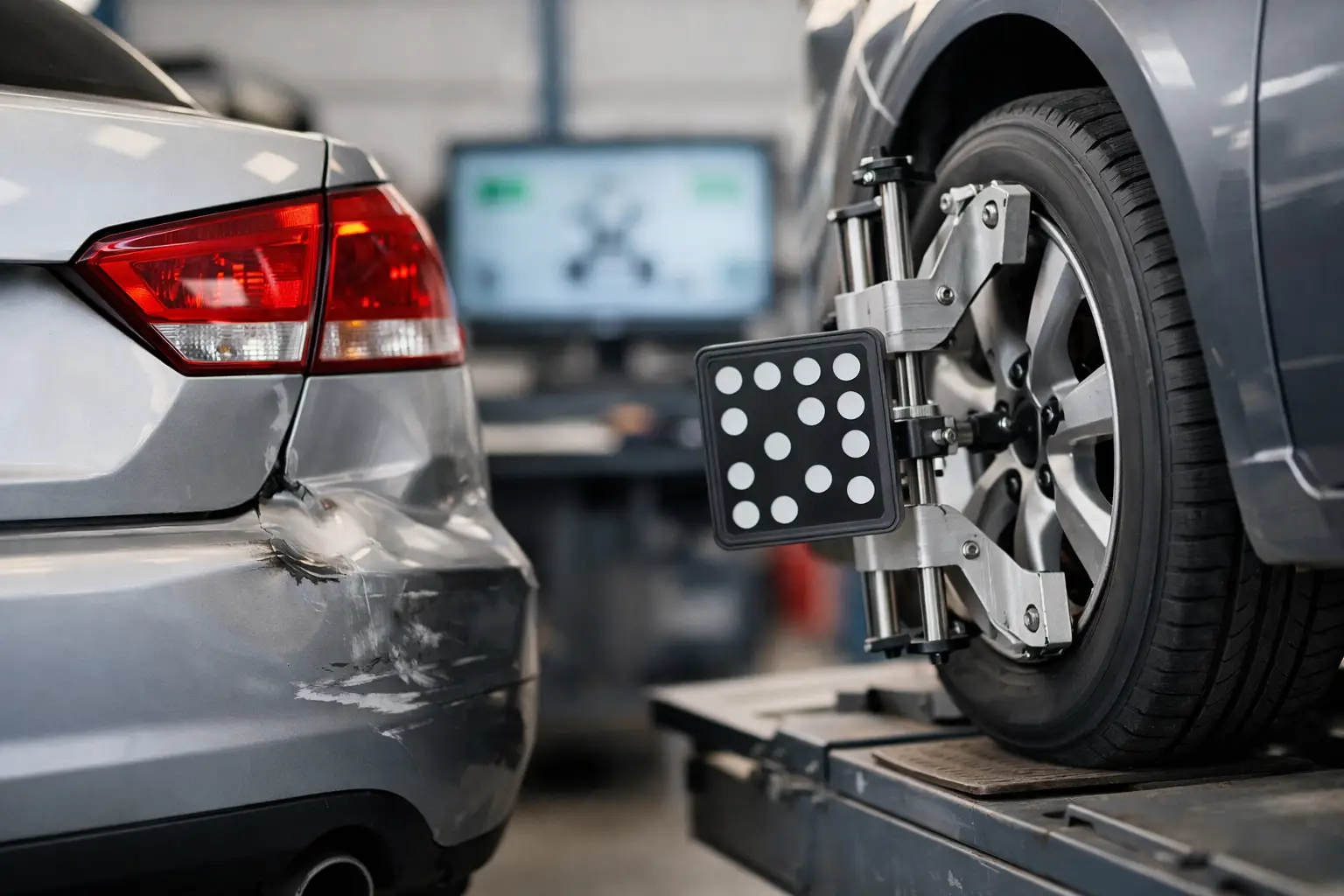
A parking-lot bump, curb strike, or low-speed rear-end accident may leave only a small scratch on the bumper. But does minor collision affect alignment? It can. Even when the body damage looks minor, an impact can transfer force through a wheel, tire, suspension component, or steering system and change how your vehicle tracks down the road.
For drivers in Southwest Houston, Stafford, Sugar Land, and Houston 77083, the safest move after any impact is to pay attention to how the vehicle drives. Alignment concerns are easier and less expensive to address before uneven tire wear or damaged suspension parts create a bigger repair.
Can a Minor Collision Affect Wheel Alignment?
Wheel alignment is the adjustment of the angles that allow your tires to sit correctly on the road. These settings help the vehicle drive straight, turn predictably, and wear tires evenly. A direct hit to a wheel or tire is the most common collision-related cause of an alignment problem, but it is not the only one.
A low-speed impact can bend or shift a steering or suspension part by a small amount. That may be enough to alter alignment readings, especially on vehicles with lower-profile tires, worn suspension components, or previous damage. Hitting a curb while avoiding another car can be just as relevant as the collision itself.
The severity, direction, and location of the impact matter. A light tap to the center of a rear bumper is less likely to affect front alignment than a front-corner impact that catches the tire. Still, there is no reliable way to judge alignment by looking only at the bumper cover or paint damage.
Signs a Minor Collision May Have Affected Alignment
Your vehicle will often give you a few clues after an accident. The most familiar sign is a steering wheel that is no longer centered when you are driving straight. You may also notice the vehicle pulling left or right on a level road, although road slope and tire pressure can sometimes cause a mild pull as well.
Pay attention to changes that were not present before the impact. A new vibration in the steering wheel, loose or unusual steering feel, squealing tires in normal turns, or a tendency to wander in your lane should be checked. These symptoms may point to alignment, tire, wheel, steering, or suspension concerns.
Uneven tire wear is another warning sign, although it may take time to appear. If the inner or outer edge of a tire begins wearing faster than the rest of the tread, the tire may not be meeting the pavement at the correct angle. Continuing to drive that way can shorten tire life significantly.
It is also worth checking for visible damage. A tire with a sidewall bulge, a bent wheel, fluid leaking near a suspension component, or a wheel that appears to sit differently in the wheel opening deserves prompt attention. Do not assume a vehicle is safe to drive just because it starts and moves normally.
Why an Alignment Check Is More Than a Convenience
An alignment problem does not always make a vehicle impossible to drive. That is why drivers sometimes put off an inspection after a minor accident. The trade-off is that a small issue can quietly lead to premature tire replacement, poorer handling, and added strain on suspension and steering components.
Houston-area roads add another reason to act early. Potholes, uneven pavement, construction areas, and curb contact can worsen a condition that began with a collision. If a vehicle is already slightly out of alignment, the next hard bump may make the symptoms more obvious.
Proper alignment also supports safe braking and handling. Your tires are the only part of the vehicle in direct contact with the road. When they are positioned correctly, your vehicle is more likely to respond as expected during turns, lane changes, and sudden stops.
Alignment Is Not Always the Only Issue
A vehicle that pulls after an accident does not automatically need only an alignment. A technician may find a tire-pressure issue, bent wheel, damaged tire, worn control arm, shifted subframe, or steering component that needs repair first. Aligning a vehicle without addressing damaged parts can produce temporary results or prevent the alignment from being set within specifications.
This is why collision repair and mechanical inspection should work together after an impact. Cosmetic repairs restore the appearance of the vehicle, while a proper inspection helps identify concerns behind the bumper, fender, or wheel. Modern vehicles are built with components designed to manage impact energy, so hidden damage is possible even after a modest hit.
If the collision involved a hard hit to the front or rear corner, a wheel, or the underside of the vehicle, ask for the steering and suspension system to be inspected. That request is especially useful if the steering wheel changed position or the car began pulling after the accident.
What Happens During an Alignment Inspection?
An alignment inspection begins with more than placing the vehicle on alignment equipment. The tires, wheels, steering, and suspension should be checked for obvious wear or damage first. Tire pressure needs to be correct because low or uneven pressure can affect the way a vehicle drives.
The technician then measures key wheel angles against the manufacturer’s specifications. These measurements typically include toe, camber, and caster. You do not need to memorize those terms to make a good repair decision. What matters is whether the angles are within range and whether any damaged or worn part is preventing the vehicle from being adjusted correctly.
A good inspection should give you a clear explanation of what was found, what needs attention now, and what can be monitored. If an insurance claim is involved, documented collision-related damage can also help clarify the repair process. Sosa Automotive Group provides free estimates and can assist with insurance handling, helping local drivers address both the repair work and the paperwork after an accident.
What to Do After a Low-Speed Impact
After a minor collision, take a brief test drive only if the vehicle appears safe to operate. On a straight, level road, notice whether the steering wheel is centered and whether the vehicle tracks straight without constant correction. Listen for rubbing, clunking, or new vibration.
If you feel a strong pull, severe vibration, tire rubbing, or loose steering, avoid driving farther than necessary. Those symptoms can indicate more than a simple alignment adjustment. Have the vehicle inspected before regular commuting or highway driving.
Even without obvious symptoms, schedule an inspection if the impact involved a wheel, tire, curb, pothole, front corner, or rear corner. It is a practical precaution, particularly when you depend on your vehicle for work, school runs, or daily travel around Houston.
A minor collision does not always knock a vehicle out of alignment, but guessing can cost more than checking. If your vehicle feels different after an impact, trust that change and have it looked at before small wear turns into a larger repair.