
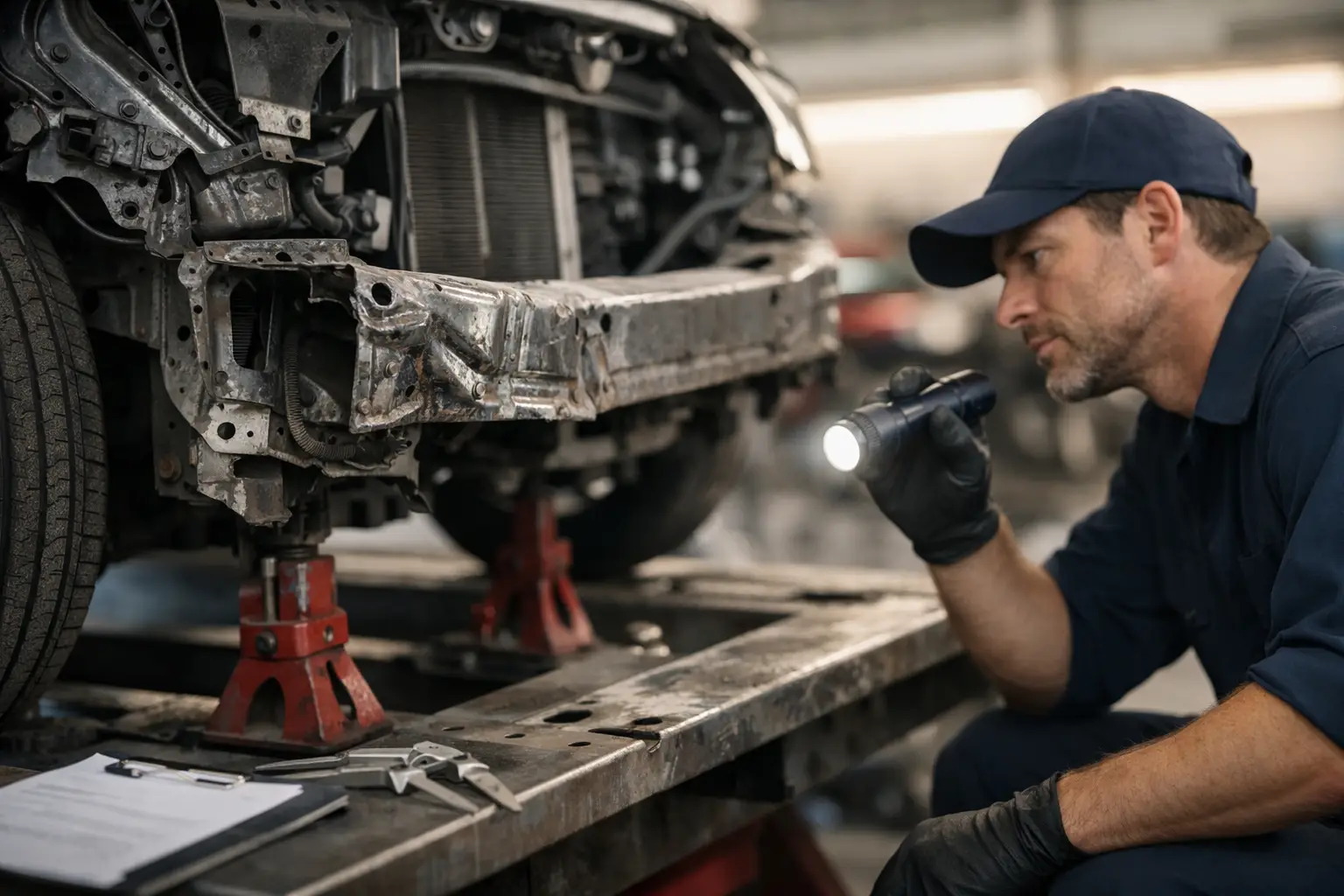
A collision can leave a vehicle looking surprisingly normal while hiding damage underneath. This frame damage inspection guide helps Houston-area drivers understand what to watch for after an accident, why a proper inspection matters, and when it is time to bring the vehicle to a qualified collision repair shop.
The biggest concern is not always the dent you can see. A hard hit to a curb, another vehicle, or a parking lot barrier can affect the structure that supports the suspension, steering, body panels, and safety systems. Catching that damage early can prevent uneven tire wear, poor handling, and repair problems later.
What “Frame Damage” Means on Modern Vehicles
Many drivers picture a separate steel frame running under a truck. That is true for many pickups, SUVs, and commercial vehicles. Most passenger cars and crossovers, however, use unibody construction. With a unibody vehicle, the body and structural support sections work together as one unit.
That means frame damage may involve frame rails, rocker panels, radiator supports, floor sections, strut towers, or other structural areas. The damage can be a visible bend, but it can also be a subtle shift that changes how panels fit or how the vehicle drives.
Not every accident causes structural damage. A low-speed impact may only affect a bumper cover, grille, lamp, or exterior panel. It depends on the impact angle, vehicle height, speed, and where the force traveled. Still, no one should judge the condition of a vehicle by its appearance alone.
Common Signs That Call for a Frame Damage Inspection
Some warning signs show up as soon as you leave the accident scene. Others become noticeable days later during your normal commute through Southwest Houston, Stafford, or Sugar Land.
A vehicle that pulls to one side, has a crooked steering wheel, or feels unstable after a collision needs attention. These symptoms can come from an alignment issue, tire damage, or suspension damage, but they can also point to a structural concern. An alignment adjustment alone will not correct a bent or shifted structural component.
Look closely at body panel gaps as well. A hood, trunk, or door that no longer opens, closes, or lines up properly can indicate that surrounding supports moved in the impact. Uneven spacing around headlights, fenders, and bumpers is another reason to schedule an inspection.
Other signs include unusual tire wear, new vibrations, rubbing noises while turning, visible creases near the roof or door openings, and water entering the cabin after rain or a car wash. On unibody vehicles, wrinkles in the trunk floor, wheel well, or engine bay may be evidence that impact energy traveled beyond the exterior panel.
Safety-system warnings should not be ignored. An airbag, seat belt, collision warning, or other dashboard light may be related to the accident. Those warnings do not prove frame damage, but they do tell you the vehicle needs a professional evaluation before you rely on it every day.
Why a Visual Check Is Not Enough
An experienced technician begins with a visual inspection, but that is only one part of the process. Modern vehicles are designed to absorb collision energy in specific areas. A bumper may rebound or look intact while brackets, reinforcements, rails, or mounting points behind it have been affected.
Paint and body panels can also hide damage. A crease under a fender liner or behind a bumper cover is easy to miss without removing parts and examining the vehicle from underneath. This is one reason a quick walk-around or a low-cost estimate based only on photos may not tell the full story.
A professional inspection compares key locations on the vehicle to manufacturer specifications. Collision shops use measuring equipment to identify whether structural points are within the allowed range. The technician may inspect the underbody, suspension mounts, steering components, cooling support, and wheel alignment angles before creating a repair plan.
Diagnostic scanning may also be part of the job. Sensors, cameras, and driver-assistance features often need inspection or recalibration after an impact. A scan cannot replace structural measurements, and structural measurements cannot replace electronic diagnostics. Both can matter depending on the vehicle and type of collision.
What Happens During a Professional Frame Damage Inspection
A thorough inspection starts with the details of the accident. Tell the shop where your vehicle was hit, whether airbags deployed, whether you struck a curb, and whether the vehicle has handled differently since the crash. Those details help the estimator and technician focus on likely damage areas.
The vehicle is then inspected for visible exterior and mechanical concerns. This can include checking panel alignment, tires, wheels, suspension components, steering response, fluid leaks, lights, and warning indicators. If further damage is suspected, the shop may disassemble damaged exterior parts to see what is behind them.
Next comes structural measurement. The shop checks reference points against vehicle specifications to determine whether the structure is bent, twisted, or out of position. On a truck with a separate frame, this may involve measuring the frame itself. On a unibody vehicle, it may involve measuring structural rails, towers, floor sections, and other designated points.
If repairs are needed, the plan should identify what will be repaired, what will be replaced, and what procedures are necessary to restore the vehicle properly. That can include structural pulling on approved equipment, parts replacement, welding or bonding procedures where specified, wheel alignment, and safety-system calibration.
The repair plan may change after disassembly. Hidden damage is common in collision work, particularly behind bumper covers and around suspension or cooling components. That is not automatically a sign of poor estimating. It is often the result of damage that could not be safely seen until parts were removed.
When You Should Not Keep Driving
If the vehicle is leaking fluid, making loud grinding noises, has a tire rubbing against the body, or cannot track straight, arrange for a tow rather than driving it to the shop. The same applies if an airbag deployed, a wheel appears pushed backward or inward, the hood will not latch securely, or the vehicle has severe front-end damage.
Even when the car seems drivable, be cautious after an accident. A damaged suspension part or loose underbody panel can become more dangerous at highway speed. Houston traffic leaves little room for a vehicle that suddenly pulls, shakes, or loses steering control.
Your insurer may recommend an inspection location, but you can still ask questions about the repair process, measurements, parts, and expected work. Keep photos from the accident, the other driver’s information if applicable, and your claim number available. Clear documentation helps the repair process move faster.
Choosing a Shop for Structural Collision Repairs
Frame and unibody repairs are not the same as cosmetic dent removal. Choose a collision repair shop that can explain its inspection process in plain language and is willing to document the work needed. You should feel comfortable asking whether structural measurements, alignment checks, diagnostic scans, and calibrations apply to your vehicle.
A local shop should also help reduce the stress of the claim. Sosa Automotive Group provides free estimates and can work directly with insurance companies, helping drivers in Houston 77083, Stafford, Sugar Land, and Southwest Houston move from accident damage to a clear repair plan.
Price matters, but the lowest initial estimate is not always the best value if it leaves out needed procedures or does not account for hidden damage. Ask what the estimate covers, how supplements are handled if additional damage is found, and how the shop will confirm the vehicle is ready to return to service.
After Repairs: What to Check Before You Leave
When you pick up your vehicle, inspect it in good daylight if possible. Look at paint color and panel gaps, open and close the doors and trunk, and make sure lights, cameras, and convenience features operate normally. A clean repair should not leave loose trim, warning lights, or obvious mismatched alignment.
During the first few drives, pay attention to steering, braking, tire noise, and vibrations. The vehicle should track straight on a level road and the steering wheel should sit normally when traveling straight. If something feels different, contact the repair shop promptly. A reputable shop would rather inspect a concern early than have you continue driving with unanswered questions.
After a collision, trust what your vehicle is telling you. A prompt, professional inspection gives you a clearer picture of the damage and helps protect the safety, reliability, and value of the vehicle your family depends on.