
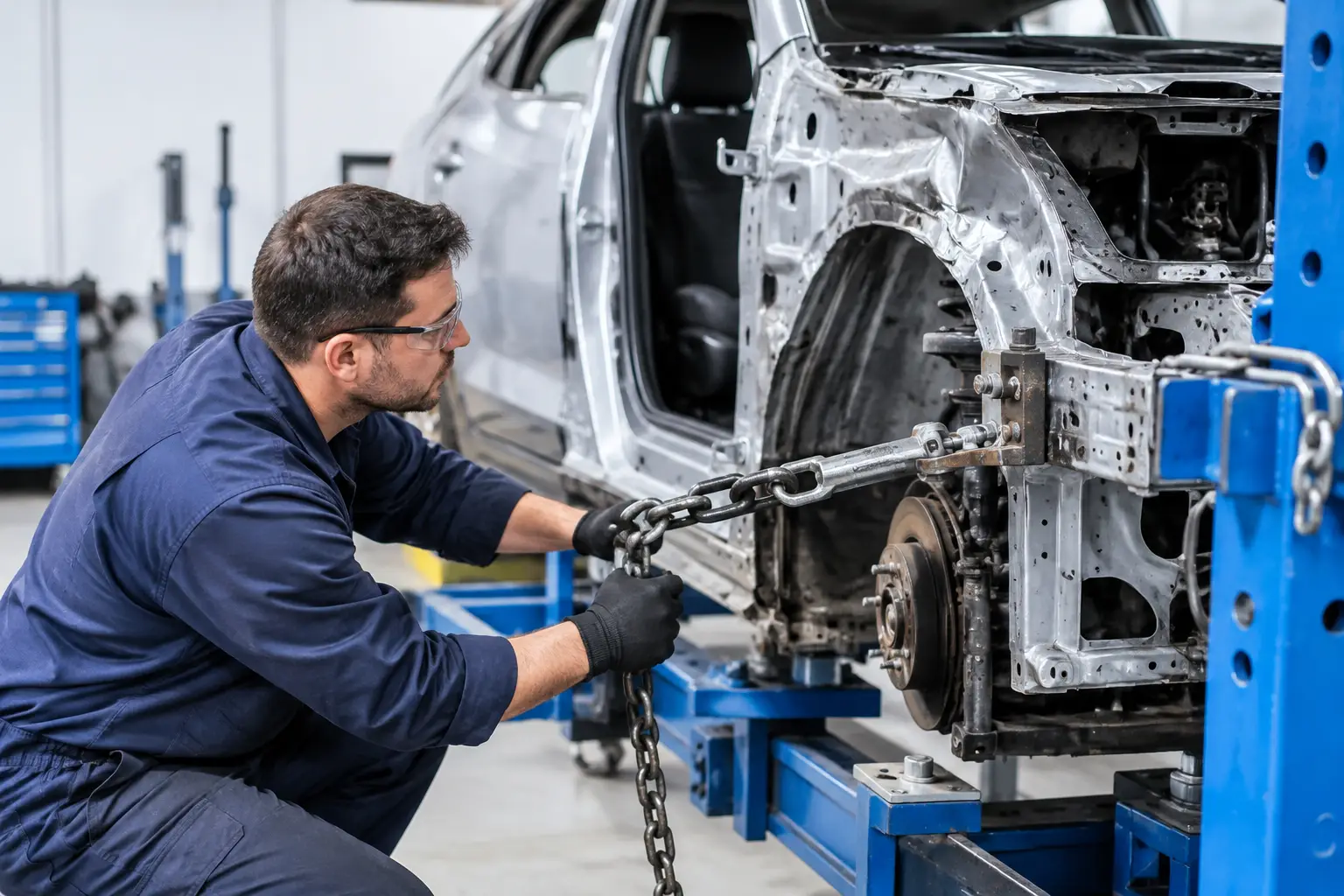
A low-speed crash can leave a vehicle looking mostly fine while causing damage underneath that changes how it drives. This frame straightening guide helps Houston-area drivers understand what structural damage means, why it should not be ignored, and what happens when a qualified collision shop inspects and repairs the vehicle.
What Frame Straightening Really Means
People often use the word “frame” to describe any part of the vehicle that supports the body. On many trucks and older vehicles, the frame is a separate steel structure beneath the body. Most modern cars, SUVs, and crossovers use a unibody design, where the body and structural support sections are built together.
In either design, a collision can bend, twist, crush, or shift structural components. Frame straightening is the process of measuring those components against the manufacturer’s specifications and carefully returning repairable areas to their proper position. It is not the same as smoothing a dent, replacing a bumper cover, or performing paint work.
Structural repair matters because the vehicle was engineered to drive, steer, absorb impact, and protect occupants in a specific shape. Even a small shift can affect alignment, tire wear, panel fit, suspension performance, and the way safety systems work in a future collision.
Signs You May Need Structural Repair
You cannot confirm frame damage by looking at one panel alone, but certain changes after an accident deserve a professional inspection. A steering wheel that is off-center, a vehicle that pulls to one side, or tires that begin wearing unevenly may point to a suspension or structural issue.
Look closely at the gaps around the hood, doors, trunk, and fenders. Uneven gaps, a hood that will not latch correctly, or doors that suddenly require extra force to close can mean panels or underlying supports have shifted. You may also notice new vibrations, unusual road noise, or a trunk floor that looks wrinkled after a rear-end collision.
Some damage is completely hidden behind bumpers, wheel liners, and exterior panels. That is why a vehicle should be evaluated after a meaningful impact even when the visible damage appears limited. Cosmetic repairs should not begin until the shop has checked for damage beneath the surface.
How a Collision Shop Checks the Frame
A proper inspection starts with more than a walk-around. The technician reviews the point of impact, visible damage, wheel and suspension condition, and panel alignment. The vehicle may be placed on measuring equipment that compares key structural locations with factory dimensions.
This measurement process tells the repair team whether a structural section is out of position and by how much. It also helps identify damage that is not obvious until the vehicle is partially disassembled. In many cases, a bumper, fender, trim piece, or interior panel must come off before the full extent of the damage is known.
This is one reason an initial estimate can change after teardown. It does not automatically mean the shop missed something. Hidden damage is common in collisions because modern vehicles use layered components designed to manage impact energy. A reputable shop should explain any newly found damage and coordinate necessary updates with the insurance company.
The Frame Straightening Process
If measurements show repairable structural damage, the vehicle is secured to specialized equipment. Controlled pulls are applied to the affected areas using chains, clamps, and hydraulic equipment. The goal is precision, not force alone. Technicians monitor measurements throughout the process and make gradual corrections rather than simply pulling until the exterior looks straight.
Once the structure is back within acceptable specifications, the repair may continue with replacement of damaged parts. Depending on the accident, that can include suspension components, radiator supports, reinforcements, quarter panels, fenders, bumpers, lights, or other parts. The vehicle may then need wheel alignment, sensor calibration, body repair, paint preparation, and refinishing.
Not every bent component should be straightened. Some parts are designed to be replaced after an impact, especially components that are intended to crush or protect passengers. The right repair plan depends on the vehicle’s design, the location of the damage, manufacturer procedures, and the condition of the affected metal.
Why DIY Straightening Is a Bad Trade-Off
It can be tempting to focus on getting a car back on the road quickly, particularly if it still starts and drives. But towing a vehicle with chains, using heat on structural metal, or attempting to pull damage at home can create larger problems. A vehicle can look improved while remaining out of specification underneath.
Improper repairs can make alignment difficult, cause premature tire wear, leave safety sensors uncalibrated, and reduce resale value. More seriously, they can compromise how the vehicle responds in another crash. Structural repair requires accurate measurements, proper anchoring, and technicians who understand the vehicle’s repair procedures.
There is also a financial reason to get the diagnosis right the first time. Paying for cosmetic work before addressing structural issues can mean removing and repainting parts again later. A complete inspection helps avoid repair decisions based only on what is visible from the outside.
Insurance and Frame Damage
Structural damage is often covered under collision insurance when it resulted from a covered accident, subject to your deductible and policy terms. If another driver caused the crash, their liability coverage may be responsible. The claims process can feel overwhelming when you are also arranging transportation and trying to understand the repair plan.
Start by documenting the accident, taking photos of visible damage, and reporting the claim promptly. Keep copies of claim information and any communication from the insurer. Your collision shop can prepare an estimate, identify hidden damage during teardown, and communicate with the insurance company about approved repairs.
You have the right to choose the repair shop you want to use. Insurance recommendations can be helpful, but the decision is yours. Choose a shop that will explain the estimate clearly, discuss the repair plan in plain language, and keep you informed if additional damage is found.
When Is a Vehicle Too Damaged to Repair?
Not every vehicle with frame damage is a total loss. A vehicle may be safely repairable when the structural damage can be restored according to manufacturer specifications and the repair cost makes sense compared with its value. The insurance company generally makes the total-loss decision based on state rules, vehicle value, expected repair cost, and related factors.
Severe damage around the passenger compartment, major roof deformation, extensive corrosion, or damage that cannot be repaired according to proper procedures may make replacement the safer or more practical outcome. The age, mileage, condition, and market value of the vehicle also matter.
A total loss can be frustrating, but it is not a judgment on whether the car can physically move again. The question is whether it can be restored safely and economically. A thorough estimate and structural measurement give you better information before you make decisions about repairs, insurance, or replacement transportation.
Choosing a Shop for Frame Straightening in Southwest Houston
For drivers in Houston 77083, Stafford, Sugar Land, and Southwest Houston, the best next step after a collision is a professional inspection before assuming the damage is only cosmetic. Ask whether the shop performs structural measurements, how it handles supplements for hidden damage, and whether it coordinates directly with insurance carriers.
Experience matters, but communication matters too. You should understand what was damaged, whether it can be repaired or must be replaced, and what repair stages may affect timing. A shop should not promise an exact completion date before it has inspected the vehicle thoroughly, especially when parts availability or insurance approval may affect the schedule.
Sosa Automotive Group provides free estimates and insurance assistance for local drivers who need practical support after an accident. With more than 20 years serving the community, the team can help assess collision damage and explain the repair path without adding confusion to an already stressful situation.
If your car pulls, rattles, shows uneven panel gaps, or was hit hard enough to raise concern, do not wait for the problem to become more expensive. A careful structural inspection gives you a clear starting point and helps protect the safety, performance, and value of the vehicle you depend on every day.