
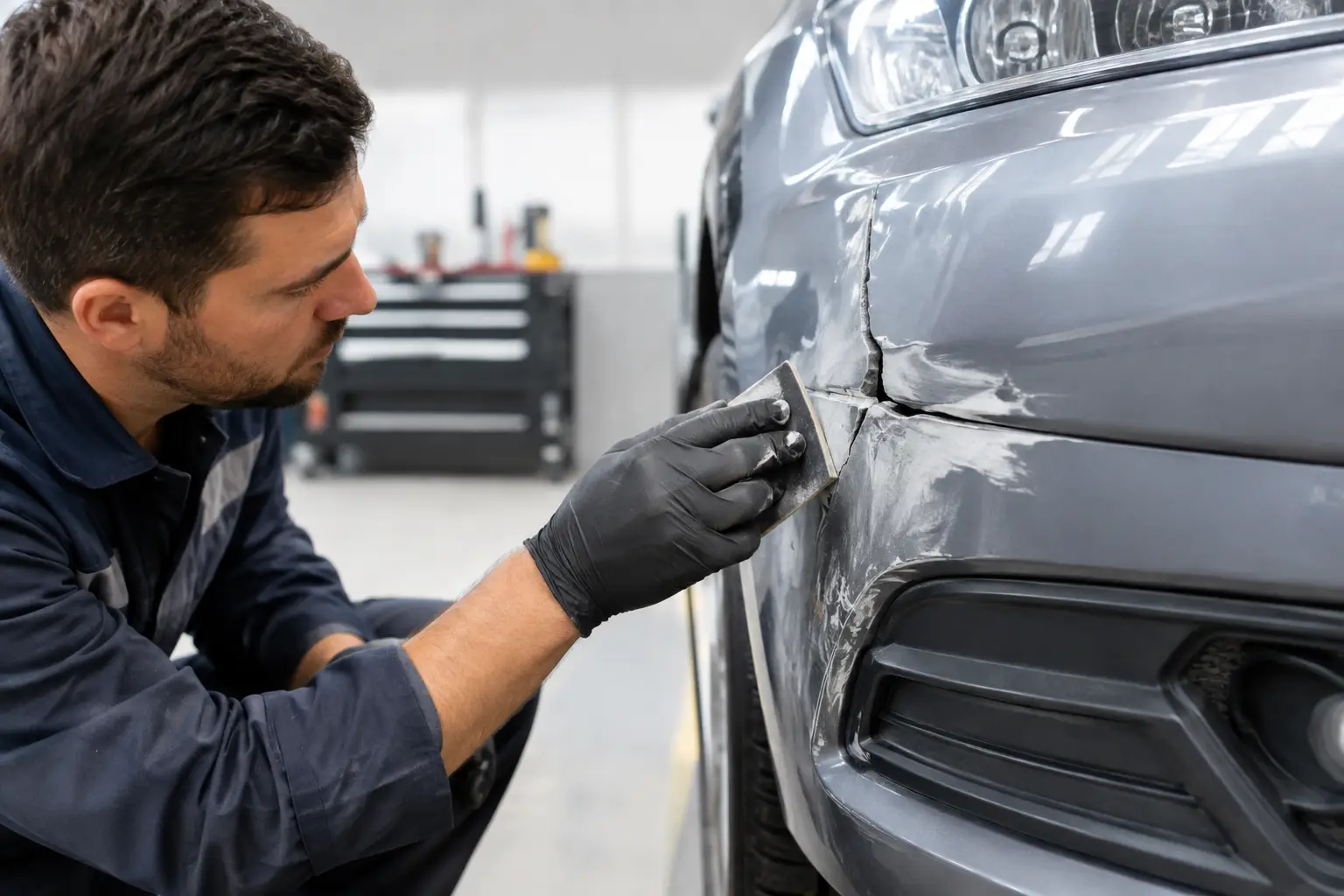
A cracked bumper can look like a small cosmetic problem, but the right repair depends on what is damaged behind the visible plastic. How bumper cracks are repaired starts with a careful inspection of the bumper cover, its mounting points, sensors, brackets, and the impact area underneath. A proper repair should restore the bumper’s appearance without overlooking parts that affect fit, safety, or vehicle systems.
For drivers in Houston, Stafford, Sugar Land, and Southwest Houston, the first step is not buying a repair kit or applying filler over the crack. It is determining whether the bumper can be repaired safely and whether a repair will hold up through heat, rain, road vibration, and daily driving.
What Is Actually Cracked?
Most modern vehicles have a plastic bumper cover on the outside. Behind that cover may be an absorber, reinforcement bar, brackets, grille components, wiring, parking sensors, radar equipment, or cameras. The outer cover is designed to handle minor contact better than a painted metal panel, but it can still split, tear, dent, or pull away from its mounting points.
A crack limited to the plastic cover is often repairable. A crack near a corner, a small split from a parking impact, or damage around a lower bumper section may be a good candidate for plastic repair. The shop will also check whether the cover is distorted, whether tabs are broken, and whether the bumper still aligns correctly with the fenders, hood, headlights, and grille.
The repair decision changes when damage reaches the bumper reinforcement, absorber, mounting structure, or sensor area. In those cases, replacing the damaged component may be the better choice. The goal is not simply to make the crack disappear. It is to return the vehicle to proper condition.
How Bumper Cracks Are Repaired Step by Step
A quality bumper crack repair is more involved than applying body filler and paint. Plastic flexes differently than metal, so the repair materials and preparation must match the type of plastic used on the vehicle.
Inspection and removal
The technician first examines the bumper in place and may remove the cover to inspect the back side. Removing it gives access to hidden damage and helps prevent missed broken retainers, brackets, clips, or wiring. It also allows the repair area to be worked correctly from both sides.
If your vehicle has parking sensors, a front camera, blind-spot equipment, or radar behind the bumper, those components must be protected and checked during the process. A minor-looking crack can still affect the operation or placement of these systems.
Cleaning and preparing the plastic
Before repairing the crack, the damaged area is cleaned thoroughly to remove road film, wax, silicone, and contaminants. The technician identifies the plastic type when possible because different plastics require different repair methods and adhesion products.
The crack is then prepared, often by sanding or shaping a shallow groove along the damaged area. This creates room for the repair material and helps it bond properly. The back side of the bumper may also be prepared and reinforced so the repaired area has support rather than relying only on surface material.
Plastic welding or adhesive repair
Many repairable bumper cracks are fixed with plastic welding. This process uses controlled heat and compatible plastic material to join the crack and reinforce it. When performed correctly, plastic welding restores strength while allowing the bumper cover to retain some of its natural flexibility.
Some bumper materials and damage patterns call for a specialized plastic repair adhesive instead. The adhesive is applied with the correct preparation products, then reinforced as needed. Either method can work well, but the right choice depends on the vehicle’s bumper material, the location of the crack, and the severity of the damage.
A crack that has spread through a mounting tab or sits along a highly stressed curve may require additional reinforcement. If the bumper cannot be restored to a reliable fit, replacement is usually more practical than trying to force a repair that may fail later.
Shaping, priming, and refinishing
Once the repair has cured, the technician sands and shapes the area until it blends with the surrounding bumper. Flexible repair materials are used where needed so the repaired section can move naturally with the rest of the cover.
The bumper is then primed, sanded again, and prepared for paint. Color matching matters, especially on metallic, pearl, tri-coat, and darker finishes that can show differences in shade under direct sunlight. A professional refinishing process includes matching the paint color and clear coat to create an even gloss and durable finish.
In some cases, paint blending into adjacent panels is needed for the best color match. That decision depends on the paint color, the vehicle’s age, sun exposure, and how noticeable a color variation would be.
Reinstallation and final checks
After the paint has cured, the bumper cover is reinstalled with the correct clips, brackets, and fasteners. The shop checks panel gaps, headlight alignment, grille fit, and the operation of any sensors or cameras affected by the repair.
This final step matters. A bumper that looks good but sits loose, rubs against another panel, or triggers a warning light is not fully repaired.
When a Cracked Bumper Should Be Replaced
Repair is often the more affordable option for a small, clean crack, but it is not always the right one. Replacement is commonly recommended when the bumper has extensive tearing, severe distortion, multiple cracks, missing material, or damaged mounting areas that cannot be restored dependably.
Replacement may also be necessary if the bumper cover has damage near radar sensors, camera openings, or safety-related mounting points. Modern vehicle systems can require calibration after bumper removal or replacement. A body shop should identify that need before returning the vehicle to you.
If there is damage behind the cover, such as a bent reinforcement bar or crushed absorber, replacing only the outer bumper cover will not address the full impact. This is why an in-person estimate is more useful than judging repairability from a photo alone.
Can You Drive With a Cracked Bumper?
It depends on the location and severity of the damage. A small crack that is secure and does not interfere with lights, tires, or sensors may allow the vehicle to be driven temporarily. Still, the crack can grow as the bumper flexes over bumps, through car washes, and during normal parking.
Do not continue driving without an inspection if the bumper is loose, dragging, has sharp edges, rubs a tire, blocks a light, or has caused sensor warnings. You should also have the vehicle checked promptly after any impact that feels stronger than a light parking scrape, even if the bumper appears mostly intact.
Houston heat can make a weak bumper repair more noticeable over time. High temperatures, sun exposure, and everyday road vibration put stress on plastic and paint. A repair that is properly reinforced and refinished is more likely to stay secure and look right.
What About Insurance Coverage?
If the crack came from a collision, parking lot impact, or another covered event, your insurance policy may help pay for the repair after your deductible. The claim process can feel like another problem to manage when you are already dealing with vehicle damage.
A collision repair shop can document the visible and hidden damage, prepare an estimate, and work with the insurance company on approved repairs. If additional damage is found after the bumper is removed, a supplement may be needed so the estimate reflects the full repair rather than only what was visible at the start.
Sosa Automotive Group provides free estimates and can help coordinate insurance handling for drivers who need clear answers after bumper damage. With more than 20 years serving the local community, the focus is on practical repairs, accurate paint work, and getting your vehicle back in proper shape.
Get the Crack Checked Before It Spreads
A bumper crack rarely improves on its own. What begins as a narrow split can collect moisture, spread along the plastic, loosen a mounting point, or create a larger paint failure. Having it inspected early gives you a clearer choice between a targeted repair and replacement before the damage becomes more involved.
The best next step is a professional estimate that looks beyond the surface. A repair should leave you with a bumper that fits correctly, matches your vehicle, and gives you confidence every time you pull out of the driveway.