
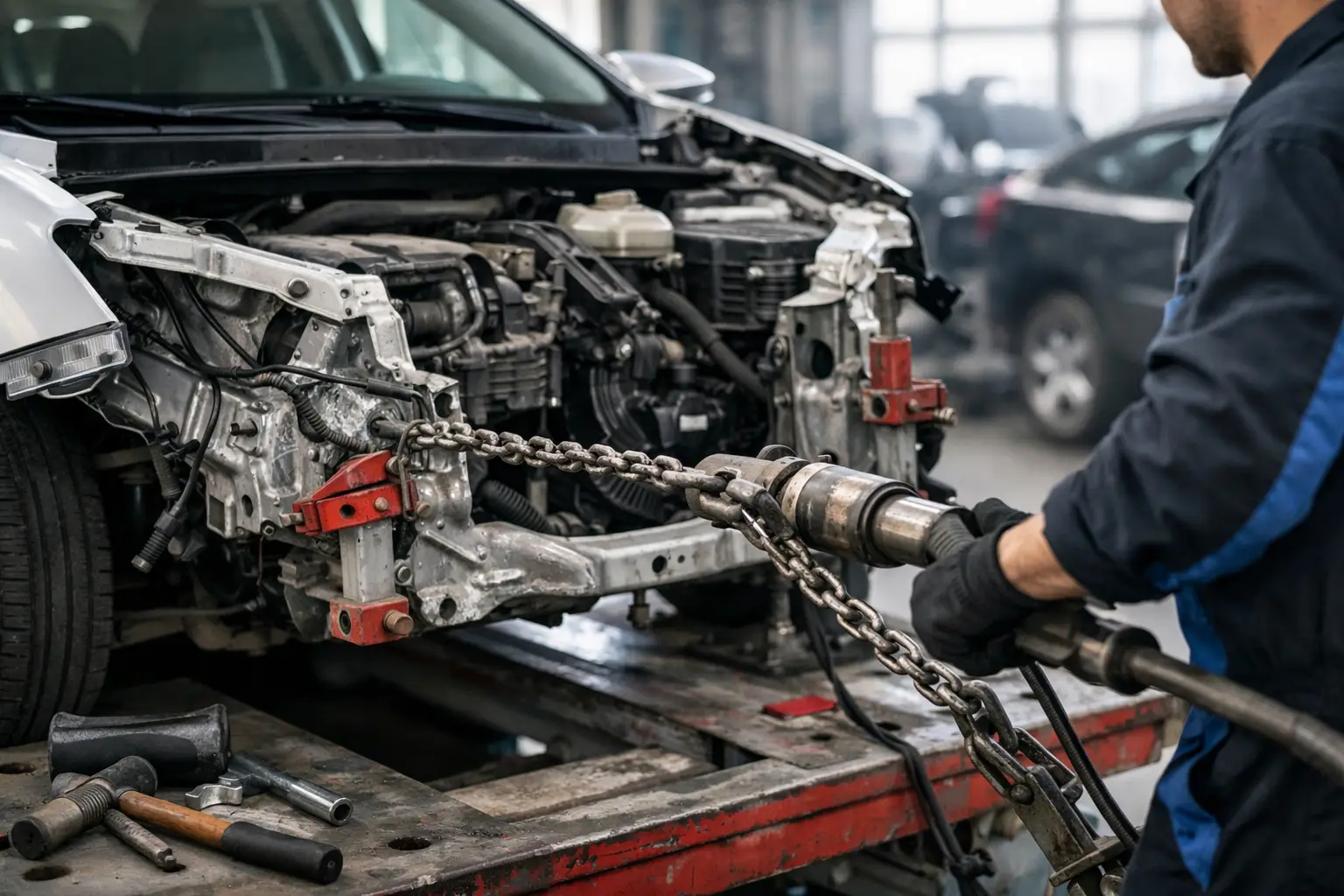
A car can look like it only has a bent fender or damaged bumper, but the real problem may be underneath. If you are wondering how frame damage is repaired, the short answer is this: the vehicle is measured, pulled back into factory alignment when possible, and repaired or replaced where the structure can no longer safely do its job.
That process matters because the frame or unibody is what helps the vehicle track straight, absorb impact, and protect occupants in another collision. For drivers in Southwest Houston, Stafford, Sugar Land, and nearby areas, frame repair is not just about appearance. It is about making sure the vehicle is safe to drive again.
What frame damage really means
People often use the term frame damage for any structural problem after an accident, but there are a few different situations a repair shop may be dealing with. On older body-on-frame vehicles, such as some trucks and SUVs, there is a separate frame under the body. On most modern passenger vehicles, the structure is a unibody, which means the body and frame work together as one unit.
In both cases, collision damage can shift mounting points, wrinkle metal, throw off suspension geometry, or change how body panels fit. Sometimes the damage is obvious. Doors may not close right, gaps may look uneven, or the steering wheel may sit off-center. Other times, the problem only shows up during a detailed structural inspection.
How frame damage is repaired step by step
The repair itself is not guesswork. A qualified collision shop follows a measured process to determine what can be corrected and what needs replacement.
Inspection and damage analysis
The first step is a complete inspection. This usually includes visible damage, suspension checks, and precise measurements of the vehicle structure. Modern shops use computerized measuring systems to compare the vehicle to factory specifications.
This is where hidden damage often shows up. A front-end hit may not stop at the bumper and radiator support. It can move rails, aprons, strut towers, floor sections, or other structural points farther back than most drivers expect.
Securing the vehicle on frame equipment
Once the damage is mapped out, the vehicle is secured to a frame rack or dedicated structural repair equipment. Clamping the car in place keeps it stable while technicians work and allows controlled corrections instead of rough pulling.
This matters because the goal is not simply to tug bent metal until it looks better. The goal is to bring specific points back into position according to manufacturer dimensions.
Measuring before, during, and after pulls
One of the biggest parts of how frame damage is repaired is constant measurement. Technicians do not make one pull and hope for the best. They measure, apply controlled force, remeasure, and continue until the structure is back within acceptable tolerance.
Depending on the hit, hydraulic pulling equipment may be used from several angles. A side impact, for example, can create a twist in the structure that requires more than one correction. A front collision may push components rearward and inward at the same time.
Straightening damaged structural sections
If the metal is bent but still repairable, technicians may straighten the affected section. This can include frame rails, core supports, pillars, rocker areas, or other reinforced areas of the body.
Straightening has limits. If the metal is too stretched, cracked, kinked in a critical zone, or weakened beyond what repair standards allow, replacement becomes the safer option. This is one reason every structural repair is not the same. Two vehicles with similar-looking accident damage may need very different repair plans.
Sectioning or replacing parts when needed
Sometimes a damaged structural part is cut out and a new section is installed based on factory repair procedures. In other cases, a full component replacement is required. This may involve welding, bonding, riveting, or a combination of methods depending on the material and manufacturer instructions.
Newer vehicles can include high-strength steel, ultra-high-strength steel, aluminum, and mixed-material construction. Those materials do not all respond the same way to heat and straightening. A shop needs the right repair approach for that specific vehicle, not a one-size-fits-all fix.
Suspension and alignment checks
Structural damage and suspension damage often go together. After the frame or unibody is corrected, the shop checks suspension components, steering parts, wheel alignment, and mounting points.
If this step is skipped or rushed, the car may still pull to one side, wear tires unevenly, or feel unstable even if the body panels look fine. Proper alignment is part of a complete structural repair, not an extra.
Reassembly and final quality control
Once structural repairs are complete, the vehicle moves through reassembly, body repair, and paint work as needed. Final checks include panel fit, drivability, warning lights, and confirmation that the repair meets specifications.
A dependable shop also documents the process clearly, especially when insurance is involved. That helps avoid confusion about what was found, what was repaired, and why certain parts needed replacement instead of straightening.
Can all frame damage be fixed?
Not always, and this is where honesty matters. Some frame damage is very repairable. Other damage may be too severe, too costly relative to the vehicle value, or too close to critical structural areas to make repair the right decision.
It depends on the force of the impact, where the damage occurred, the type of vehicle, and whether the metal has torn, buckled, or lost strength. It also depends on repair standards from the manufacturer. A good shop should explain whether the vehicle can be safely restored or whether the insurance company may consider it a total loss.
That is not bad news in every case. It is simply part of making a safe decision. The right answer is not always the cheapest one up front.
Signs your car may have structural damage
Not every driver knows they should ask about the frame after an accident. If the car has trouble driving straight, sits unevenly, has visible wrinkles in the engine bay or trunk area, or shows uneven gaps around doors and panels, structural damage is possible.
You may also notice doors that stick, unusual tire wear, or a steering wheel that no longer centers the way it used to. Even a moderate collision can cause hidden movement in the structure, especially on newer vehicles designed to manage crash energy in controlled ways.
Why proper equipment and experience matter
Frame repair is not cosmetic work. It requires the right measuring systems, repair equipment, and repair planning. It also requires technicians who understand when straightening is appropriate and when replacement is the better path.
That is especially true when insurance claims are involved. A customer should not have to sort through structural terminology alone while also dealing with an accident, missed work, and transportation issues. At Sosa Automotive Group, that practical side matters just as much as the repair itself. Clear estimates and direct insurance handling can remove a lot of stress during the process.
What to expect from the repair timeline
There is no single timeline for structural repair. Minor alignment corrections may move quickly. Heavier damage can take longer because measuring, pulling, replacement parts, welding procedures, and post-repair checks all add time.
Insurance approval can also affect the schedule, especially if hidden damage is found after teardown. That is normal. In collision repair, the first estimate is sometimes only the beginning of the full picture.
What matters most is that the repair is done correctly. A rushed structural repair can create ongoing drivability issues and safety concerns that cost more later.
Choosing a shop for frame repair
If you need structural repair after a collision, ask direct questions. Does the shop perform structural measurements? Do they follow manufacturer repair procedures? Will they explain what is repairable versus what needs replacement? Can they work directly with insurance?
Those questions tell you more than a low estimate ever will. You want a shop that is straightforward, equipped for the work, and focused on safe repairs instead of quick cosmetic fixes.
After an accident, most drivers are not looking for complicated explanations. They want to know what happened, what it will take to fix it, and whether their vehicle will be safe again. That is exactly what a trustworthy collision shop should be prepared to answer.