
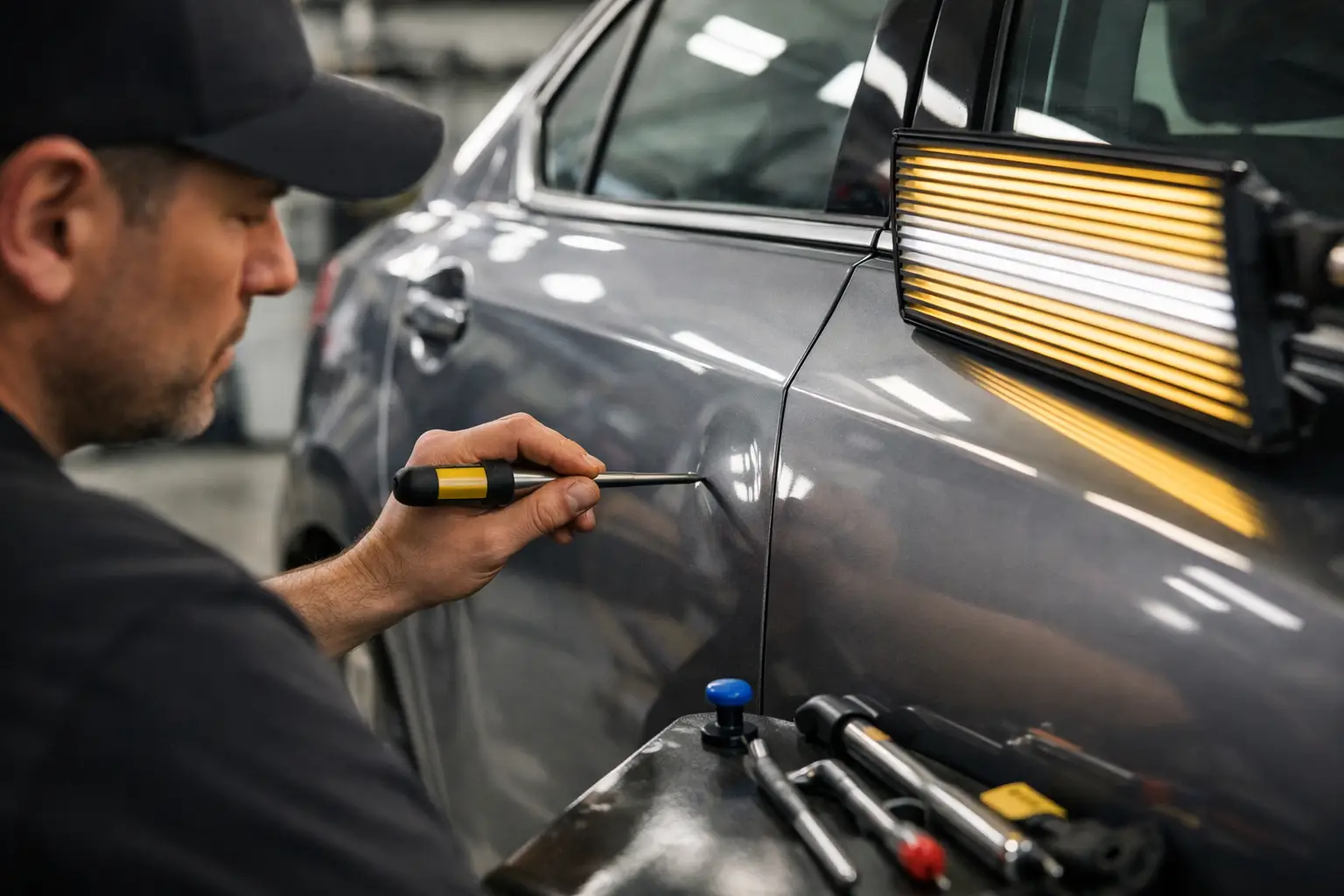
A shopping cart rolls a little farther than expected. A hailstorm moves through Southwest Houston overnight. Somebody opens a door too hard in a parking lot. The result is usually the same - a dent that catches your eye every time you walk up to your car. If you have been wondering how paintless dent repair works, the short answer is this: a technician carefully reshapes the metal from behind or pulls it from the outside without sanding, filling, or repainting the panel.
That sounds simple, but the real value is in knowing when paintless dent repair is the right fix and when a traditional body repair will give you a better result. For drivers in Houston, Stafford, and Sugar Land, that matters because the right repair can save time, protect your factory finish, and keep a small cosmetic problem from turning into a bigger headache.
How paintless dent repair works
Paintless dent repair, often called PDR, is a method used to remove dents while keeping the original paint intact. Instead of grinding down the damaged area and applying body filler and new paint, the technician uses specialized tools to massage the metal back into shape.
In many cases, the repair starts by gaining access behind the panel. That might mean working through an opening in a door, hood, fender, or quarter panel. Using metal rods and precision tools, the technician applies slow, controlled pressure to the low area of the dent. The goal is not to force the metal out in one push. It is to bring the panel back gradually so the surface matches the surrounding shape.
When backside access is limited, glue pulling may be used from the outside. Small tabs are attached temporarily to the dented area with a special adhesive, then pulled with controlled force to lift the dent. After that, the high spots are tapped down and refined until the panel looks even again.
Lighting is a major part of the process. Technicians use reflection boards or special lights to read the panel and see even subtle distortions in the metal. Without that visual guide, it would be almost impossible to restore the shape accurately. What looks like one simple dent to a car owner may actually have several high and low points that need to be corrected in sequence.
Why the paint matters in paintless dent repair
The reason PDR works at all is that modern automotive paint has some flexibility. If the impact did not crack, chip, or stretch the paint too far, the finish can often stay intact while the metal is moved back into place.
That is the main advantage. Your vehicle keeps its original factory paint, which is usually preferable to repainting when the damage is minor. Factory finishes tend to be more durable and consistent than any refinishing process, even when the work is done well. Keeping that original finish can also help preserve appearance and value.
There is a limit, though. If the dent has sharp creases, exposed metal, or paint damage, paintless dent repair may not be enough by itself. A good shop will tell you that upfront instead of trying to make a borderline repair fit.
What kinds of dents can usually be repaired?
Paintless dent repair is a strong option for small to midsize dents where the paint surface is still in good condition. Door dings, minor parking lot damage, and many hail dents are common examples. Rounded dents in flexible areas of the panel are generally the best candidates.
Panel location also matters. A dent in the middle of a door may be easier to repair than damage along a hard body line or near the edge of a panel. The thickness of the metal, the depth of the dent, and whether the impact stretched the panel all affect the final decision.
Aluminum panels can sometimes be repaired with PDR too, but they are less forgiving than steel and may take more time and skill. That does not mean the repair cannot be done. It just means the answer depends on the exact damage.
When paintless dent repair is not the right choice
Not every dent should be fixed with PDR. If the paint is broken, the metal is torn, or the panel has been severely stretched, traditional body work is usually the better repair path. The same goes for collision damage that affects structural areas or leaves the panel badly misaligned.
Previous repairs can also change the answer. If a panel has already been filled or repainted in the damaged area, paintless dent repair carries more risk. Refinished paint can be less flexible than factory paint, and glue pulling on a repainted panel may lift the finish.
This is why inspections matter. Two dents can look similar from a few feet away but need completely different repair methods once a technician checks the paint condition, access, and metal movement.
How the repair process usually goes at a shop
The first step is an evaluation. A technician looks at the size, depth, and location of the dent, along with the condition of the paint. They will also check whether they can reach the backside of the panel or if outside pulling methods are more realistic.
If the dent is a good candidate, the repair itself may be relatively quick compared with conventional body work. Minor dents can sometimes be corrected the same day. Larger or more complex damage, especially hail damage affecting multiple panels, can take longer.
During the repair, trim panels, taillights, or other components may need to be removed for access. That is normal. The objective is to reach the damage safely and repair it cleanly without creating new issues around the original dent.
After the metal has been reshaped, the technician fine-tunes the surface by blending the repaired area to match the rest of the panel. Done properly, the dent should no longer draw your eye, and in many cases it becomes very hard to detect.
Benefits of PDR for Houston-area drivers
For everyday drivers, the biggest benefits are usually time, cost, and preserving the original finish. Because there is no sanding, filling, or paint curing involved, paintless dent repair is often faster than traditional body repair on eligible damage.
It can also be more affordable for minor dents because the process uses less material and less refinishing labor. That does not mean PDR is always cheap. Complex dents still require real skill. But when the damage fits the method, it is often a smart value.
There is also less disruption. If your vehicle has a small dent from hail or a parking lot incident, getting it assessed early may help you avoid living with damage that bothers you every day or waiting until more cosmetic issues pile up.
How paintless dent repair works with insurance claims
For some dents, especially hail damage, insurance may be involved. In those cases, documentation and a proper estimate are important. The repair method has to match the damage, and the estimate needs to reflect the labor and access required.
This is where working with an experienced local body shop helps. If your vehicle has broader collision damage in addition to dents, the shop can determine whether PDR should be part of the repair plan or whether conventional body and paint work will give a better result. At Sosa Automotive Group, that kind of practical guidance matters because customers often need both technical repair advice and help navigating the insurance side.
Choosing the right shop for dent repair
Paintless dent repair is one of those services where experience shows. The tools matter, but judgment matters more. A skilled technician knows how far the metal can move, how to protect the finish, and when to stop and recommend another repair method.
If a shop promises PDR for every dent, that is worth questioning. Honest repair advice should include trade-offs. Sometimes PDR is the best solution. Sometimes a conventional repair is the only way to restore the panel properly. The right answer depends on the damage, not just the sales pitch.
If you are dealing with a dent on your car, truck, or SUV, the best next step is a professional inspection. A small dent may be a quick paintless repair, or it may need a different approach to look right long term. Either way, getting a clear estimate early gives you better options and a lot less guesswork.