
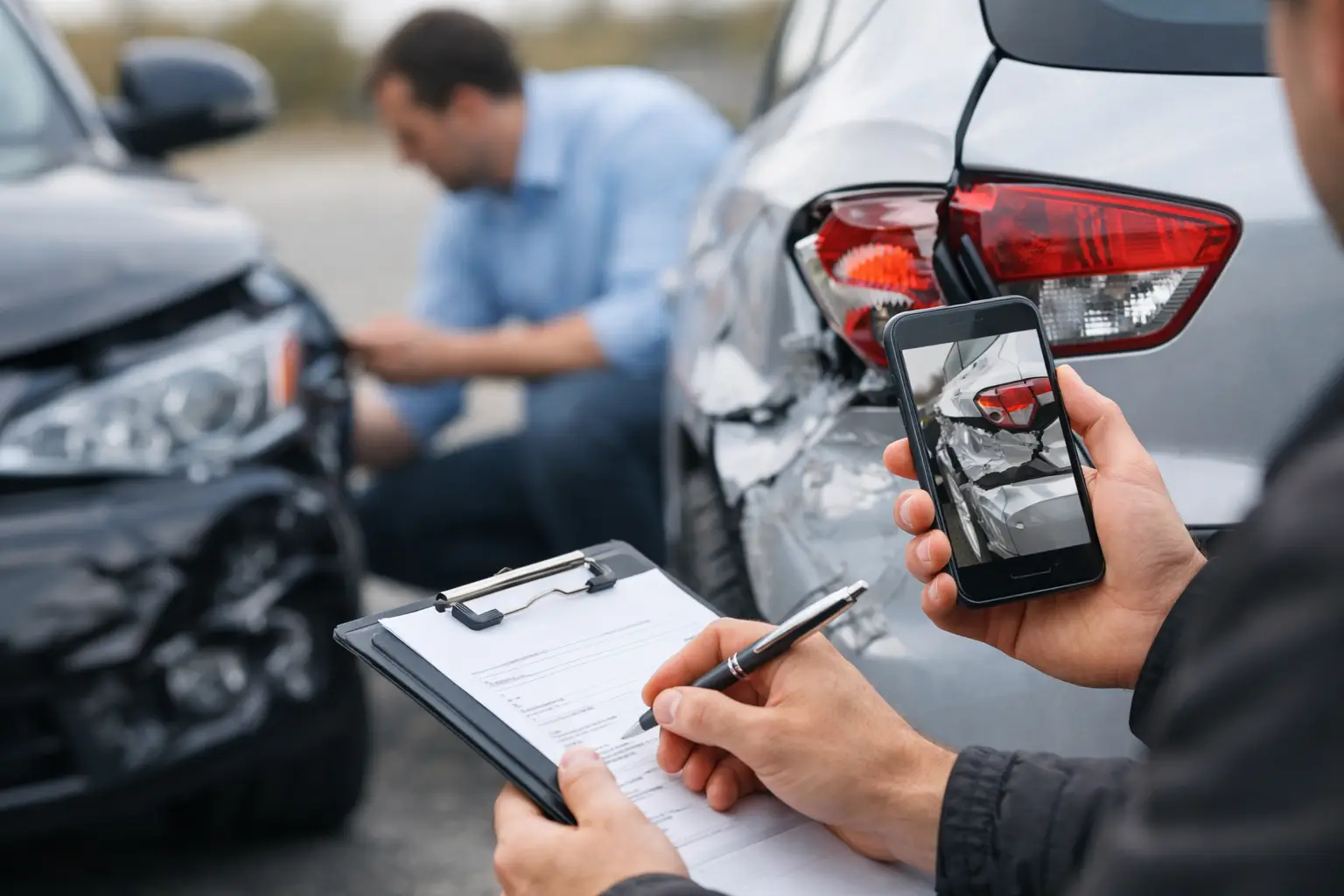
The minutes after a collision can feel rushed, especially on a busy Houston road. Still, knowing how to document accident damage before vehicles are moved or repairs begin can protect your claim, clarify what happened, and give your repair shop a more accurate starting point. Your goal is not to prove who is at fault at the scene. It is to create a clear, factual record of the damage, the location, and the details you may need later.
Start With Safety Before You Document Accident Damage
First, check yourself and your passengers for injuries. Call 911 if anyone is hurt, if the vehicles are blocking traffic, if there is a fuel leak, or if the accident is serious. In Texas, law enforcement may need to respond to collisions involving injuries, death, or significant property damage.
If it is safe to do so, move your vehicle out of active traffic. Turn on hazard lights and stay aware of passing cars. Do not stand between vehicles, step into moving traffic for a better photo, or remain in an unsafe position just to collect evidence.
Once everyone is safe, start documenting while the scene is still fresh. Photos taken immediately after an accident are usually more useful than photos taken later in a driveway, after rain, or after a damaged bumper has shifted during transport.
Take Photos That Tell the Full Story
A few close-up pictures of a dent are helpful, but they do not show the whole situation. Insurance adjusters and collision repair professionals need context: where the vehicles were, how the impact happened, and whether surrounding parts may also be affected.
Use your phone to take wide, medium, and close-up photos. Begin with wide shots that show the full scene, including the roadway, intersection, traffic signs, lane markings, weather conditions, and both vehicles. Then take medium-distance photos showing each side of the vehicles and their positions relative to one another.
Finally, photograph each damaged area up close. Capture dents, paint transfer, cracked lights, broken trim, wheel damage, shattered glass, leaking fluid, deployed airbags, and loose panels. Take pictures from more than one angle. A photo straight on can show the size of damage, while an angled photo may reveal depth, scratches, or panel misalignment.
Do not limit your photos to the obvious impact point. A rear-end collision, for example, can damage bumper supports, trunk alignment, sensors, exhaust components, or a rear camera even when the bumper only appears scuffed. Photograph the entire exterior, including areas that look undamaged. This helps establish the vehicle's overall condition right after the crash.
If your vehicle was pushed into a curb, take photos of the tires, wheels, and suspension area as well. If a warning light appears on the dashboard, photograph that too. Modern vehicles have cameras, sensors, and driver-assistance systems that may require inspection and calibration after a collision.
Record the Details Your Photos Cannot Show
Photos are only one part of a strong accident record. As soon as you can, write down the basics in your phone's notes app or on paper. Include the date, time, exact location, weather, road conditions, direction each vehicle was traveling, and a short description of what occurred.
Keep the description factual and simple. For example: “I was stopped at the red light on Highway 6 at 6:15 p.m. when the vehicle behind me made contact with my rear bumper.” Avoid guessing about speed, accepting blame, or arguing fault at the scene. Those decisions may involve the insurance companies, police report, and available evidence.
Also record the other driver's name, phone number, driver's license information, insurance company, policy number, license plate number, and vehicle make, model, and color. Photograph their insurance card and driver's license only if they agree and it is safe to do so. If they do not, write down the information carefully.
If officers respond, ask how to obtain the police report or note the report number if one is available. A report may not include every detail of the damage, but it can be useful when there are different accounts of the accident.
Look for Witnesses and Nearby Evidence
A neutral witness can be valuable, particularly when drivers disagree about what happened. If someone saw the collision, ask for their name and phone number. You can also ask if they are willing to provide a brief description of what they observed. Do not pressure anyone or hold up traffic to get a statement.
Look around for possible cameras, such as those at nearby businesses, parking lots, homes, or intersections. Make a note of their location. Footage may be overwritten quickly, so sharing this information with your insurer promptly can matter. Your own dash camera footage should also be saved immediately and backed up if possible.
If you have a vehicle app, connected-car service, or collision alert system, preserve any notification or trip data it provides. It may show the time and location of the impact, though it should not replace photos, witness information, or a professional inspection.
Protect Your Evidence After You Leave the Scene
Do not edit, filter, crop, or mark up your original photos. Keep the unedited files on your phone and back them up to cloud storage, email, or another secure location. You can make copies to share, but preserve the originals with their date and time information.
Create one folder for the accident and keep related documents together. This should include your photos, video, police report information, insurance claim number, tow receipt, rental-car paperwork, repair estimates, and communication with the insurer. Keeping everything organized reduces the chance that a useful detail gets lost when the claim takes longer than expected.
If the car is towed, photograph it again when it arrives at the storage lot or repair facility. Damage can become easier to see once dirt is removed or panels are examined in better lighting. Note any personal belongings left in the vehicle and remove valuables when you are allowed to do so.
Get a Repair Estimate Before Approving Work
An insurance photo estimate can be a starting point, but it is not always the final repair cost. Collision damage often includes hidden issues behind bumpers, fenders, doors, or underbody panels. A repair facility may need to remove damaged parts before it can identify all necessary repairs.
This does not mean an estimate is inaccurate or that someone is doing something wrong. It means collision repair is an inspection process. Once hidden damage is found, the shop may submit a supplement to the insurance company for additional approved repairs. Ask the shop to explain what is visible, what may be concealed, and what happens if more damage is discovered.
For drivers in Southwest Houston, Stafford, Sugar Land, and Houston 77083, Sosa Automotive Group can provide a free estimate and help coordinate directly with insurance. That support can be especially helpful when you are trying to balance claim paperwork, transportation needs, and a damaged vehicle you depend on every day.
Common Documentation Mistakes to Avoid
The biggest mistake is waiting too long. Damage can be repaired, weather can change the scene, memories can fade, and camera footage can disappear. Take clear photos as soon as safety allows, even if you plan to file your claim later.
Another mistake is photographing only the other driver's damage or only your own. Document both vehicles, the surroundings, and the full condition of your car. Also avoid posting detailed comments about the accident on social media while the claim is being reviewed. A short post can be misunderstood, and your insurance company should receive the facts directly from you.
Finally, do not delay a repair inspection because the vehicle still drives. A bumper that appears secure may have broken mounting tabs or damaged safety sensors. A wheel that looks fine may have suffered an impact that affects alignment or tire wear. If something feels different after the crash, mention it during the estimate.
A well-documented accident gives you a stronger record and gives your repair team a clearer picture of what your vehicle needs. Save the evidence, ask questions when something is unclear, and choose a local shop that will take the time to inspect the damage and explain the next step.