
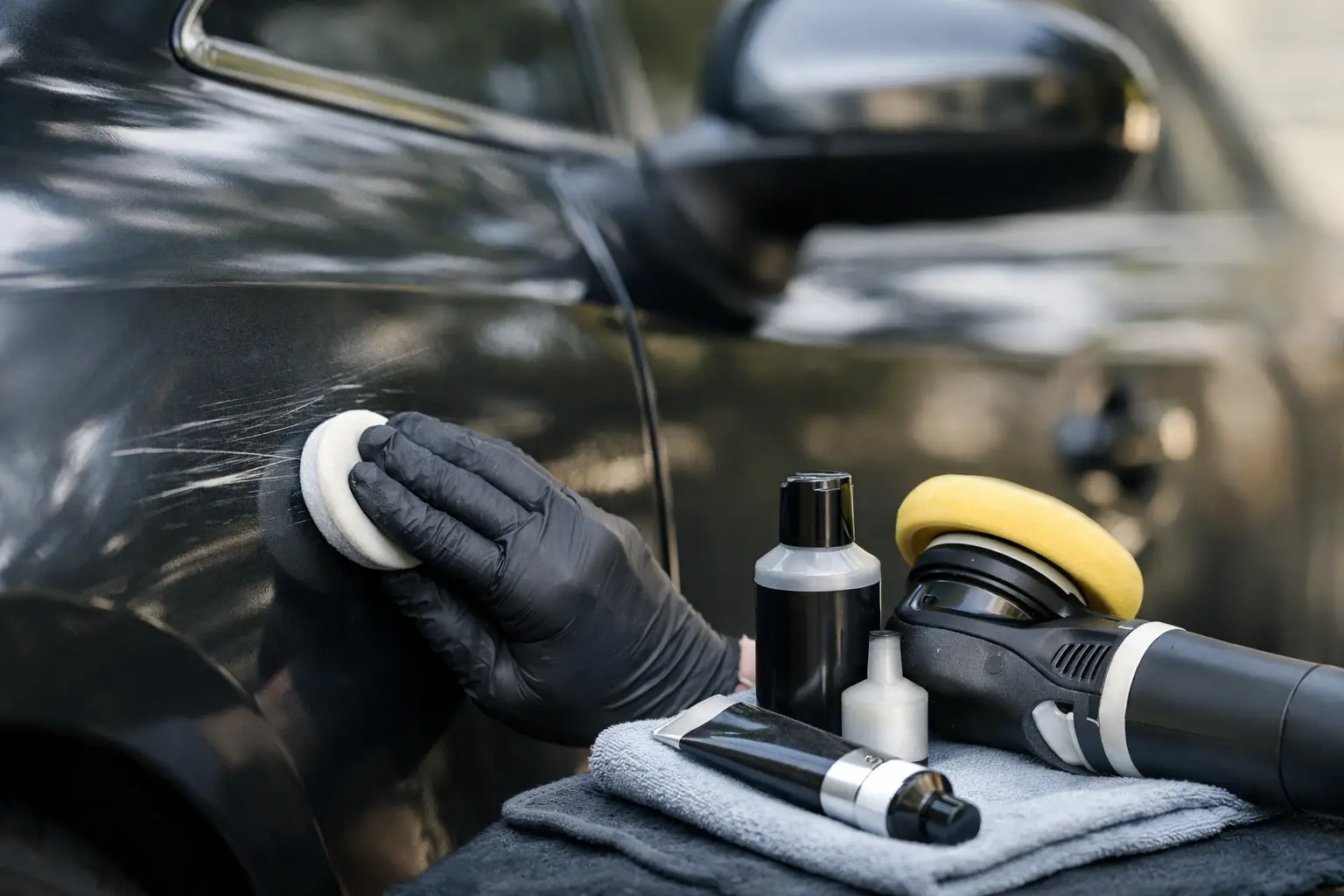
A scratch can make an otherwise dependable vehicle look neglected overnight. Before buying a touch-up pen or rubbing at the spot with a towel, take a minute to identify what you are dealing with. Knowing how to fix paint scratches starts with understanding how deep the damage goes. The wrong DIY method can turn a small mark into a dull, uneven area that needs more paint work than it did at first.
For drivers in Houston, Stafford, Sugar Land, and Southwest Houston, paint damage also deserves timely attention. Our heat, heavy rain, road debris, and humidity can make exposed metal more vulnerable to corrosion. A careful repair protects the appearance of your vehicle and helps preserve its value.
First, Find Out How Deep the Scratch Is
Modern automotive paint usually has three main layers: a clear protective coat on top, the colored base coat underneath, and primer above the metal or plastic body panel. A scratch may affect only the clear coat, cut into the color, or expose primer or bare metal.
Start by washing the area with automotive soap and water, then dry it with a clean microfiber towel. Dirt can look like a scratch, and rubbing dirt across paint can create more damage. Look at the mark in bright, direct light. If it disappears or becomes much less visible when the panel is wet, it is often a clear-coat scratch.
The fingernail test can help. Lightly run your fingernail across the scratch. If your nail does not catch, the damage may be shallow enough for polishing. If it catches, the scratch likely reaches into the color coat or deeper. If you can see gray, white, black, or bare metal, it needs more than a quick polish.
A painted bumper can be a little harder to judge because the material beneath it is plastic, not metal. Still, a deep bumper scratch may require professional refinishing to restore a smooth, consistent color.
How to Fix Paint Scratches in the Clear Coat
Fine swirl marks, scuffs from a bush, and light scratches near door handles are often clear-coat damage. These can sometimes be improved at home with a quality polishing compound or scratch remover. The goal is not to fill the mark with wax. It is to gently level a very small amount of clear coat around the scratch so light reflects evenly again.
Work on a cool, clean panel out of direct sunlight. Apply a small amount of polish to a foam applicator or microfiber pad, then work a small section using light, controlled pressure. Follow the product directions and wipe away residue with a fresh microfiber towel. Check your progress before repeating.
Be conservative. Aggressive rubbing, repeated compound use, or household abrasives can thin the clear coat and leave a hazy patch. Toothpaste, rough sponges, and dry paper towels are not reliable paint-repair tools. They may seem to reduce a mark temporarily while adding fine scratches around it.
Once the scratch is improved, apply a quality wax or paint sealant for short-term protection. Wax will not repair a deep scratch, but it can help protect intact paint from sun and moisture.
Repairing Scratches That Reach the Color Layer
When a scratch cuts through the clear coat into the color, touch-up paint may help reduce its appearance and protect the panel. This approach works best on narrow chips and small scratches, not large scraped areas across a door, fender, or bumper.
Use the paint code for your vehicle rather than choosing a color by name alone. The code is often found on a label inside the driver-side door jamb, under the hood, or in the owner’s manual. Even then, touch-up paint may not match perfectly. Sun exposure, age, and previous repairs can change how the existing paint looks.
Clean the damaged area carefully and remove loose paint without enlarging the scratch. Apply touch-up paint in thin layers with the applicator recommended for the product. Let each layer dry as directed before adding another. Building several thin layers is usually better than leaving one thick blob of paint that sits above the surface.
Some repair kits include clear coat. It can add protection, but it takes a steady hand to blend well. A touch-up repair is usually most successful when the priority is preventing further damage rather than making the scratch completely invisible. On a newer vehicle, a dark color, or a highly visible panel, professional color matching often produces a much better result.
Do Not Wait on Exposed Metal
If the scratch exposes bare metal, treat it as a priority. Metal panels can begin developing surface rust after repeated contact with moisture, particularly during Houston’s rainy periods. The longer rust spreads under the surrounding paint, the more extensive the repair can become.
Avoid covering exposed metal with wax, tape, or a random paint color and assuming the problem is solved. A proper repair may require cleaning the damaged area, addressing corrosion, applying primer, matching the base color, and refinishing the clear coat. If the panel is dented or creased as well, the underlying body damage should be repaired before paint is applied.
Deep scratches on plastic bumper covers do not rust, but they can still worsen, collect grime, and stand out sharply. If the plastic is gouged, cracked, or distorted, paint alone will not restore the panel’s shape.
When a DIY Scratch Repair Makes Sense
At-home repair can be a reasonable choice when the scratch is small, shallow, and away from a highly visible area. It can also make sense for an older work vehicle where protection matters more than a near-perfect finish.
DIY work is less suitable when the scratch crosses multiple panels, has sharp edges, exposes metal, or comes with a dent. It is also risky on pearl, metallic, tri-coat, and specialty finishes. These colors can look noticeably different if the paint is not blended correctly.
Be realistic about cost versus results. A bottle of touch-up paint may be inexpensive, but a poor repair can require sanding and refinishing later. For many drivers, getting an estimate first is the easiest way to decide whether a small repair is worth handling at home.
Why Professional Paint Repair Can Be the Better Value
Professional auto body repair is not just about applying paint over a scratch. A proper process includes evaluating the damage, preparing the panel, correcting dents or surface imperfections, matching the color, applying paint evenly, and protecting it with clear coat. Depending on the location and depth of damage, a shop may also blend paint into an adjacent panel so the repair does not look like a separate patch.
This matters after parking lot damage, a minor collision, or a scrape against a garage wall. What looks like a paint scratch may include a bent panel, damaged bumper tabs, cracked trim, or hidden damage beneath the surface. Addressing the full issue at once can prevent repeat visits and produce a cleaner result.
For collision-related damage, insurance may cover the repair depending on your policy and deductible. A local shop that can help coordinate with your insurer removes some of the uncertainty while you focus on getting your vehicle back on the road.
Sosa Automotive Group provides free estimates and helps customers with insurance handling for collision and paint-related repairs. With more than 20 years serving the local community, the team can assess whether your vehicle needs a simple paint correction, touch-up work, panel refinishing, or more complete body repair.
Preventing the Next Paint Scratch
No vehicle stays perfect forever, especially in daily Houston traffic, but a few habits can reduce new damage. Wash your vehicle regularly to remove abrasive dust and road grime. Use clean microfiber towels instead of old bath towels or brushes that can drag debris across the finish.
Leave space when parking next to other vehicles, especially in crowded lots where door dings happen quickly. Keep a safe following distance behind trucks that may throw gravel, and clean bird droppings or tree sap promptly. Both can damage clear coat if left in place under the Texas sun.
A scratch does not always mean a major repair, but it deserves an honest look. If the mark is deep, visible, or connected to collision damage, a professional estimate can give you a clear path forward and help protect the vehicle you depend on every day.