
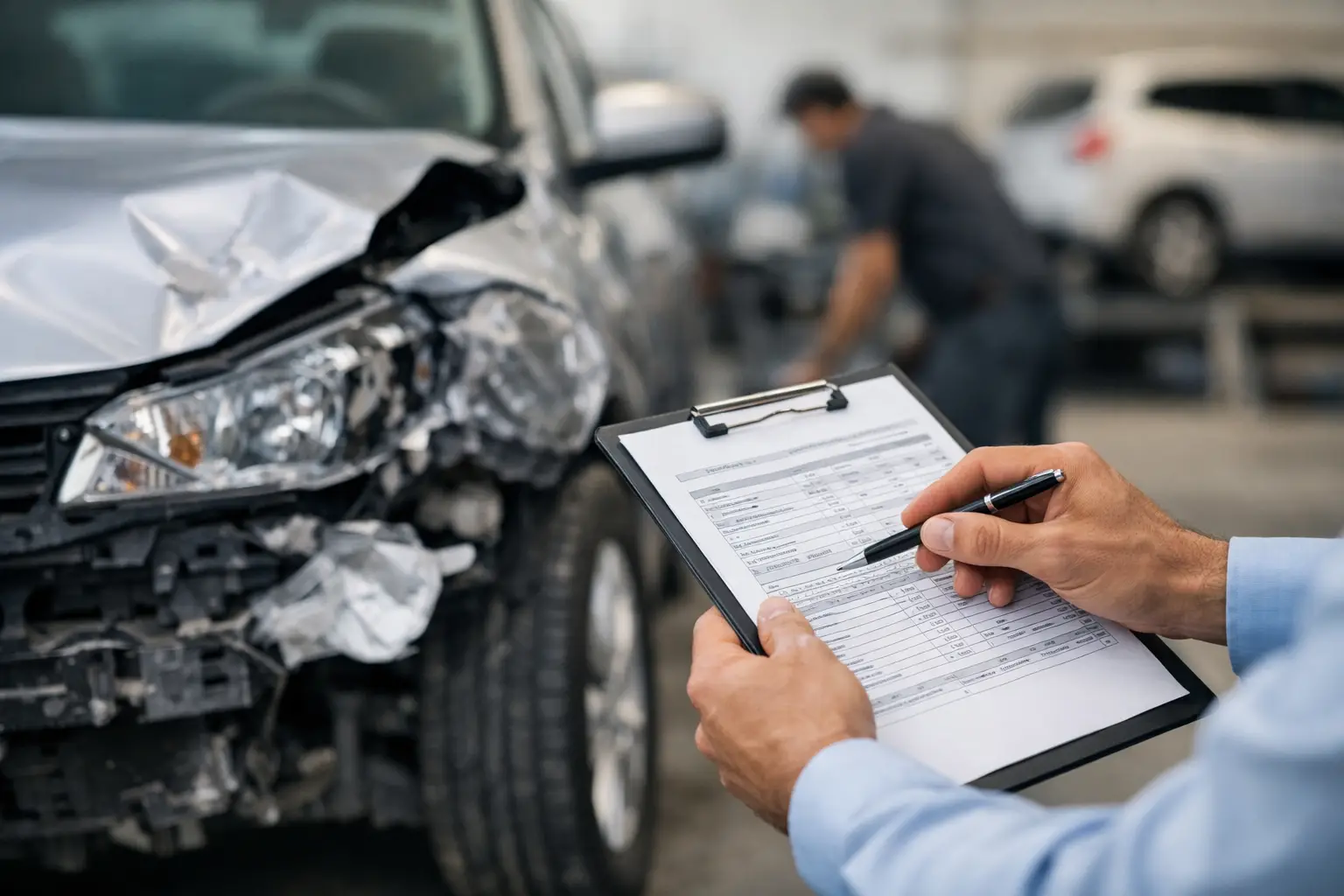
A repair estimate can feel like a page of codes, dollar amounts, and unfamiliar terms when all you want is your vehicle back. Knowing how to read a repair estimate helps you understand what your shop plans to repair, what your insurance company may cover, and which questions to ask before work starts.
After an accident, the lowest number is not automatically the best value. A complete estimate should account for visible damage, likely hidden damage, proper parts, paint work, and the labor required to restore your vehicle safely and correctly.
Start With the Vehicle and Claim Information
At the top of the estimate, check the basics first: your name, vehicle year, make, model, VIN, mileage, and license plate information. These details need to match your vehicle. A wrong trim level or VIN can affect the parts listed, especially when a vehicle has options such as parking sensors, cameras, special lighting, or advanced safety features.
If insurance is involved, you may also see a claim number, insurance company name, policy information, and the name of the adjuster. Keep these details handy, but remember that an insurance estimate is often an initial assessment, not a final repair plan.
A repair facility may write its own estimate after inspecting the vehicle. Differences between the shop estimate and the insurance estimate do not automatically mean someone is wrong. One estimate may include damage the other party could not see at the time, or it may use different parts and labor allowances. The key is understanding why the numbers differ.
How to Read a Repair Estimate Line by Line
Most collision estimates separate work into operations for each damaged area of the vehicle. You may see sections for the front bumper, left fender, door, quarter panel, wheel, suspension, or rear body area. Under each section, the estimate lists the work needed for that part.
Common operations include repair, replace, remove and install, remove and replace, refinish, and blend. “Repair” means the technician can restore the existing part. “Replace” means the part is too damaged, unsafe, or impractical to repair. “Remove and install,” often shown as R&I, means a part is taken off temporarily so another repair can be completed, then reinstalled. “Remove and replace,” or R&R, means the old part comes off and a new one is installed.
“Refinish” refers to paint work. It can include preparing the surface, applying color and clear coat, and restoring the appearance of a repaired or replaced panel. If paint is being applied to a door or fender, the estimate may also include blending into an adjacent panel. This helps the color match more naturally, particularly on metallic, pearl, faded, or older paint finishes.
Do not assume a panel listed for repair will look patched when the job is complete. Proper body repair includes reshaping the panel, preparing the surface, sealing it as needed, and refinishing it to match the surrounding vehicle. The right approach depends on the location and extent of the damage.
Understand Labor, Parts, and Materials
The total estimate generally combines labor charges, parts costs, paint materials, and applicable fees. Each category tells part of the story.
Labor is usually measured in hours, such as body labor, paint labor, mechanical labor, frame labor, or scanning and calibration labor. The number of hours is not always the number of calendar days your vehicle will be in the shop. A repair with 15 labor hours may still take longer due to parts delivery, insurer approval, paint curing time, or additional damage found after disassembly.
Parts are typically labeled as original equipment manufacturer, aftermarket, recycled, or reconditioned. OEM parts come from the vehicle manufacturer. Aftermarket parts are made by another company. Recycled parts are usually original parts from a donor vehicle, while reconditioned parts have been restored for reuse.
There are trade-offs with each option. OEM parts may be preferred for fit, finish, availability, or manufacturer-specific systems, but they can cost more. Quality aftermarket parts can be appropriate in some repairs, while recycled parts may be a practical option for certain non-safety-related components. Ask the repair shop which type is listed and why it is recommended for your vehicle.
Paint and materials may appear as a separate charge or as a formula-based amount. This covers items such as primer, color, clear coat, masking materials, abrasives, clips, sealers, and other supplies needed to perform a durable repair. It is not simply a charge for a can of paint.
Look for Necessary Safety and Technology Work
Modern vehicles often need more than body and paint work after a collision. Bumpers, mirrors, windshields, grilles, and suspension components can contain sensors and cameras that support features such as blind-spot monitoring, backup cameras, lane assistance, automatic braking, and parking assistance.
Your estimate may include pre-repair scanning, post-repair scanning, diagnostic work, wheel alignment, airbag system inspection, or calibration. These items can be easy to overlook because they may not be visible from outside the vehicle. They matter because the vehicle’s safety and driver-assistance systems need to function as intended after repairs.
Some procedures are only confirmed after parts are removed or diagnostic checks are completed. A trustworthy shop should explain what is known at the start, what may need to be inspected further, and how any newly found work will be handled.
Know Why Supplements Happen
A supplement is an additional estimate submitted after the repair process begins. It is common in collision repair, especially when impact damage is hidden behind a bumper cover, beneath a panel, or inside the vehicle structure.
For example, a bumper may look like it needs paint and minor repair from the outside. Once it is removed, the shop may find damaged brackets, broken mounting tabs, crushed absorber material, a bent reinforcement bar, or disconnected sensor wiring. Those items were not visible during the first inspection.
A supplement should not come as a surprise without an explanation. The shop should document the newly discovered damage and coordinate with the insurer when a claim is involved. This process can add time, but approving necessary repairs is better than overlooking damage just to keep the original estimate unchanged.
Check Your Deductible and Out-of-Pocket Amount
The deductible is the amount you are responsible for under your insurance policy before coverage pays the remaining approved repair cost. It is not an extra repair charge created by the shop. If your deductible is $500, for example, that amount is generally your responsibility when you pick up the vehicle, depending on your claim and policy details.
Review the estimate or repair authorization for any customer-pay items. These might include unrelated maintenance, upgrades you requested, damage not covered by the claim, or costs above an insurance allowance. Ask for a clear explanation before approving any work you expect to pay yourself.
It is also wise to ask whether rental coverage applies and whether a repair supplement could affect the expected completion date. No shop can promise that hidden damage will never be found, but clear communication makes the process much less stressful.
Questions Worth Asking Before You Approve Repairs
You do not need to know collision terminology to make a good decision. Ask whether the estimate includes all visible damage, whether any items need further inspection after disassembly, and whether the listed parts are OEM, aftermarket, or recycled. Ask how the shop will handle paint matching and whether adjacent panels need blending.
For a newer vehicle or one with safety technology, ask whether scanning, alignment, and calibration are needed. Finally, ask who will communicate with the insurance company if additional damage is found. These questions focus the conversation on repair quality, safety, timing, and your out-of-pocket responsibility.
A very low estimate can leave out necessary procedures, while a higher estimate may include work that protects the vehicle’s fit, finish, and safety systems. The right estimate is one that is explained clearly and supported by the condition of your vehicle.
For drivers in Southwest Houston, Stafford, Sugar Land, and Houston 77083, Sosa Automotive Group can provide a free estimate and help coordinate directly with your insurance company. Bring your estimate, photos, and claim information if you have them. A few minutes of clear answers at the beginning can give you much more confidence while your vehicle is being restored.