
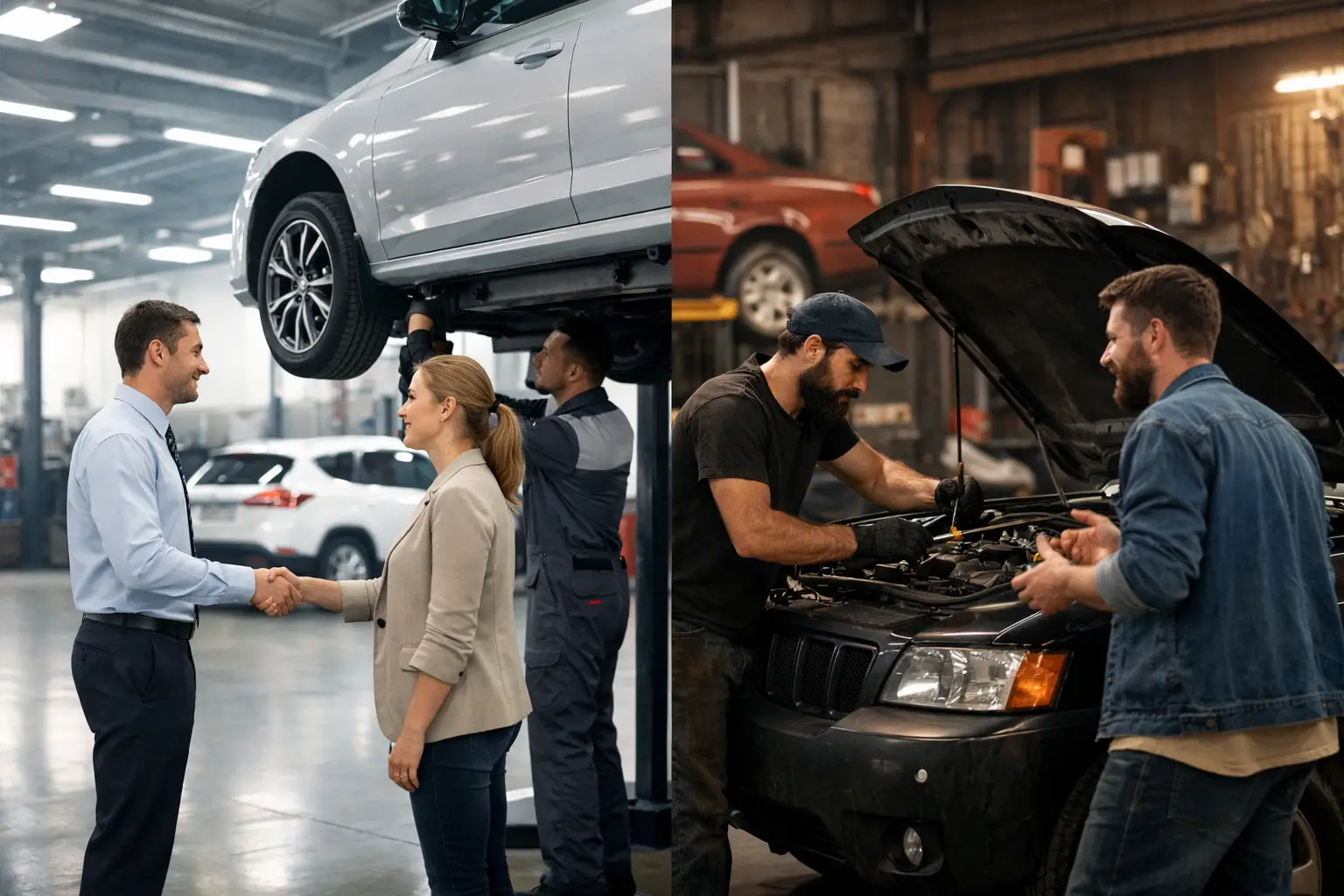
A collision can leave you making decisions before you have had time to process what happened. One of the biggest is choosing an insurance repair shop vs independent shop. Your insurer may give you a list of recommended facilities, but that does not mean you have to use one. The right choice comes down to repair standards, communication, convenience, and whether the shop will stand behind the work.
For drivers in Houston, Stafford, Sugar Land, and Southwest Houston, the goal is simple: get your vehicle repaired correctly, handle the claim with less stress, and get back on the road safely.
What Is an Insurance-Recommended Repair Shop?
An insurance-recommended shop is often part of an insurer's direct repair program, sometimes called a DRP. The shop has an ongoing business relationship with the insurance company and may receive claim referrals from that carrier.
This arrangement can make the claims process feel more organized. The shop may be able to send updates directly to the insurer, submit photos and supplements electronically, and work within processes the carrier already knows. For someone who wants fewer calls and less paperwork after an accident, that can be helpful.
Still, an insurer's recommendation is not the same as a guarantee that a particular shop is the best fit for your vehicle or situation. Every body shop has its own technicians, equipment, workload, repair approach, and customer service standards. You should evaluate the facility itself, not just the name of the insurance program attached to it.
What Makes an Independent Body Shop Different?
An independent body shop is not required to be part of a particular insurer's network. It may work with many insurance companies, and it may handle customer-pay repairs as well. Independence does not mean the shop cannot manage insurance claims. A qualified local shop can prepare estimates, communicate with adjusters, document damage, and submit supplements when hidden damage is found.
The main difference is where the shop's loyalty sits. An independent shop works for the vehicle owner who selected it. That does not mean the shop ignores the insurer's approved estimate. It means the repair discussion can focus on restoring the vehicle properly, following applicable repair procedures, and addressing damage that becomes visible after disassembly.
This can matter after more than a minor bumper scuff. Modern vehicles have sensors, cameras, safety systems, wiring, structural components, and materials that may require careful inspection and calibration. A low initial estimate is not always a complete estimate. The real question is whether the shop will identify what the vehicle needs and communicate clearly as the repair develops.
Insurance Repair Shop vs Independent: Key Differences
There is no automatic winner in an insurance repair shop vs independent comparison. A recommended shop may offer a familiar claims workflow, while an independent shop may give you a more personal experience and greater flexibility. The quality of the individual repair facility matters more than the category alone.
Claims communication
Insurance-network facilities may have direct systems for exchanging estimates, photos, and approvals with specific carriers. This can reduce back-and-forth early in the claim.
Independent shops can also handle that communication. Ask whether the shop works directly with your insurance company, helps submit documentation, and contacts the adjuster when additional damage is discovered. A shop that regularly manages claims should be able to explain the process in plain language instead of leaving you to coordinate every step alone.
Repair decisions and parts
Insurance estimates can include different types of replacement parts, depending on your policy, vehicle age, availability, and insurer guidelines. These may include original equipment manufacturer parts, aftermarket parts, recycled parts, or reconditioned parts.
Ask the shop what parts are included in the estimate and why. If you have a preference, bring it up before repairs begin. In some cases, a different part choice may affect cost or require insurer approval. A good shop will explain the options honestly rather than making promises that do not match your coverage.
Supplements for hidden damage
Collision damage is often deeper than what can be seen in a parking lot or driveway. Once the vehicle is disassembled, the technician may find damaged brackets, broken mounting points, bent components, or sensor-related issues. The shop then submits a supplement to the insurance company for review.
Supplements are common and are not necessarily a sign that anyone missed something. What matters is how the shop handles them. You should receive a clear update on what was found, what it means for the repair, and whether it changes the expected completion date.
Scheduling and turnaround time
A network shop may have a steady stream of referrals, which can be convenient but may also affect scheduling during busy periods. An independent shop may have more flexibility, or it may be equally busy after severe weather or a rush of local accidents.
Do not choose based on a promised completion date alone. Ask when the shop can begin work, whether parts have been confirmed, and how often you will receive updates. A realistic timeline with honest communication is more useful than an overly optimistic promise.
Customer service and accountability
After an accident, you should not feel like a claim number. The best repair experience usually comes from a shop that answers questions, returns calls, documents its work, and explains what is happening to your vehicle.
Look for a shop with a long local history, a clean and professional facility, experienced technicians, and a clear repair warranty. Family-owned shops can be especially valuable when you want direct access to people who are invested in their reputation in the community.
You Usually Have the Right to Choose Your Shop
In Texas, your insurance company can recommend a repair facility, but you can generally choose the shop that repairs your vehicle. You are not required to use a particular shop simply because it appears on a preferred list.
Your insurer still has a role in reviewing the claim and determining what your policy covers. If there is a difference between an insurer's estimate and a shop's repair plan, the shop and insurer may need to discuss the repairs, documentation, labor operations, or parts. That process is normal. Choosing your own shop does not mean you must negotiate the claim alone.
If anyone tells you that using a non-network shop will automatically prevent your claim from being paid, ask for a clear explanation in writing. Then speak with the shop you are considering. An experienced collision repair team can help you understand the next steps without adding pressure to an already stressful situation.
Questions to Ask Before You Authorize Repairs
Before leaving your vehicle, take a few minutes to ask practical questions. The answers can tell you much more than whether a shop is insurance-recommended.
- Will you work directly with my insurance company and help with supplements?
- What repair procedures will you follow for my vehicle?
- What types of replacement parts are included in the estimate?
- Will you inspect and calibrate safety systems when required?
- How will you update me if the repair timeline changes?
- Is the repair work covered by a written warranty?
You should also ask for a free estimate when available. An estimate gives you a starting point, but remember that a complete collision repair plan may require disassembly. A trustworthy shop will explain that upfront instead of surprising you later.
When an Independent Shop May Be the Better Fit
An independent shop can be a strong choice when you want direct communication, a second opinion, or a shop that has earned trust in your neighborhood. It can also make sense if you have had a poor experience with a network shop, if your vehicle needs detailed body or paint work, or if you simply prefer to choose the people working on your car.
For Houston-area drivers, local knowledge has practical value. A nearby shop is easier to visit, easier to reach for updates, and more likely to depend on its reputation with local families and commuters. Sosa Automotive Group has served the area for more than 20 years, offering free estimates and direct insurance handling so customers do not have to choose between personal service and claim support.
When an Insurance-Recommended Shop May Make Sense
Using an insurer's recommended shop can be reasonable if the facility has strong reviews, clear communication, the right capabilities for your vehicle, and availability that works for you. The built-in claims relationship may reduce some administrative steps, particularly for a straightforward repair.
Do not reject a shop just because it participates in a network. Instead, ask the same questions you would ask any repair facility. A preferred-shop label is one detail to consider, not the whole decision.
Your vehicle is a major part of your daily life, whether you use it for commuting, school drop-offs, work, or errands around Southwest Houston. Choose the shop that takes the time to inspect it carefully, explain the repair plan clearly, and treat your concerns like they matter.