
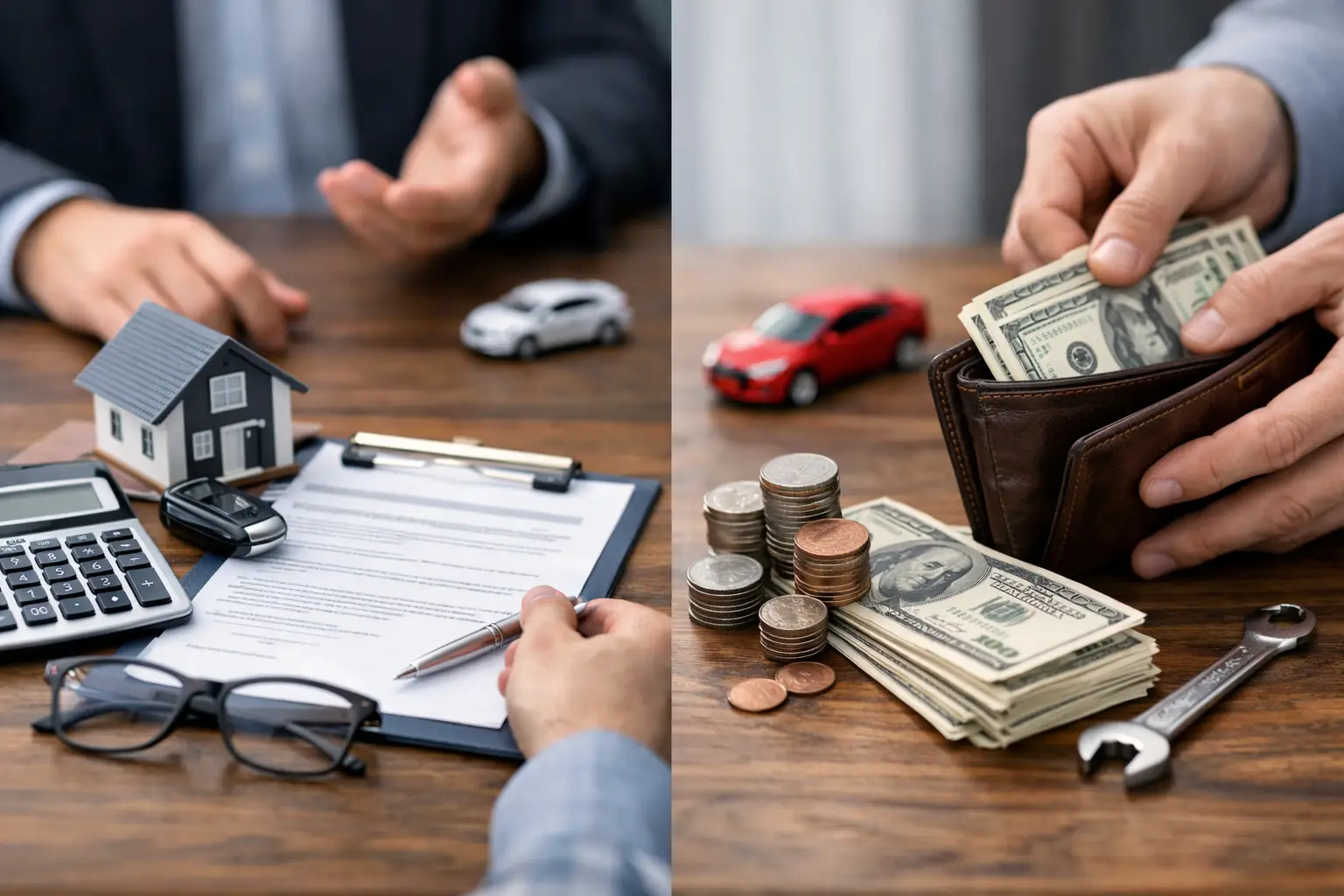
A small dent in a parking lot can turn into a bigger decision than expected. When comparing insurance repair vs out of pocket, the lowest bill today is not always the best financial choice tomorrow. Your deductible, the true extent of the damage, your policy, and whether another driver was responsible all matter.
For drivers in Houston, Stafford, Sugar Land, and Southwest Houston, the practical first step is simple: get a written repair estimate before deciding how to pay. Damage behind a bumper, under a panel, or near a sensor may not be visible from the outside. A free estimate gives you real numbers to compare instead of guessing.
Insurance Repair vs Out of Pocket: Start With the Numbers
The basic comparison is between your out-of-pocket cost under the policy and the full cost of the repair if you do not file a claim. If you have collision coverage and a $1,000 deductible, a $1,200 repair may not be worth putting through your own insurance. You would pay $1,000, and the insurer would pay only the remaining $200.
If the repair estimate is $4,500, the calculation changes. Assuming the loss is covered, you would generally pay your $1,000 deductible and your insurer would cover the approved balance. In that situation, using insurance can protect your savings and allow the shop to complete the repairs properly.
Do not make the decision based only on the first estimate, though. Collision repairs often involve hidden damage. A cracked bumper cover can conceal broken brackets, damaged absorbers, bent reinforcements, or sensor issues. Once the vehicle is disassembled, a repair facility may find additional damage and submit a supplement to the insurer. This is a normal part of the repair process, not automatically a sign that the original estimate was wrong.
When Paying Out of Pocket Can Make Sense
Paying yourself may be reasonable for minor cosmetic damage, especially when the repair cost is close to or below your deductible. Examples include a light scuff in the paint, a small door ding, or a shallow dent that does not affect a safety system, panel alignment, or paint protection.
It can also be an option if you want to avoid opening a claim for a very small repair. Some drivers prefer this approach after comparing the estimate with their deductible and considering their claim history. The key is to make sure the repair is truly minor. A bumper that looks like it only has a scrape may still need inspection if it was hit with enough force to shift, crack, or affect parking sensors.
If you pay out of pocket, ask for a clear estimate that identifies the repair method, paint work, parts, and expected completion time. The cheapest quote is not always the best value if it skips necessary preparation, uses poor-quality materials, or leaves damage beneath the surface.
When Filing an Insurance Claim Is Usually the Better Move
Insurance is often the more sensible choice after a significant collision, damage involving multiple panels, airbag deployment, wheel or suspension concerns, or damage to cameras and driver-assistance features. These repairs can become costly quickly, and modern vehicles have components behind bumpers and mirrors that require proper scanning, calibration, and testing.
You may also want to file a claim when another driver caused the accident. In that case, their liability insurer may be responsible for the repair costs. You may still choose to use your own collision coverage first if it helps move the repair forward, depending on your policy and the circumstances. Your insurer may later seek reimbursement from the at-fault party's insurer, including your deductible when appropriate. Ask your insurance company how that process applies to your claim.
Filing a claim can also create a clear record of the accident and repair. That can be useful when damage is more than cosmetic or when there are questions about liability. Keep photos of the vehicle, the accident information, estimates, claim communications, and final repair paperwork.
Your Deductible Is Not the Only Cost to Consider
A deductible is the amount you are responsible for before your coverage pays on a covered loss. It is not a fee charged by the repair shop, and it does not determine the total cost of restoring the vehicle. If your approved repair is $6,000 and your deductible is $500, the repair shop completes the approved work while you remain responsible for the $500 deductible.
The concern many drivers have is whether a claim will raise their premium. There is no one answer. Rate changes can depend on fault, prior claims, your insurer, your coverage, local loss trends, and other factors. A claim involving an at-fault accident may be treated differently from a claim where another driver caused the damage. Your insurance agent or carrier can explain your policy, but they cannot always predict every future rate decision.
That uncertainty is why a quick estimate is valuable. If the repair is just over your deductible, paying directly may be worth considering. If the repair is several times your deductible, the savings from using coverage may outweigh the possibility of a later premium change. The right decision depends on your finances and the facts of the loss.
Do Not Let a Cash Decision Lead to an Incomplete Repair
It is understandable to look for the least expensive way to get back on the road. But choosing to pay cash should not mean accepting a shortcut that affects safety, appearance, or long-term value. Poor panel alignment can create wind noise and water leaks. Incomplete paint preparation can lead to peeling or mismatched color. Damaged brackets, lights, sensors, and bumper components can cause problems that are easy to miss at pickup.
A reputable body shop should explain what it sees, what is visible versus what may be found after disassembly, and whether the vehicle has features that need additional inspection. You should also receive an itemized estimate rather than a vague number written on a business card.
For older vehicles with purely cosmetic damage, an owner may decide that a less extensive repair is acceptable. That is a personal choice. Still, the shop should be honest about what the chosen repair will and will not address. A lower-cost option should not be presented as a complete restoration if it is only a temporary or appearance-focused fix.
You Can Choose the Repair Shop
After an accident, you may hear that you need to use an insurance company's preferred repair facility. In Texas, you generally have the right to choose the repair shop that works on your vehicle. An insurer may recommend a shop or have a direct repair program, but you can select a qualified facility you trust.
The best shop for your situation is one that communicates clearly with both you and the insurer. It should document damage, prepare supplements when necessary, explain the repair plan, and keep you informed when parts availability or insurance approvals affect the schedule. This matters whether you are paying cash or using coverage.
Sosa Automotive Group has served local drivers for more than 20 years and can provide a free estimate while helping customers navigate insurance coordination after a collision. That support can take some pressure off when you are balancing transportation needs, repair costs, and claim paperwork.
Questions to Ask Before You Decide
Before authorizing repairs, ask the shop whether the estimate includes paint materials, scanning, calibration needs, parts, and likely hidden damage considerations. Ask your insurer what deductible applies, whether rental coverage is available, and what documentation it needs to process the claim.
If another driver is involved, ask how liability is being handled and whether you should open a claim with your own insurer. If you are considering cash payment, ask whether the shop can provide a final invoice and warranty information. These questions help you compare the real cost, not just the first number you hear.
Make the Choice With a Complete Estimate
There is no automatic winner between insurance repair and paying out of pocket. A minor scratch below your deductible may be best handled directly. A collision with concealed damage, safety-system concerns, or a repair bill far above your deductible is often a stronger case for insurance.
Get the vehicle inspected, review the estimate carefully, and choose the path that lets the repair be done correctly without creating unnecessary financial strain. A clear estimate and an honest conversation can make a stressful accident feel much more manageable.