
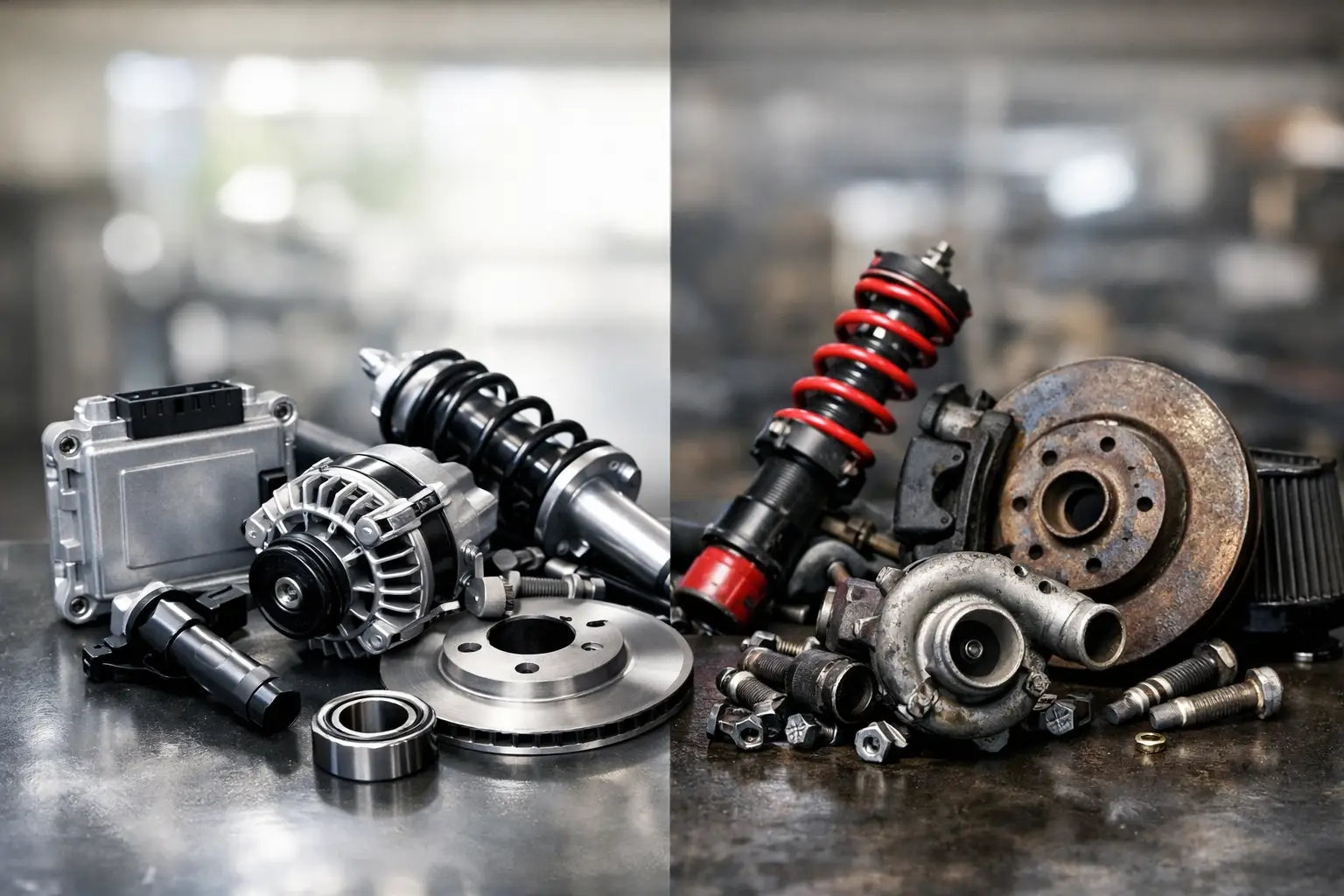
After a collision, one of the first questions many drivers ask is about OEM parts vs aftermarket. It usually comes up when you are already dealing with enough - insurance calls, repair timelines, and the inconvenience of being without your vehicle. The right answer depends on your car, the damage, your coverage, and what matters most to you: price, fit, warranty, or long-term peace of mind.
If you have never had to think about replacement parts before, you are not alone. Most people only learn the difference when a repair estimate is in front of them. And when that happens, clear information matters more than technical talk.
What OEM parts vs aftermarket really means
OEM stands for Original Equipment Manufacturer. These are parts made by or for your vehicle's manufacturer to match the parts your car came with from the factory. If you drive a Ford, Toyota, Honda, Chevrolet, or another make, OEM parts are designed to meet that manufacturer's exact specifications.
Aftermarket parts are made by third-party companies rather than the original vehicle manufacturer. They are built to replace the same damaged component, but they are not branded by the automaker. Some aftermarket parts are made very well and perform just fine. Others can vary more in quality, fit, and finish.
That is why this conversation is rarely as simple as one option being always right and the other being always wrong. A lot depends on the specific part being replaced.
The biggest difference: consistency
For most collision and body repair customers, the main advantage of OEM parts is consistency. In general, OEM parts are more predictable in fit, appearance, and compatibility. That matters when you are restoring a vehicle after an accident and want body lines, panel gaps, mounting points, and finish quality to match as closely as possible.
With aftermarket parts, the fit can be very good, but it is not always identical from one manufacturer to the next. Some parts install smoothly. Others may need additional adjustment. In auto body repair, even a small difference can affect how a panel sits, how trim aligns, or how much labor is needed to complete the repair properly.
For a customer, that usually translates into a simple concern: will my car look and function the way it should when the job is done? That is a fair question, especially after collision damage.
When OEM parts often make the most sense
OEM parts are often preferred when the repair involves newer vehicles, late-model cars, leased vehicles, or visible exterior components where fit and finish matter most. Bumpers, fenders, hoods, grilles, lamps, and other body-related parts can affect both appearance and how the repair comes together.
They can also make sense if you plan to keep the vehicle for a long time and want the repair to stay as close to original factory condition as possible. Some drivers simply feel more comfortable knowing the replacement part comes from the same source as the original. That peace of mind has value.
There are also situations where manufacturer procedures or warranty concerns make OEM parts the better path. This is especially true when repair accuracy is a priority and there is little room for variation.
When aftermarket parts can be a reasonable choice
Aftermarket parts are often considered because they can lower repair costs. In some cases, that helps keep a claim within budget or reduces out-of-pocket expense for the vehicle owner. Insurance companies may also specify aftermarket parts on an estimate, particularly for older vehicles where using OEM parts could make the repair significantly more expensive.
That does not automatically mean the repair is being done the wrong way. Many aftermarket parts are acceptable for certain repairs, especially when the part is not highly visible or when a quality alternative is available from a reputable supplier.
For an older car with normal wear, an aftermarket replacement may be a practical decision. If the goal is safe, proper restoration without overspending on a vehicle that has already depreciated, aftermarket parts can have a place.
Fit, finish, and paint match
One point that matters in collision repair is that a part does not just need to bolt on. It needs to fit correctly with surrounding panels and work with the refinishing process. A slight difference in contour, edge shape, or mounting location can create more work and affect the final appearance.
That is one reason OEM parts are often favored for exterior body repairs. They usually provide a more reliable starting point. Paint match, of course, depends on more than the part itself. Color blending, material prep, and technician skill all matter. But if the panel shape is off, even excellent paint work can only do so much.
For drivers in places like Houston, Stafford, and Sugar Land, where vehicles see daily commuting, heat, storms, and heavy traffic, a quality repair is about more than cosmetics. It is about restoring the vehicle in a way that holds up in real-world use.
Safety is part of the conversation
Not every replacement part carries the same level of safety importance, but some absolutely do. Depending on the area of damage, parts can affect sensor placement, structural performance, lighting function, and how other components interact during future impacts.
That is why repair decisions should not be based on price alone. A low-cost part that creates fitment issues or does not meet the demands of the repair can end up costing more in time, frustration, or corrective work.
A trustworthy repair shop will explain where OEM is strongly recommended, where aftermarket may be acceptable, and what trade-offs come with each option. That kind of guidance helps customers make an informed decision instead of guessing from a line item on an estimate.
Insurance and why estimates differ
Many customers are surprised to learn that the parts listed on an estimate may be influenced by their insurance policy. Some policies allow for aftermarket parts. Some include OEM endorsements. Some carriers approve one option at first and change course if availability, fit, or repair requirements become an issue.
This is where direct communication matters. If you receive an estimate that includes aftermarket parts and you prefer OEM, ask whether your policy allows an upgrade and what the price difference would be. In some cases, the insurance company will cover OEM. In others, the vehicle owner may choose to pay the difference.
A repair shop that works with insurance companies regularly can help clarify those options. That takes some pressure off the customer at a time when the process already feels stressful.
OEM parts vs aftermarket for older vehicles
For older vehicles, the answer often becomes more practical. If the car has higher mileage, prior wear, or a market value that does not support premium replacement cost, aftermarket parts may be the smarter financial choice. The goal is still a proper repair, but the decision is viewed through the lens of value.
That said, age alone does not settle it. If an older vehicle is especially well maintained, has sentimental value, or needs a visible repair where appearance matters, OEM may still be worth considering.
This is why good repair advice is rarely one-size-fits-all. The vehicle, the damage, and the customer's priorities all matter.
How to decide what is right for your repair
Start with the part itself. Is it structural, visible, or closely tied to alignment and finish? Then consider the vehicle's age, your insurance coverage, and how long you plan to keep the car. If your main priority is factory-level consistency, OEM parts are often the stronger choice. If budget is the deciding factor and the part is appropriate for aftermarket use, a quality aftermarket option may make sense.
The most helpful next step is to ask direct questions during the estimate. What kind of part is being used? Why was that option chosen? Will it affect fit, appearance, or warranty? A shop that values transparency should be able to answer those questions clearly.
At Sosa Automotive Group, this is the kind of conversation that helps customers feel more confident about moving forward with repairs. When people understand their options, they are in a better position to protect both their vehicle and their budget.
If you are facing collision repairs, do not feel pressured to make a quick parts decision without context. Ask questions, weigh the trade-offs, and choose the option that fits your vehicle and your peace of mind.