
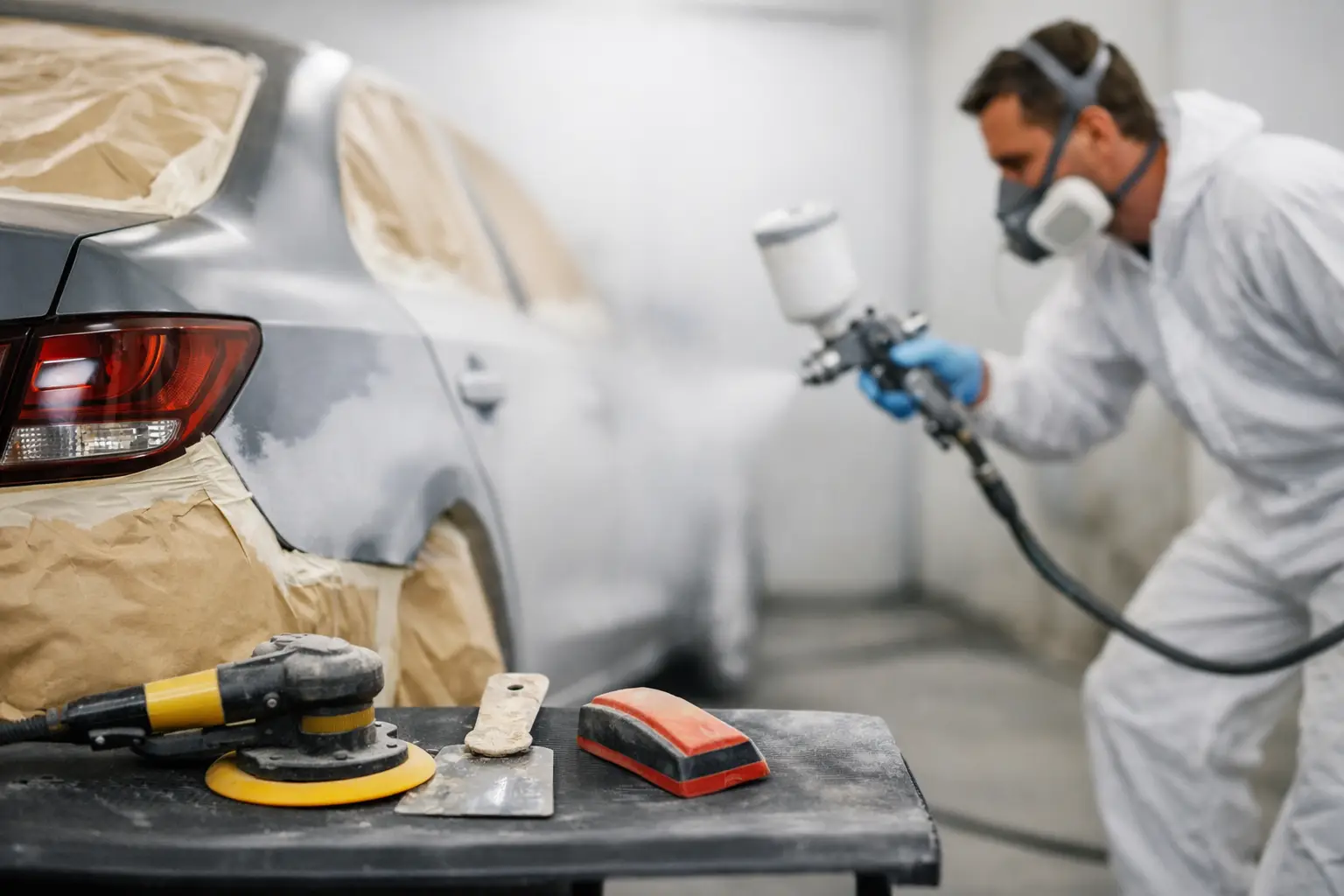
That small dent in the fender rarely stays a small decision for long. Once paint is cracked, a panel is bent, or an insurance claim is involved, most drivers want one thing fast - a clear idea of paint and body work cost and what they are actually paying for.
The honest answer is that the price can vary a lot. A light cosmetic repair may be fairly manageable, while collision damage that affects multiple panels, paint matching, and structural alignment can cost much more. If you are in Houston, Stafford, Sugar Land, or Southwest Houston, the best starting point is a local inspection and a free estimate, because photos and rough guesses only go so far.
What affects paint and body work cost?
The biggest factor is the extent of the damage. A surface scratch on one panel is very different from a crushed quarter panel, broken clips, hidden damage behind the bumper, or a door that no longer lines up correctly. What looks minor from the outside can turn into a larger repair once the panel comes off and the technician sees what is underneath.
Labor is another major part of the total. Body work is hands-on, detail-heavy work. Repairing metal, smoothing filler, prepping a panel, matching color, painting, and finishing all take time. The more labor hours a repair needs, the more the final price will reflect it.
Paint itself also matters more than many people expect. Solid colors are usually simpler to match than metallic, pearl, or tri-coat finishes. Newer vehicles can be especially tricky because factory paint codes are only the starting point. Sun exposure, age, and prior repairs can all affect how a color needs to be blended.
Parts can raise the price as well. Sometimes a panel can be repaired. Other times it makes more sense to replace it. If trim pieces, brackets, lights, sensors, or moldings were damaged in the impact, those items add to the repair cost too.
Typical paint and body work cost ranges
For very minor cosmetic work, such as a small scratch or light scuff on a single area, you may be looking at a lower-cost repair if the damage has not gone deep and does not require major panel work. Once a repair involves dent removal, sanding, refinishing, and blending into nearby panels, the price usually rises.
A moderate repair often includes one or two damaged panels, more prep work, and paint blending so the repaired area matches the rest of the vehicle. This is common after parking lot damage, side swipes, or minor front-end and rear-end collisions.
Higher repair costs usually come into play when there is multi-panel damage, frame or structural concerns, significant bumper damage, broken components, or hidden damage behind the visible impact area. In those cases, a repair can move from cosmetic work into true collision restoration.
As a general rule, drivers often see pricing break down this way:
- Minor scratch, scuff, or spot repair - a few hundred dollars
- Single-panel dent and paint repair - several hundred to over a thousand dollars
- Multi-panel body and paint repair - often well over a thousand dollars
- Collision repair with structural or hidden damage - can rise significantly depending on parts and labor
These are only broad ranges, not quotes. The real number depends on the vehicle, damage, paint type, and whether insurance is involved.
Why two estimates can look very different
If you have ever compared estimates from different shops, you may have noticed that one price can be much lower than another. That does not always mean one shop is overcharging. It often means the repair approach is different.
One estimate may include proper disassembly, color blending, corrosion protection, and replacement of damaged hardware. Another may price the job as a quicker cosmetic fix. Lower upfront pricing can sound appealing, but if shortcuts lead to poor color match, uneven finish, or repairs that do not hold up, the lower number may not be the better value.
This is especially true after an accident. A proper repair is not just about making the car look better. It is about restoring fit, finish, safety, and function as closely as possible.
Paint and body work cost for insurance claims
When damage comes from a collision, insurance may cover some or all of the repair depending on your policy and fault details. That can change what you pay out of pocket, but it does not eliminate the need for a thorough estimate.
Insurance estimates sometimes reflect visible damage first. Once repairs begin, additional damage may be found behind panels, bumpers, or supports. When that happens, the shop may submit a supplement to the insurer for approval. This is normal in collision repair and one reason final costs can shift from the first number you hear.
For many customers, the easier path is working with a shop that handles insurance coordination directly. It saves time, reduces back-and-forth, and helps move the process along when your vehicle is already out of service.
How vehicle type changes the price
Not every car costs the same to repair. A compact sedan with a common paint color is usually more straightforward than a luxury SUV with advanced sensors, specialty finishes, and expensive replacement parts.
Newer vehicles can also require extra care around driver-assist systems. A bumper repair today may involve more than plastic and paint if radar or sensor components are built into the area. Calibration and careful reassembly can affect total cost.
Even the shape of the panel matters. Flat, accessible panels are simpler to work on than curved body lines, tight edges, and areas where blending is harder to hide.
When a cheap repair makes sense - and when it does not
There are times when a lower-cost repair is perfectly reasonable. If the vehicle is older, the damage is minor, and you simply want it cleaned up without investing heavily, a basic cosmetic solution may be enough.
But if the paint is peeling, bare metal is exposed, the panel fit is off, or the damage came from a real collision, cheaper is not always smarter. Poor prep work and incomplete repairs can show up later as fading, cracking, rust, or mismatched color. What saves money now can create a second repair bill later.
This is where a straightforward conversation with a local shop matters. You want to know what is necessary, what is optional, and what level of repair makes sense for your vehicle and budget.
How to get an accurate paint and body work cost estimate
The best estimate starts with an in-person inspection. A technician can look at panel alignment, paint damage, hidden impact points, and any signs that the damage goes deeper than it first appears.
Bring your insurance information if the damage is claim-related. If you have photos from right after the accident, those can help too. Be clear about your goals. Some customers want the vehicle restored as close to pre-accident condition as possible. Others are more focused on getting a safe, presentable repair at a practical cost. That difference matters.
A good estimate should explain what is being repaired, what is being replaced, whether paint blending is needed, and whether additional damage could be discovered during teardown. Clear communication upfront helps prevent surprises later.
What local drivers should look for in a body shop
Price matters, but so does trust. When your car is in the shop, you want to know the repair is being handled by people who do this work every day and can walk you through the process without making it harder than it needs to be.
For drivers in Southwest Houston, Stafford, Sugar Land, and nearby areas, it helps to choose a shop with collision repair experience, free estimates, and the ability to work directly with insurance companies. Those practical details save time when life is already disrupted.
A family-owned local business like Sosa Automotive Group understands that most customers are not comparing paint chemistry or repair theory. They want honest pricing, dependable work, and a clear path to getting back on the road.
If you are trying to make sense of repair pricing, the smartest next step is not guessing from online averages. It is getting your vehicle looked at by a trusted local shop that can show you what the damage really involves and give you a number based on the car in front of them, not a rough estimate from the internet.