
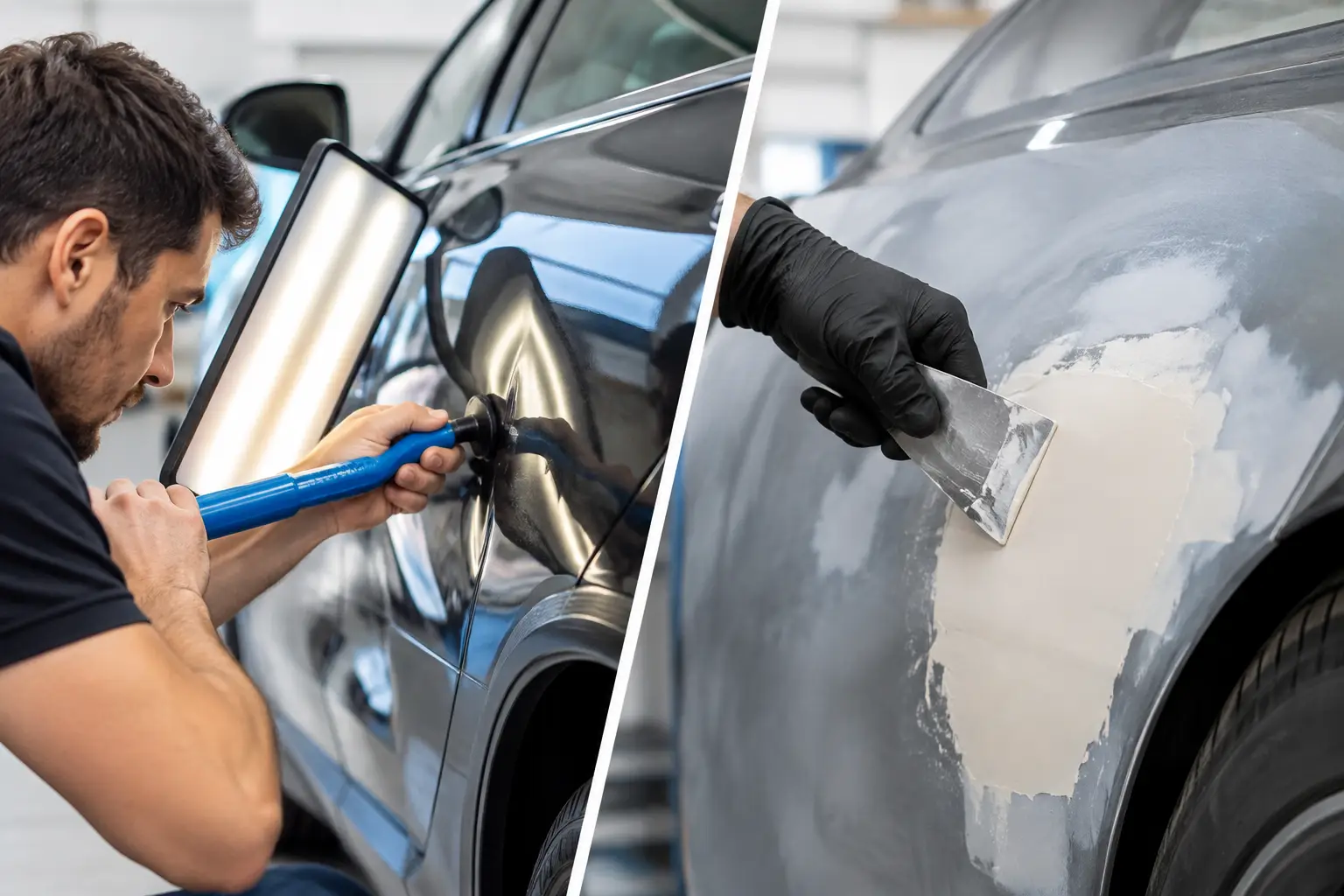
A shopping cart ding, a hail mark, or a low-speed bump can leave you with the same question: should the panel be pushed back into shape or repaired with body filler and paint? Paintless dent repair versus filling is not simply a choice between a quick repair and a more involved one. The right answer depends on the depth and location of the damage, the condition of the paint, and whether the metal can return to its original shape without compromising the finish.
For drivers in Houston, Stafford, Sugar Land, and Southwest Houston, getting the right diagnosis first can save time, protect the value of the vehicle, and prevent a small cosmetic issue from turning into a larger paint repair later.
What Paintless Dent Repair Does
Paintless dent repair, often called PDR, is a specialized method of reshaping a dented panel without applying filler or repainting the vehicle. A technician accesses the back of the damaged area when possible and carefully works the metal back into position using dedicated tools. In some situations, controlled pulling methods are used from the outside of the panel.
The key requirement is that the paint and clear coat must still be intact and flexible enough to remain intact during the repair. When PDR is a good fit, the factory finish stays in place. That matters because original paint is difficult to duplicate perfectly, even with quality materials and careful color matching.
PDR is commonly used for small-to-medium door dings, shallow dents, hail damage, and minor creases. It can often be completed faster than conventional body repair because it does not require sanding, filler curing, primer, color application, or clear coat work.
That does not mean every dent can be pushed out. A dent may look minor from several feet away but have a sharp center, stretched metal, or damage along a reinforced edge. Those details make a professional inspection worthwhile.
When Filling and Painting Is the Better Repair
Conventional auto body repair uses filler only after the damaged metal has been properly straightened and prepared. The technician reshapes the panel as closely as possible, applies a thin layer of quality body filler where needed, sands it smooth, primes the repair, and refinishes the panel with matching color and clear coat.
This process is usually the better option when the paint is cracked, chipped, scraped, or missing. It is also appropriate when the dent is too deep or sharp for paintless repair, when the metal has stretched, or when the damage sits near an edge, body line, or structural reinforcement that cannot be restored cleanly with PDR.
A collision can also leave damage that is not obvious at first glance. A bumper cover may be scuffed while the fender, mounting points, or underlying components have shifted. In that situation, focusing only on the visible dent can lead to an incomplete repair. A body shop should assess the whole affected area before recommending a method.
Paintless Dent Repair Versus Filling: The Main Differences
The biggest difference is what happens to the vehicle's finish. Paintless dent repair preserves the original paint, while filling requires refinishing at least part of the affected panel. If your paint is undamaged and the dent is suitable for PDR, keeping the factory finish is often an advantage for appearance and resale confidence.
Repair time can differ substantially. A straightforward paintless repair may take a few hours or, depending on access and scheduling, be completed the same day. Filling and painting usually take longer because each repair stage needs proper preparation and drying time. The panel may also need blending into adjacent panels to achieve a consistent color match.
Cost depends on the damage, not just the repair method. PDR can be more affordable for a simple door ding because it avoids paint materials and refinishing labor. However, difficult access, a sharp crease, aluminum panels, or extensive hail damage can add complexity. Conventional repairs can cost more when painting and blending are necessary, but they are often the only durable option for damaged paint or distorted metal.
Neither process should be selected based on speed alone. A fast repair that leaves cracked paint, an uneven contour, or a poor color match is not a good value. The goal is a repair that looks right and holds up through Houston heat, rain, sun exposure, and daily driving.
How to Tell Which Repair Your Vehicle Needs
Start by looking closely at the paint around the dent. If you see a crack, crease through the clear coat, exposed metal, peeling paint, or a deep scratch, conventional body repair and paint are more likely to be needed. Leaving exposed metal untreated can allow corrosion to begin, especially after repeated moisture exposure.
Next, consider the location. Broad, shallow dents in the center of a door or quarter panel are often good PDR candidates. Damage on the edge of a panel, near a wheel opening, beside a body line, or around a handle can be more difficult. These areas have less flexible metal and may not allow access from behind.
The cause of the dent matters as well. A light impact from a cart or another car door is different from collision damage. If the vehicle was hit hard enough to affect panel alignment, gaps between body panels, lights, bumpers, or doors, the repair may involve more than cosmetic work. Have it inspected before assuming it is just a dent.
Why Quality Matters With Both Methods
Paintless dent repair requires patience and control. Pushing too aggressively can create high spots, distort a body line, or crack the paint. A quality PDR repair should restore the panel's shape without leaving noticeable waves or reflections that look uneven in sunlight.
Filler repairs require the same attention to detail. Filler should not be used as a shortcut for badly damaged metal. The metal needs to be properly repaired first, and the final surface must be prepared carefully before paint is applied. Color matching, clear coat application, and blending all affect whether the repair disappears into the rest of the vehicle.
Houston's strong sun can make poor repairs easier to spot. Differences in gloss, texture, or color may become noticeable in direct light. Choosing an experienced local body shop helps ensure the repair approach matches the damage rather than forcing every vehicle into the same solution.
What About Insurance Claims?
If the dent came from an accident, your insurance claim may cover the appropriate repair method after the estimate and claim review. The repair plan should be based on safe, proper restoration, not on whether one option sounds cheaper at first. If hidden damage is found after disassembly, the estimate may need to be updated with the insurer.
A shop that handles insurance coordination can reduce the back-and-forth during an already frustrating situation. Keep photos of the damage, claim information if you have it, and any details about how the incident occurred. Those items can help move the estimate process along.
Get an Estimate Before Choosing
The most useful next step is a hands-on inspection. A photo can show the general size of a dent, but it may not reveal paint damage, metal stretch, panel access, or hidden collision damage. A technician can explain whether paintless repair is realistic or whether filling and refinishing will provide the better result.
Sosa Automotive Group provides free estimates and can help Houston-area drivers understand the repair process and insurance options. Whether the best path is preserving the original finish with PDR or restoring a damaged panel through bodywork and paint, the right repair begins with an honest assessment of what your vehicle needs.