
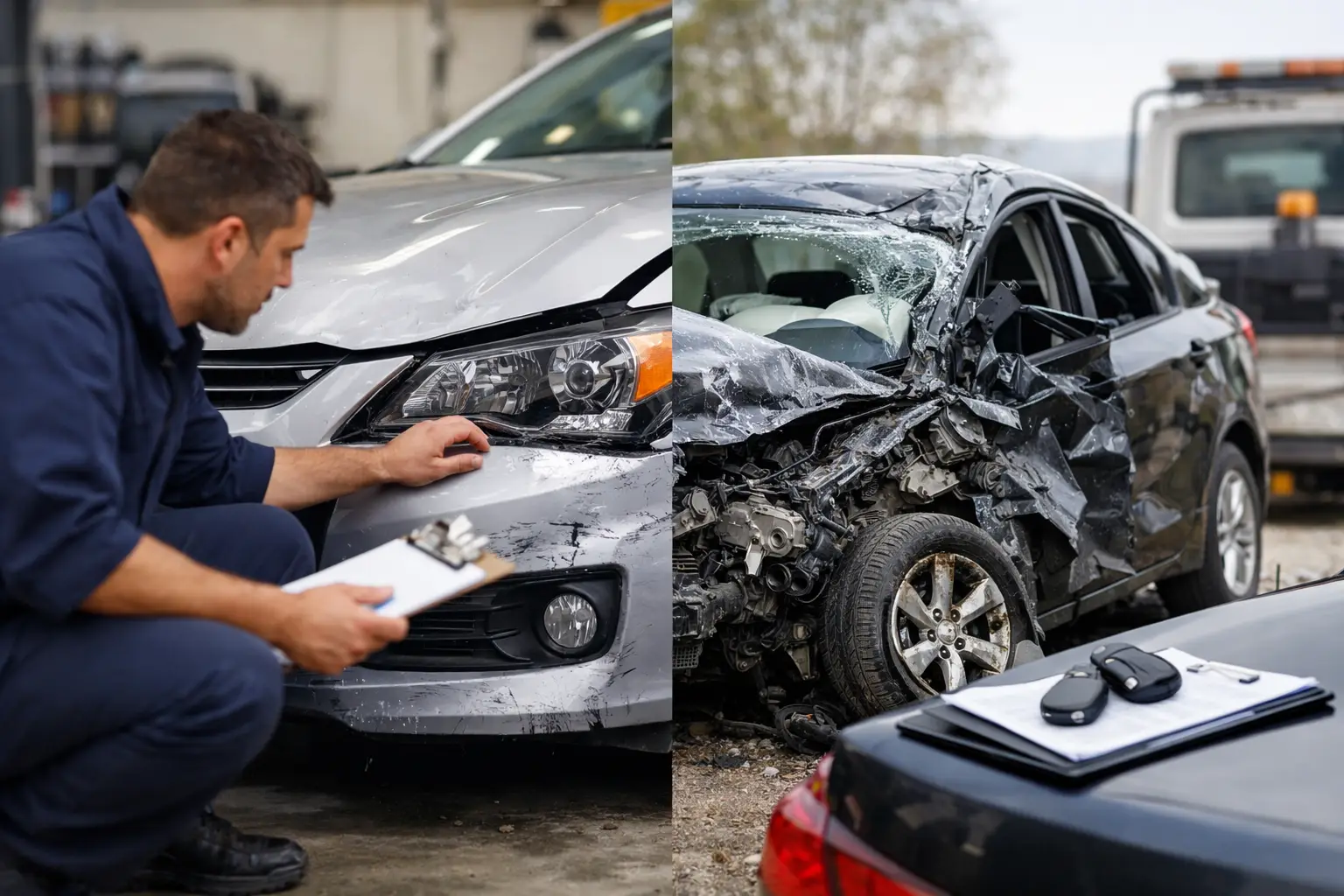
A wrecked car can look worse than it really is - and sometimes a car that does not look too bad ends up being declared a total loss. That is why understanding repairable damage vs total loss matters after an accident. If you are dealing with body damage, waiting on an insurance decision, or trying to figure out whether your vehicle can be restored, the key is knowing how that call is usually made.
For most drivers, the decision comes down to math, safety, and state rules. Insurance companies compare the cost to repair the vehicle with its actual cash value before the accident. They also look at whether hidden damage affects the structure, safety systems, or drivability. A vehicle is not labeled a total loss just because it has major dents or deployed airbags, but those factors can push it in that direction fast.
What repairable damage vs total loss really means
Repairable damage means the vehicle can be restored safely and reasonably based on the cost of repairs and the value of the car. Total loss means the insurer has decided the vehicle is not worth repairing, usually because the repair cost is too high compared with the vehicle's pre-accident value.
That sounds simple, but real claims are rarely that clean. Two cars can have similar front-end damage and get different outcomes. A newer SUV with strong resale value may be repaired. An older sedan with high mileage may be totaled even if the visible damage looks lighter. The repair decision is tied to the specific vehicle, not just the severity you can see from the outside.
How insurance companies make the call
The insurance company usually starts with the vehicle's actual cash value, often called ACV. This is the market-based value of your car right before the accident, taking into account age, mileage, condition, options, and local market data. Then they compare that number with the estimated repair cost, plus expected supplemental damage and sometimes salvage value.
In practical terms, if your car is worth $8,000 before the crash and repairs are estimated at $6,500, the insurer may decide it is too expensive to fix. If the same damage happens to a car worth $24,000, repair is much more likely.
There is also the issue of hidden damage. What looks like a bumper and fender job may involve damage to the radiator support, frame components, sensors, suspension, or ADAS features like lane assist and parking sensors. Once teardown begins, repair costs often rise. That is one reason insurers and repair shops avoid making promises too early.
Safety matters as much as cost
A car can be repairable on paper but still raise safety concerns depending on where the damage is located. Structural damage is a major factor. If key areas of the frame or unibody are compromised, the vehicle must be measured carefully to determine whether it can be restored to manufacturer standards.
Airbag deployment also changes the equation. Replacing airbags, seat belt pretensioners, sensors, modules, and related interior parts can add up quickly. On late-model vehicles, calibration after repair is another cost that many drivers do not expect.
Texas total loss rules and why they matter
Texas drivers should know that insurers do not make these decisions based only on opinion. State rules affect when a vehicle is considered a total loss. In Texas, a vehicle is generally considered a total loss when the cost of repairs plus salvage value equals or exceeds the vehicle's actual cash value.
That means a borderline case can go either way depending on the car's market value and the expected salvage return. It also means older vehicles are more likely to be totaled because they have less value to work with. Even moderate collision damage can cross the threshold quickly.
For drivers in Houston, Stafford, Sugar Land, and surrounding areas, this becomes especially relevant after heavy traffic collisions, hail, flooding, or multi-panel body damage. Flood exposure is its own issue, because water damage can affect electronics, safety systems, and long-term reliability even when the body looks repairable.
Signs your vehicle may still be repairable
If the damage is limited to body panels, paint, lights, bumpers, or bolt-on parts, there is a good chance the vehicle may be repairable. Cosmetic damage can look dramatic but often does not mean the structure is compromised.
Even some heavier collision damage can still be fixed when the vehicle has strong pre-accident value and parts are available. Newer models are often repaired because their replacement cost is high and proper repair procedures are more clearly defined.
A proper inspection matters here. Visual damage only tells part of the story. A shop that handles collision repair every day can identify what is surface damage, what is structural, and what may be hidden until disassembly.
Signs a total loss decision may be coming
There are a few patterns that often point toward total loss status. Severe front-end or side-impact damage, twisted structural components, multiple deployed airbags, heavy suspension damage, or flood contamination all raise the odds. Older vehicles with high mileage are also at greater risk of being totaled because they reach the value threshold sooner.
Parts delays can sometimes influence the process too, though not always directly. If a vehicle needs extensive work, specialized components, and recalibration across several systems, repair becomes less attractive to the insurer. The final call still comes down to value and safety, but complexity has a way of pushing costs up.
What you should do after the accident
If your vehicle is being evaluated, start with documentation. Take clear photos, gather your insurance information, and keep records of any towing, storage, or rental expenses. Then get a professional estimate from a collision repair shop that knows how to work with insurers.
This is where local experience helps. A shop that regularly handles insurance claims can explain what damage is obvious, what may appear during teardown, and whether repair is realistic. They can also help you understand the estimate in plain language instead of leaving you to sort through line items on your own.
If the insurer declares the car a total loss and you disagree, you can ask how they calculated the vehicle's value. Review the mileage, trim level, condition, options, and comparable vehicles they used. A low valuation can affect the decision just as much as the repair estimate.
Why the first estimate is not always the final answer
Many drivers think the initial estimate settles everything. It usually does not. Collision estimates are often written before all hidden damage is exposed. Once repairs begin and damaged parts are removed, supplements may be added for items that were not visible at first inspection.
That can work in either direction. A car that seemed repairable can become a total loss after teardown. On the other hand, a vehicle that looked terrible from the outside may turn out to have less structural damage than expected.
This is one reason clear communication matters so much during a claim. You want to know where things stand, what the likely next step is, and whether the numbers are moving toward repair or total loss.
Choosing the right shop if your car is repairable
If your insurer approves repairs, the quality of the shop matters. Proper collision repair is not just about making the vehicle look good again. It is about restoring fit, finish, safety, and function. That includes structural measurements, correct parts usage, paint matching, and calibration when needed.
A dependable local shop should be able to walk you through the process, coordinate with the insurance company, and give you a realistic view of timing. Sosa Automotive Group serves Southwest Houston drivers with free estimates and direct insurance handling, which can take some pressure off when you are already dealing with the disruption of an accident.
The biggest thing to remember is this: do not judge your vehicle's future by appearance alone. Repairable damage vs total loss is decided by value, repair cost, hidden damage, and safety standards working together. If you are unsure where your car stands, get it inspected by a trusted collision repair professional who will give you a straight answer and help you take the next step with confidence.