
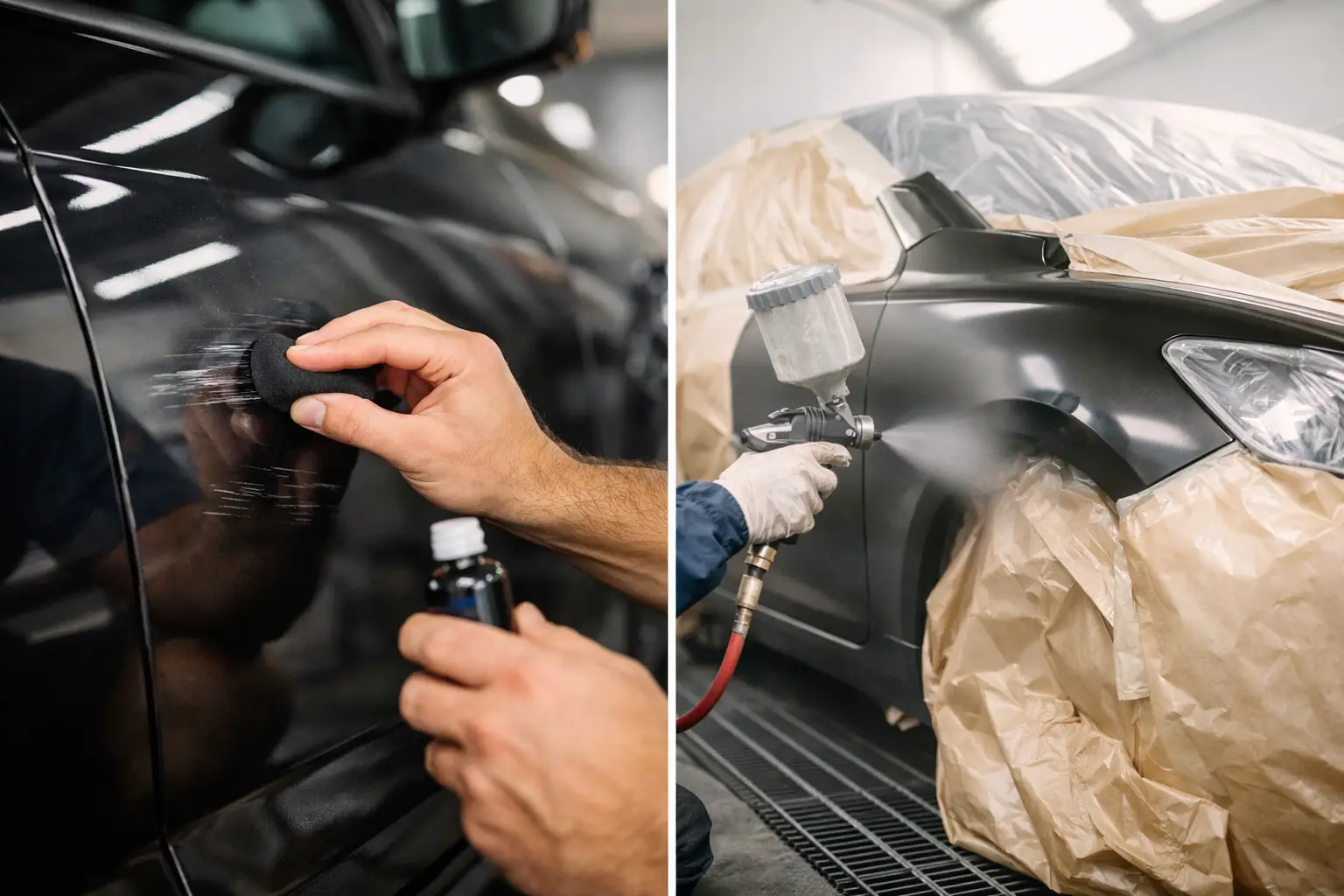
A grocery cart, a tight parking space, or road debris can leave a mark that looks small but feels impossible to ignore. When weighing scratch repair vs repainting, the right answer comes down to more than how the damage looks from a few feet away. The depth of the scratch, the condition of the surrounding paint, and the location on the vehicle all affect the repair.
For Houston-area drivers, cosmetic damage can also become a practical concern. Heat, strong sun, humidity, and frequent rain can make exposed metal or damaged clear coat deteriorate faster. A prompt inspection helps determine whether a focused repair will restore the finish or whether repainting is the more dependable choice.
Start With How Deep the Scratch Goes
Modern automotive paint usually has several layers: a protective clear coat, the color coat underneath, primer, and the metal or plastic body panel. A surface mark limited to the clear coat is very different from a scratch that reaches primer or bare metal.
A quick visual check can provide clues. If the mark appears white, it may be a clear-coat scratch or paint transferred from another object. If you can see a gray, black, or metallic surface below the vehicle's color, the scratch is likely deeper. Running a fingernail gently across the area can help as well. If your nail catches noticeably, the damage may be beyond a simple polish.
Appearance alone is not always enough to make the call. A professional estimate can identify paint cracking, small dents, damaged plastic, or early corrosion around the scratch that may not be obvious at first glance.
When Scratch Repair Is the Better Option
Scratch repair is often a good fit when the vehicle's paint damage is limited, localized, and the surrounding panel is in good condition. This may involve polishing and paint correction for light clear-coat marks, or carefully cleaning, filling, priming, and touching up a deeper isolated scratch.
For a shallow scratch, polishing can level the damaged clear coat and improve the appearance without adding paint. This is useful for many scuffs, light brush marks, and minor surface scratches. It is not a shortcut for deep damage, though. Polishing too aggressively can thin the clear coat, so the work needs to be assessed and performed carefully.
Touch-up repair is more appropriate when a small scratch has broken through the color coat but has not affected a large portion of the panel. The goal is to seal and protect the damaged area while blending the repair as naturally as possible. Results can be very good for small, contained damage, although a close inspection may still reveal a slight difference in texture or finish depending on the vehicle's paint color and age.
Scratch repair usually offers three practical advantages: less downtime, lower cost than repainting an entire panel, and preservation of more of the factory finish. It is particularly worthwhile for a small parking-lot scratch on a door, bumper, or fender when there is no denting, peeling paint, or rust.
When Repainting Makes More Sense
Repainting is generally the stronger long-term repair when the scratch is wide, deep, or spread across a visible section of the panel. It may also be needed when the paint has cracked, chipped away, started peeling, or exposed bare metal.
Once metal is exposed, the issue is no longer only cosmetic. Moisture can reach the panel and allow corrosion to begin. Houston's humidity and heavy rain can make that risk more urgent. A proper repair may require sanding the damaged area, treating any corrosion, applying primer, restoring the panel surface, and refinishing the area with matched paint and clear coat.
A panel may need repainting if the scratch runs through multiple sections of paint, crosses a body line, or sits in a highly visible area where a spot repair would not blend well. Dark colors, pearl finishes, metallic paint, and some bright reds can be especially challenging because small variations in color or metallic flake can stand out.
Repainting can also be the better decision when a scratch comes with collision damage. A scraped bumper may look like a paint issue until an inspection finds dents, cracked mounting points, or distortion in the plastic. Repairing the body surface before painting produces a smoother, more durable result than covering over the visible damage.
Scratch Repair vs Repainting: Cost and Time
The cost difference between scratch repair and repainting depends on the severity of the damage, the vehicle's paint type, panel preparation, and how much blending is required. A small surface correction or touch-up repair typically costs less because it uses less material and labor. A complete panel refinish costs more because the preparation work matters as much as the paint itself.
Time follows the same pattern. Minor scratch repair may be completed relatively quickly when the damage is limited and the paint can be corrected or touched up. Repainting can take longer because the panel must be prepared properly, repaired if needed, primed, painted, cleared, and allowed to cure. Adjacent panels may also require blending for a consistent color match.
The least expensive option is not always the best value. A quick touch-up on a long, deep scratch may look acceptable for a short time, but it may not protect exposed material or match the panel well. On the other hand, repainting a full panel for a light clear-coat scuff may add unnecessary cost. The best estimate should explain why a particular repair is recommended.
Color Matching Is More Than Finding the Paint Code
Every vehicle has a manufacturer paint code, but the code is only the starting point. Over time, sun exposure, washing habits, prior repairs, and normal aging can alter the appearance of the existing finish. Paint that matches the factory formula may still need adjustment to match the vehicle as it looks now.
That is why quality repainting often includes color testing and blending into nearby areas when appropriate. A properly refinished panel should not look noticeably different in direct sun, shade, or under parking-lot lights. This process takes skill, but it is especially important on newer vehicles and on panels that are easy to see, such as hoods, doors, and quarter panels.
What to Do Before the Damage Gets Worse
Avoid scrubbing the scratch with abrasive pads or using household cleaners. Those products can make the clear coat haze or enlarge the damaged area. Wash the area gently, remove dirt, and avoid picking at loose paint.
If bare metal is visible, schedule an estimate soon. If the vehicle was damaged in an accident, take photos before cleaning it and keep any information that may be useful for an insurance claim. Cosmetic damage is sometimes part of a larger repair, especially after a side swipe or bumper impact.
Sosa Automotive Group provides free estimates for drivers in Southwest Houston, Stafford, Sugar Land, and the 77083 area, with insurance coordination available when the damage is part of a claim. An in-person look can clarify whether the vehicle needs simple scratch repair, a refinished panel, or body work before paint.
A clean repair begins with an honest assessment. If the scratch can be corrected without repainting, that can save time and preserve your original finish. If repainting is needed, addressing it properly now can help protect your vehicle's appearance, value, and body panels for the miles ahead.