
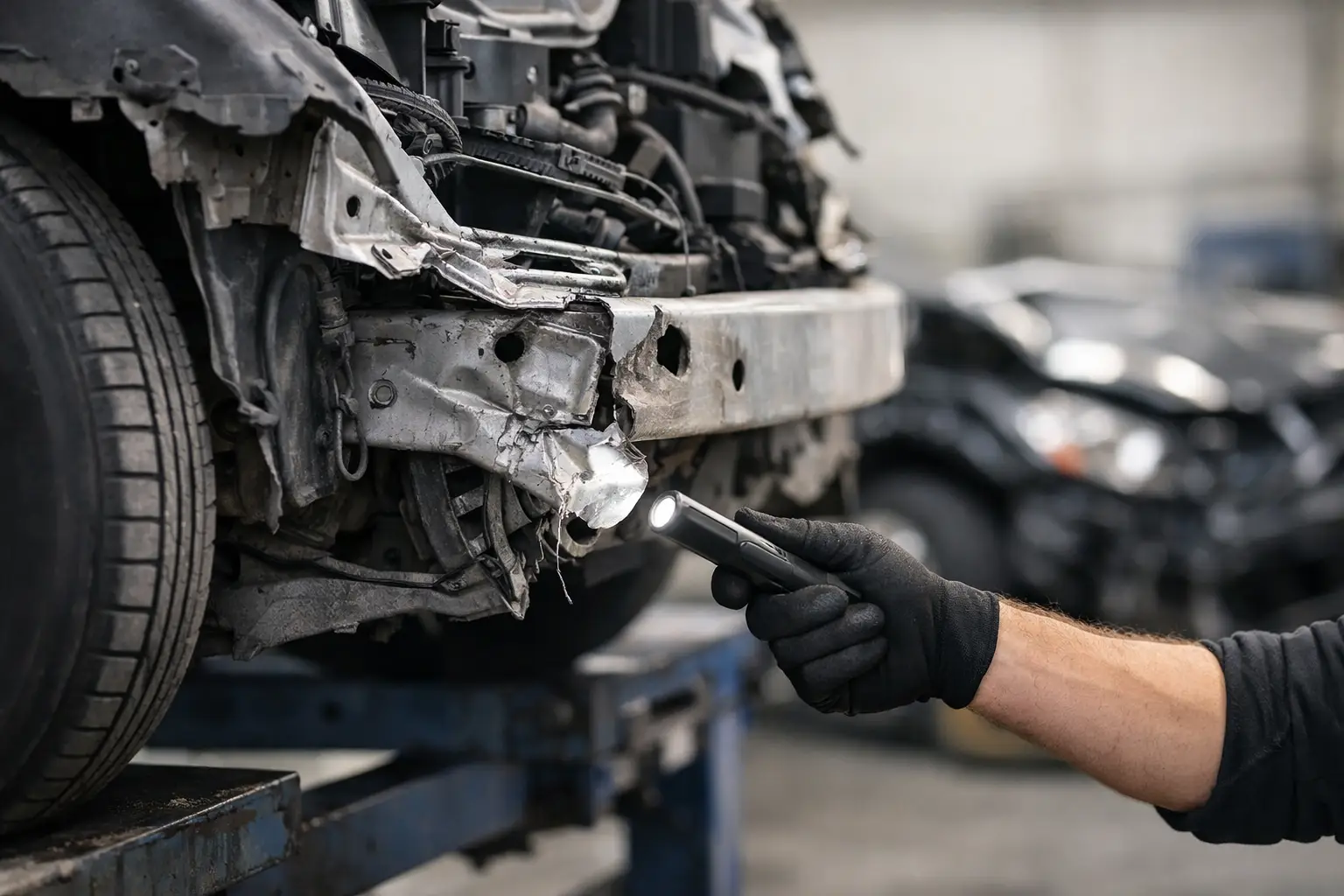
A vehicle can look nearly normal after a fender bender and still have a serious structural problem underneath. Knowing the top signs of frame damage can help you avoid unsafe driving, uneven tire wear, and repair issues that become more expensive over time. If your vehicle was hit in Houston, Stafford, Sugar Land, or Southwest Houston, a proper collision inspection is the safest way to find out what happened beneath the visible damage.
Why Frame Damage Needs Prompt Attention
Your vehicle’s frame, also called its structural support system, is designed to hold key components in their correct positions. Depending on the vehicle, this may be a traditional body-on-frame design or a unibody structure, where the body and frame are integrated.
During a collision, the frame absorbs and redirects impact energy. That is part of how modern vehicles protect occupants. But once metal bends, twists, cracks, or shifts, the vehicle may no longer drive, steer, or protect passengers as intended.
Frame damage is not always obvious. A hard front-end crash may leave clear signs, but potholes, curb strikes, side impacts, rear-end collisions, and even low-speed accidents can cause structural movement. Cosmetic repairs alone do not correct a frame that is out of alignment.
Top Signs of Frame Damage to Watch For
The Vehicle Pulls to One Side
A car that drifts or pulls left or right on a level road may have alignment trouble, but alignment trouble can be a symptom of frame damage. If suspension mounting points have shifted, a standard wheel alignment may not hold or may not bring the wheels back into their proper specifications.
Do not assume pulling is just a tire issue after an accident. Have the vehicle checked, especially if the pulling began immediately after the impact or gets worse when braking.
Uneven or Fast Tire Wear
Take a close look at your tires. Excessive wear along the inner or outer edge, cupping, or tires that wear out much sooner than expected can indicate that the wheels are not sitting at the correct angles.
Tire wear has several possible causes, including worn suspension parts and poor alignment. After a collision, however, it may point to a larger structural issue. Replacing tires without identifying the reason for the wear can mean the same problem returns quickly.
Gaps Between Body Panels Look Uneven
Check the gaps around the hood, doors, trunk, fenders, and bumpers. On an undamaged vehicle, these gaps should be relatively even from one side to the other. If the hood sits higher on one side, the trunk will not line up, or a door looks pushed inward, the surrounding structure may have moved.
A damaged bumper cover or fender can also create uneven gaps, so this sign does not automatically mean the frame is bent. Still, it is a reason to have a collision repair professional inspect the area rather than judging the damage by appearance alone.
Doors, Hood, or Trunk Do Not Close Correctly
A door that suddenly needs to be slammed, a hood that will not latch, or a trunk that pops open can be more than an inconvenience. These parts rely on correctly positioned hinges, latches, and body openings. When the vehicle structure shifts, those points may no longer line up.
Sometimes a latch simply needs adjustment. But if several panels are difficult to close after a crash, structural damage becomes more likely. For safety, do not drive with a hood, trunk, or door that cannot securely latch.
New Noises While Driving
Listen for rattling, creaking, clunking, or wind noise that was not there before the accident. A bent structural component, loose bracket, damaged suspension part, or shifted body panel can all create unfamiliar sounds.
Noise alone is not a reliable diagnosis, but it matters when paired with other symptoms. For example, a clunk over bumps plus steering pull and uneven tire wear deserves immediate attention.
The Steering Wheel Is Off Center
On a straight, level road, your steering wheel should generally sit close to center when the vehicle is traveling straight. If it is noticeably tilted after an accident, the wheel alignment may be off. If an alignment does not correct the issue, the underlying structure or suspension mounting points may need further inspection.
Drivers sometimes get used to holding the wheel at an angle. That does not make the condition normal or safe. It can reduce handling confidence, particularly in heavy Houston traffic or during wet weather.
Visible Wrinkles, Cracks, or Bent Metal Underneath
Look beneath the vehicle only when it is safely parked and never crawl under a car supported only by a jack. Visible creases in metal, cracked welds, bent frame rails, or areas that look rippled can indicate impact damage.
You may also see damage in the trunk floor, under the hood, near the wheel wells, or around the radiator support. Rust-free paint that suddenly splits or buckles near a seam is another sign that the metal below has moved.
Suspension Parts Keep Needing Adjustment
If a shop aligns your vehicle but it continues to pull, wears tires unevenly, or returns with alignment readings outside manufacturer specifications, more investigation is needed. The issue could be a bent control arm, damaged subframe, or a shifted structural component.
This is where proper measuring equipment matters. A collision repair facility can compare structural points against factory specifications instead of relying on a visual guess.
What Frame Damage Can Affect
Driving with frame damage is not always immediately noticeable, but the risks can build. A compromised structure may affect steering response, braking stability, suspension performance, and how the vehicle handles an emergency maneuver.
It can also affect safety systems. Modern bumpers, crumple zones, sensors, airbags, and seat belt components are designed around specific vehicle dimensions. When structural areas are out of position, the vehicle may not respond to another collision the way it was engineered to.
There are financial concerns as well. Unaddressed damage can lower resale value, create recurring alignment and tire costs, and complicate insurance claims. The earlier the damage is identified, the clearer the repair plan can be.
Can Frame Damage Be Repaired?
In many cases, yes. Whether repair is practical depends on the location and severity of the damage, the age and value of the vehicle, the availability of parts, and manufacturer repair procedures. Minor movement in a repairable area may be corrected with professional frame measuring and straightening equipment.
Severe damage is different. If the structure cannot be restored within safe specifications, or if repair costs exceed a large portion of the vehicle’s value, the insurer may determine that the vehicle is a total loss. That decision should be based on a thorough inspection, not on how good the exterior looks after a quick wash.
A quality repair also involves more than pulling metal back into place. The shop should inspect related suspension, steering, cooling, electrical, and safety components. Once structural repairs are complete, alignment checks and road testing help confirm that the vehicle drives properly.
What to Do After an Accident
If you notice any of these warning signs, avoid putting off an inspection. Take photos of visible damage, keep your claim information available, and tell the repair shop exactly what happened during the collision. Details such as impact direction, speed, whether airbags deployed, and when the vehicle began pulling can help guide the inspection.
You do not need to diagnose frame damage yourself. A trained collision technician can inspect the vehicle, measure the structure, explain the findings in plain language, and help coordinate with your insurance company. Sosa Automotive Group offers free estimates and insurance handling to help local drivers move from uncertainty to a clear repair plan.
After a crash, trust what your vehicle is telling you. A panel that will not line up, a steering wheel that no longer sits straight, or tires wearing unevenly may be the first warning that the damage runs deeper than the paint.