
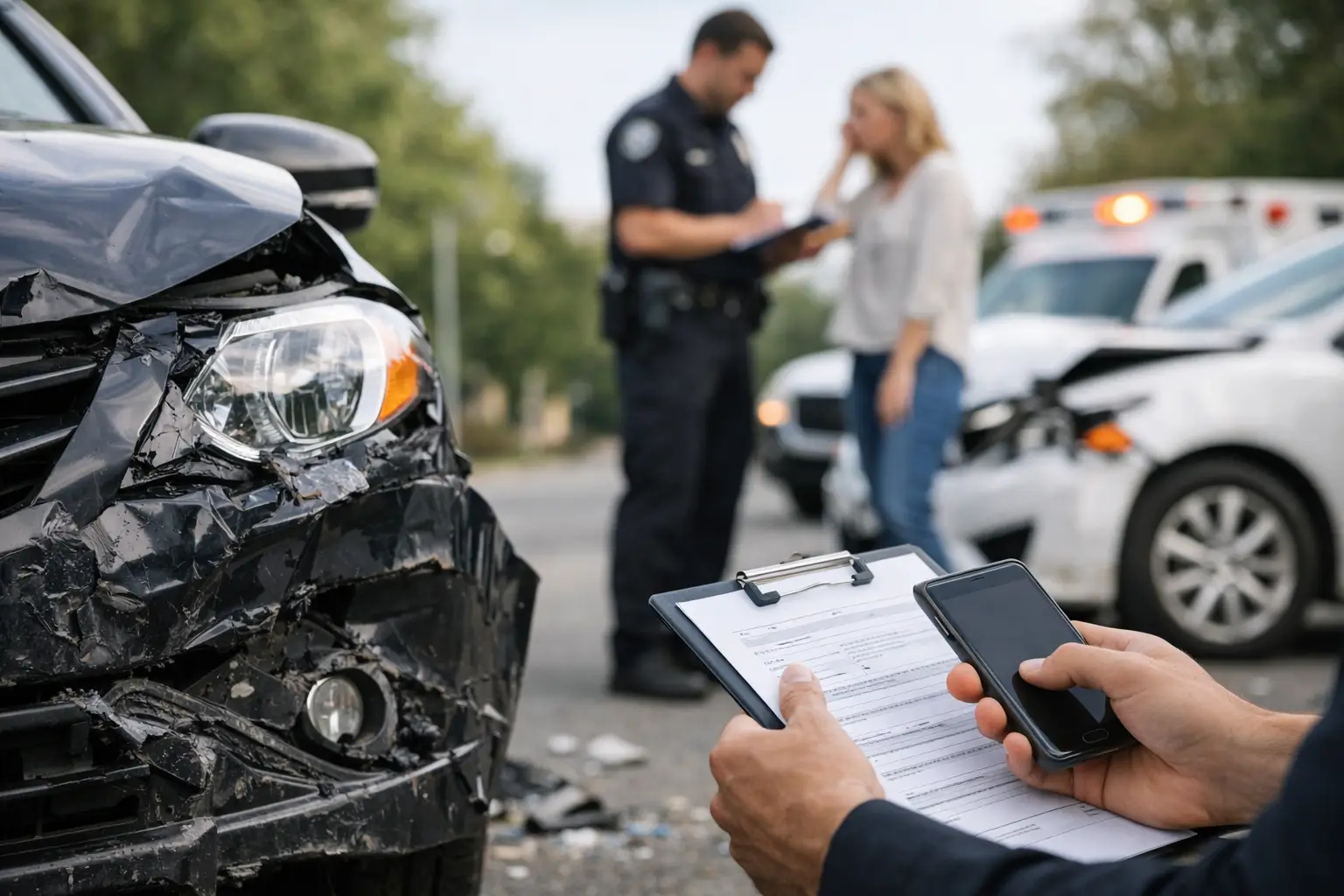
A collision can turn an ordinary Houston commute into a day of phone calls, paperwork, and unanswered questions. If you are searching for what happens after car accident, the first priority is simple: protect the people involved, document what you can, and give yourself a clear path toward getting your vehicle repaired.
The steps after a crash are not always identical. A minor parking-lot scrape is different from a collision that leaves a car unsafe to drive. Still, knowing the usual process can reduce stress and help you avoid rushed decisions when you need your vehicle back for work, school, appointments, and family responsibilities.
What Happens After a Car Accident in Texas?
Immediately after an accident, move to a safe location if the vehicle can be moved and doing so will not create another hazard. Turn on your hazard lights, check for injuries, and call 911 if anyone is hurt, if vehicles are blocking traffic, or if the situation requires police assistance. In a busy area of Southwest Houston, creating distance from moving traffic matters.
Exchange contact, driver’s license, registration, and insurance information with the other driver. Avoid arguing about fault at the scene. Even when an accident seems straightforward, the insurance companies will review the available information before making a coverage or liability decision.
Use your phone to take photos of the vehicles, damage, license plates, the road, traffic signs, nearby intersections, and any debris. If there are witnesses, ask for their names and contact information. Those details may help later if accounts of the accident differ.
If a police officer responds, ask how to obtain the report or report number. A police report does not always decide fault by itself, but it can provide a useful record of the date, location, drivers, vehicles, and officer observations.
Make Sure You and Your Car Are Safe
Some accident damage is obvious: a crushed bumper, broken glass, a bent wheel, or a leaking fluid. Other damage can be hidden behind a bumper cover or under the vehicle. A car that looks mostly fine may still have damage to its cooling system, suspension, steering, sensors, or structural components.
Do not drive a vehicle if the airbags have deployed, warning lights remain on, fluids are leaking, a tire or wheel is damaged, the steering feels unusual, or the hood will not latch properly. Arrange for a tow when there is any doubt about roadworthiness. Trying to save time by driving an unsafe car can turn a repairable problem into more serious damage.
Take care of your own health as well. Some injuries do not feel serious in the first few hours after an accident. Seek medical attention when needed and keep records of appointments, instructions, and related expenses. This article focuses on the vehicle repair process, but your well-being comes first.
Start the Insurance Claim Process
Contact your insurance company as soon as reasonably possible. Provide the facts: when and where the accident happened, who was involved, the condition of your vehicle, and whether police responded. Share photos and the report number if you have them.
Your insurer may assign a claim number and an adjuster. Keep that claim number, along with the adjuster’s contact information, in one place. You may also be contacted by the other driver’s insurer. It is reasonable to be accurate and cooperative, but do not guess about details you do not know or accept a repair amount before the damage has been properly inspected.
Depending on the circumstances and your coverage, you may file through your own insurer or pursue a claim through the other driver’s insurance. The right route depends on fault, available coverage, deductibles, and how quickly each carrier can move the claim forward. If you have questions about coverage or a settlement involving injuries, speak with your insurer or a qualified legal professional.
Choose a Repair Shop Before Approving Repairs
After an accident, many drivers are focused on the first estimate they receive. Price matters, but it is not the only consideration. Collision repair is about restoring safety, function, appearance, and value as closely as possible. A quality inspection should look beyond the visible dent or scraped paint.
You can choose the repair facility you trust. An insurance company may suggest shops within a network, but a recommendation is not the same as a requirement. Look for a local shop that communicates clearly, prepares a complete estimate, explains the repair plan, and has experience working with insurance claims.
For drivers in Houston 77083, Stafford, Sugar Land, and Southwest Houston, Sosa Automotive Group provides free estimates and can work directly with insurance companies. That support can save you from acting as the messenger between the shop and the adjuster while your car is being evaluated.
What a Collision Estimate Usually Includes
A repair estimate starts with visible damage, but the first estimate is sometimes not the final repair cost. Once technicians remove damaged panels or parts, they may find hidden issues such as broken brackets, damaged absorbers, bent supports, or wiring problems. When this happens, the shop documents the additional damage and submits a supplemental estimate to the insurer for review.
This is a normal part of collision repair. It is not necessarily a sign that something has gone wrong. Modern vehicles place sensors, cameras, radar components, and safety equipment behind exterior panels. Even a relatively low-speed impact can affect parts that are not visible from the outside.
A proper estimate may include body labor, paint and materials, replacement parts, repair operations, wheel alignment, mechanical work, and calibration for safety systems when required. Ask the shop to explain anything that is unclear. You should understand what is being repaired, what parts are being used, and whether the insurer has approved the work.
Repairs Can Take Longer Than Expected
The length of repairs depends on the damage, parts availability, insurance approval, and the vehicle’s technology. A small cosmetic repair may move quickly. A collision involving multiple panels, suspension damage, airbags, or advanced driver-assistance systems can take longer.
Parts availability is often the variable customers cannot see. A repair shop may be ready to begin, but a specific grille, headlamp, sensor, or structural part may need to be ordered. Insurance supplements can also add time because approval is needed before additional work proceeds.
A dependable shop should keep you informed instead of leaving you to wonder what is happening. Ask for updates at key points: after the initial inspection, when parts are ordered, when supplemental damage is found, and when the vehicle is approaching completion. Clear communication does not eliminate every delay, but it makes the process easier to manage.
The Final Inspection Matters
Before you pick up your vehicle, the repair facility should inspect the completed work for fit, finish, and function. Panels should align properly, paint should blend consistently, lights and safety features should operate as intended, and warning lights should be addressed. If the repair involved sensor-equipped areas of the vehicle, required calibrations and scans should be completed according to the vehicle’s needs.
When you arrive, take a few minutes to walk around the vehicle in good lighting. Look at the repaired area from more than one angle. Open and close affected doors, the trunk, or the hood if applicable. Ask questions about the work completed, warranty information, and any follow-up care for fresh paint.
If something does not look or feel right, bring it up before you leave or contact the shop promptly. A reputable local repair shop wants the vehicle returned in proper condition and the customer comfortable with the result.
Keep Your Records Until the Claim Is Closed
Save the estimate, final repair invoice, photos, claim number, rental paperwork, towing receipt, and communication with the insurer. These records can be useful if a question comes up later about payment, repairs, resale history, or a supplement.
Also keep an eye on your vehicle in the days after pickup. Pay attention to warning lights, unusual noises, pulling while driving, water leaks, or features that no longer work as expected. Most repairs go smoothly, but reporting concerns early gives the repair shop an opportunity to inspect them.
A car accident disrupts your routine, but you do not have to manage every detail alone. Start with safety, document the damage, report the claim, and choose a repair shop that will explain the work plainly and stand behind it. The right help can turn a stressful collision into a clear next step toward getting back on the road.