
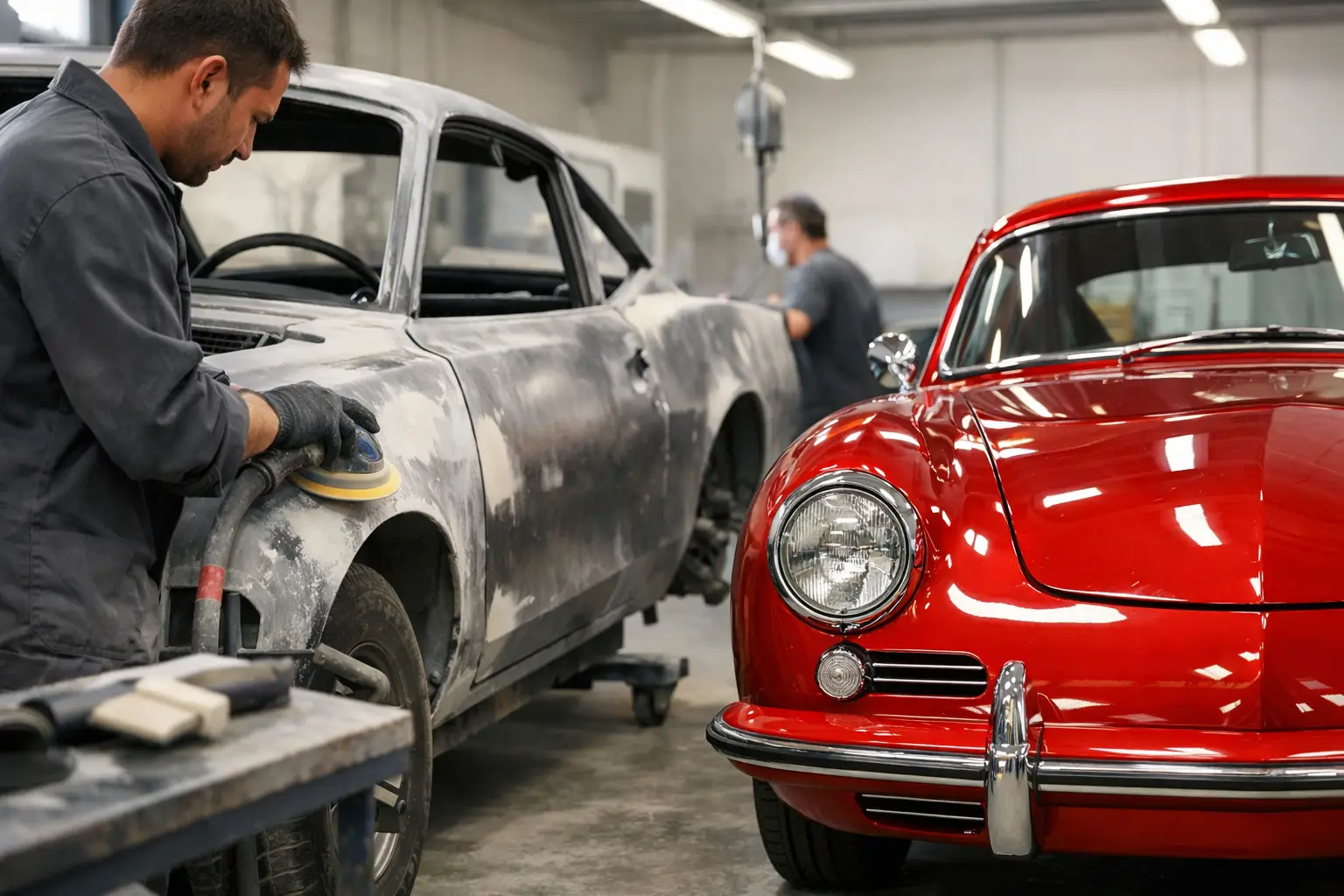
A lot of drivers ask what is auto body restoration only after a fender bender, a scrape in a parking lot, or years of wear start showing up on the outside of the vehicle. That makes sense. Most people do not think about body work until the damage is right in front of them. But restoration is more than making a car look better. It is the process of bringing damaged or worn exterior parts back to proper condition so the vehicle looks right, functions correctly, and holds its value.
For everyday drivers in Houston, Stafford, Sugar Land, and nearby communities, auto body restoration usually means fixing collision damage, dents, bent panels, chipped paint, rust spots, and other cosmetic or structural issues on the outside of the car. In some cases, the work is minor. In others, it takes detailed repair, paint matching, and coordination with an insurance claim.
What is auto body restoration and what does it include?
Auto body restoration is the repair and refinishing of a vehicle's exterior body after damage, wear, or age-related decline. The goal is to return the vehicle as closely as possible to its pre-damage condition. Depending on the vehicle, that may involve dent repair, panel replacement, frame-related body correction, sanding, repainting, rust treatment, bumper repair, and finishing work.
This is different from general mechanical repair. If your engine is misfiring or your brakes are worn out, that is a mechanical issue. If your hood is crumpled, your bumper is cracked, or your paint is peeling after damage, that falls under body restoration.
The exact scope depends on what happened to the vehicle. A light sideswipe may need body filler, refinishing, and blending paint across adjacent panels. A more serious collision may require replacing body parts, checking alignment points, and restoring the car's appearance after structural repairs are completed.
Auto body restoration vs. auto body repair
People often use these terms interchangeably, and in many real-world situations that is fine. Still, there is a useful difference.
Auto body repair often refers to fixing a specific issue, such as a damaged bumper, dented door, or broken fender. Auto body restoration is a broader process. It usually means bringing the affected area, or sometimes the whole exterior, back to a more complete and finished condition.
For example, if a rear quarter panel has been dented, repair might mean pulling the dent and making the panel usable again. Restoration would include repairing the damage properly, smoothing the surface, matching the paint, and making sure the panel blends with the rest of the vehicle so it does not look patched together.
That difference matters because drivers are usually not just paying for a part to be fixed. They want their vehicle to look normal again and protect its value.
Common situations where body restoration makes sense
Not every vehicle needs a full restoration job, but many everyday situations call for professional body work. Accidents are the most obvious example. Even low-speed collisions can leave damage that goes beyond what you see on the surface.
Parking lot dents, scraped bumpers, storm damage, fading paint, rust around wheel wells, and previous poor-quality repairs can also lead to restoration work. Sometimes the reason is practical. A loose bumper cover, cracked panel, or exposed metal can get worse if left alone. Other times, the reason is financial. If you plan to keep the vehicle, sell it, or trade it in, visible body damage can lower its value.
There is also the safety side. Cosmetic damage is not always purely cosmetic. A panel that looks slightly out of place may point to hidden impact damage underneath. That is why a professional inspection matters after a collision, even when the car still drives.
What happens during the auto body restoration process?
The process starts with an inspection and estimate. A shop will examine visible damage, look for hidden issues, and determine whether parts can be repaired or need replacement. If the damage came from an accident, this is often the stage where insurance paperwork begins.
Next comes disassembly if needed. Some damage is not fully visible until trim pieces, bumpers, lights, or panels are removed. Once the full extent is clear, the technician can move forward with the right repair plan.
Body repair comes after that. This may include dent removal, straightening panels, correcting body alignment, replacing damaged parts, sanding rough areas, and preparing the surface. If rust is present, the affected area has to be treated properly before paint work starts.
Then comes refinishing. The repaired area is primed, painted, and clear coated. Paint matching is a big part of good restoration work. Even if the correct factory color is used, age and sun exposure can change how the original finish looks over time. A quality shop accounts for that so the final result blends naturally.
The last step is reassembly, inspection, and detail work. Panels should line up correctly, paint should be even, and the finished vehicle should look consistent, not pieced together.
Why quality restoration matters
A quick cosmetic fix can cover damage for a while, but poor body work often shows up later. Paint can peel, colors may not match, rust can return, and repaired panels may sit unevenly. That is frustrating if you are paying out of pocket, and it can also create problems with resale value.
Quality restoration protects more than appearance. Properly repaired body components help preserve the fit, finish, and integrity of the vehicle. That matters after an accident, especially when doors, hoods, trunks, bumpers, or quarter panels have been affected.
It also reduces stress. When a shop can inspect the damage, explain what is needed in plain language, and handle the insurance side when applicable, the process becomes much more manageable for the vehicle owner.
How to know if your car needs auto body restoration
If your vehicle has obvious dents, paint damage, cracked plastic parts, rust, or body panels that no longer line up correctly, it is worth having it checked. The same goes for damage that seems minor but happened during a collision. A bumper can look mostly fine and still have hidden issues underneath.
Watch for uneven gaps around doors or the trunk, paint that is flaking, bubbling near rust spots, or areas where the finish no longer protects the metal underneath. These are signs that the problem may spread if ignored.
If you are unsure, start with a professional estimate. That gives you a clearer idea of the damage, the repair options, and whether insurance may cover part of the cost.
Choosing the right shop for auto body restoration
This is where experience and communication matter. A good shop should explain the damage clearly, provide a written estimate, and be upfront about whether the job involves repair, replacement, refinishing, or all three. If insurance is involved, it helps to work with a team that knows how to handle that process without making the customer chase paperwork.
Local reputation matters too. Drivers who need body work are usually dealing with an inconvenient situation already. They want a shop that does solid work, keeps them informed, and gets the vehicle back on the road as efficiently as possible.
For Southwest Houston drivers, that often means looking for a family-owned shop with collision and paint experience, free estimates, and a practical approach to customer service. That is one reason many local vehicle owners turn to Sosa Automotive Group when they need help after an accident or want body damage repaired the right way.
What is auto body restoration worth to you?
The answer depends on the condition of the vehicle, the extent of the damage, and your plans for the car. If the issue is minor and purely cosmetic, you may choose to wait. If exposed metal, rust, cracked parts, or accident damage are involved, delaying repairs can lead to higher costs later.
Restoration is usually worth more when the vehicle is newer, financed, well-maintained, or important to your daily routine. It can also make sense for older vehicles if the damage affects function, appearance, or resale value.
What matters most is getting an honest assessment. Not every dent needs major work, and not every damaged panel has to be replaced. The right shop will tell you what is necessary, what is optional, and what will hold up over time.
If your vehicle has body damage and you are wondering what to do next, the best move is simple. Get it looked at before the problem grows, and choose a shop that treats the repair like it matters - because to you, it does.