
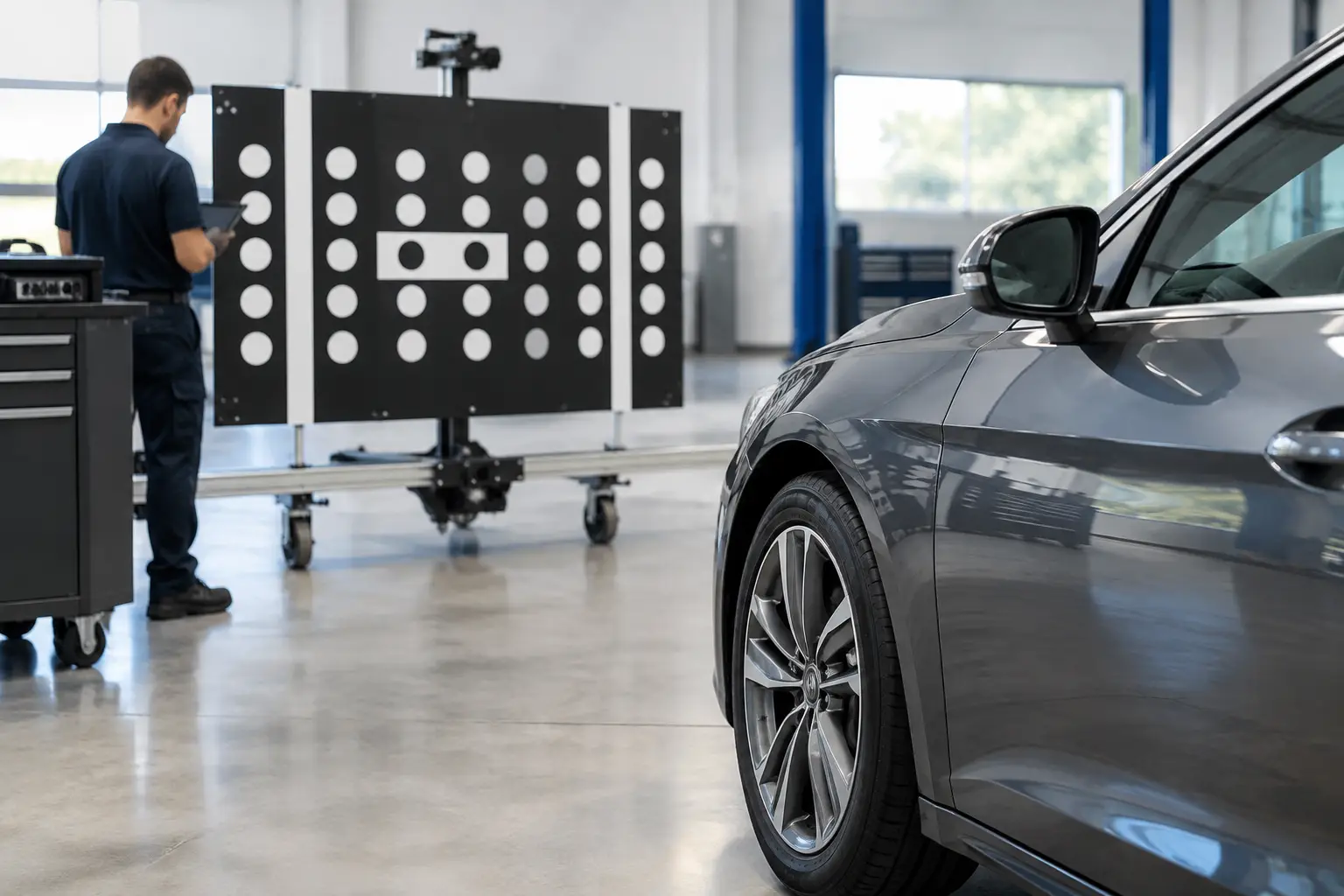
A repaired bumper can look perfect and still leave a vehicle with a safety system that is not seeing the road correctly. ADAS calibration is the process of checking and resetting the cameras, radar sensors, and other equipment that support many newer vehicle safety features. After an accident, replacing the damaged part is only part of restoring the vehicle.
For drivers in Southwest Houston, Stafford, Sugar Land, and Houston 77083, this work can matter after even a moderate collision. A sensor may sit behind the front grille, inside a bumper cover, near a mirror, or at the top of the windshield. If its position changes, its readings can change too.
What ADAS Systems Do
ADAS stands for Advanced Driver Assistance Systems. These features are designed to warn a driver, assist with certain driving tasks, or help reduce the severity of a crash. Depending on the vehicle, ADAS can include forward collision warning, automatic emergency braking, lane departure warning, lane-keeping assistance, blind-spot monitoring, adaptive cruise control, rear cross-traffic alert, parking sensors, and a surround-view camera system.
These systems are helpful, but they are not a replacement for an alert driver. They also depend on precise sensor placement. A forward-facing camera that is slightly out of position may misread lane markings. A radar sensor behind a repaired bumper may not accurately judge the distance to traffic ahead. That is why proper collision repair involves more than cosmetic appearance.
When ADAS Calibration May Be Needed
The need for calibration depends on the vehicle, the damaged area, the parts replaced, and the manufacturer’s repair procedures. A minor repair does not always require it, but it should never be guessed at.
Calibration is commonly considered after front-end or rear-end collision repairs, bumper replacement, grille replacement, windshield replacement, suspension repairs, wheel alignment, side-mirror replacement, and repairs involving sensors or camera mounts. It may also be required after a vehicle’s ride height changes or when a radar bracket is replaced.
A cracked windshield is a good example. Many vehicles have a camera mounted behind the glass near the rearview mirror. Replacing the windshield can disturb the camera’s original position, even if the work is done carefully. The camera may need to be calibrated so lane-related and braking-assistance features continue to operate as designed.
Likewise, a bumper cover can look undamaged after a low-speed impact while the sensor bracket behind it has shifted. The visible damage alone does not tell the whole story. A qualified repair process accounts for what is behind the panels as well as what can be seen from the outside.
Why Calibration Matters After Collision Repair
A warning light on the dash is an obvious sign that something needs attention. But some ADAS concerns are less obvious. A system may appear to work while responding too early, too late, or inconsistently. For example, a collision warning may alert the driver at the wrong distance, or lane support may not recognize road markings as reliably as it should.
Proper calibration helps verify that the system is aligned to the vehicle’s actual position and manufacturer specifications. It is a safety and repair-quality issue, not simply an extra service to add to an estimate.
There is also a practical reason to address it before getting back to normal driving. Many Houston-area drivers spend long stretches on busy roads, whether commuting on Highway 6, the Beltway, or neighborhood routes around Sugar Land and Stafford. Features such as blind-spot monitoring and forward collision warning can be especially useful in heavy traffic, but only when the equipment has been inspected and set correctly.
Static and Dynamic Calibration Are Different
There are two common approaches, and some vehicles need one while others need both.
Static calibration is performed in a controlled shop setting. The vehicle is positioned on a level surface, and specialized targets or equipment are placed at exact distances and angles. The vehicle’s camera or radar system is then reset according to the manufacturer’s procedure. Small measurement errors can affect the result, which is why the setup matters.
Dynamic calibration is completed while the vehicle is driven under specified conditions. The system may need to recognize lane lines, traffic, signs, or other road conditions while a scan tool monitors the process. The required speed, road type, weather, and traffic conditions vary by manufacturer.
Neither method is automatically better. The correct method is the one required for the specific year, make, model, and repair performed. In some cases, a vehicle must first have its alignment checked because a vehicle that does not track straight may not calibrate correctly.
What a Proper Repair Process Looks Like
A dependable shop begins by inspecting the damage and identifying the vehicle’s safety equipment. This includes checking diagnostic trouble codes, reviewing repair information, and determining whether damaged parts, brackets, wiring, or mounting locations affect the system.
After the body and mechanical repairs are completed, calibration is performed when required. The vehicle may then be scanned again to confirm there are no remaining relevant fault codes. A road test can also help confirm that the vehicle drives properly after alignment, suspension, or collision repairs.
This process takes more care than simply clearing a dashboard message. Clearing a code may turn off a warning temporarily, but it does not prove a camera or radar unit is aimed correctly. The repair should follow the vehicle manufacturer’s procedures and account for the work actually performed.
Questions to Ask After an Accident
If your vehicle has driver-assistance features, ask the repair shop whether the damage or planned repairs affect those systems. A clear conversation can prevent surprises later in the repair process.
Ask whether the vehicle has cameras, radar, parking sensors, or blind-spot sensors in the damaged area. Ask whether the repair plan includes a pre-repair and post-repair diagnostic scan, and whether calibration is required after the work is complete. If calibration is needed, ask what documentation will show it was completed.
Insurance coordination can also be part of the conversation. The goal is not to add unnecessary work. It is to make sure manufacturer-required procedures are considered when restoring the vehicle. A complete estimate should reflect the actual repair needs, including safety-related steps when applicable.
Do Not Ignore New Warning Messages
If an ADAS warning appears after a collision, windshield replacement, alignment, or repair, schedule an inspection rather than assuming the system will reset on its own. The same applies if a feature begins behaving differently, such as lane alerts not responding, parking sensors giving false warnings, or adaptive cruise control becoming unavailable.
Weather and dirt can temporarily affect cameras and sensors, especially during heavy rain or after driving on wet Houston roads. Cleaning the sensor area may resolve a temporary obstruction message. But a persistent warning, damaged bumper area, cracked windshield, or recent collision deserves professional attention.
At Sosa Automotive Group, the focus is on helping local drivers move forward after an accident with clear communication, quality repair work, free estimates, and assistance handling the insurance process. When your vehicle has advanced safety features, asking about calibration is one more practical way to protect the repair and your peace of mind.
Before you leave any collision repair shop, take a moment to ask whether your vehicle’s cameras and sensors were inspected and whether ADAS calibration was required. That simple question can help ensure the safety features you rely on are ready for the road again.