
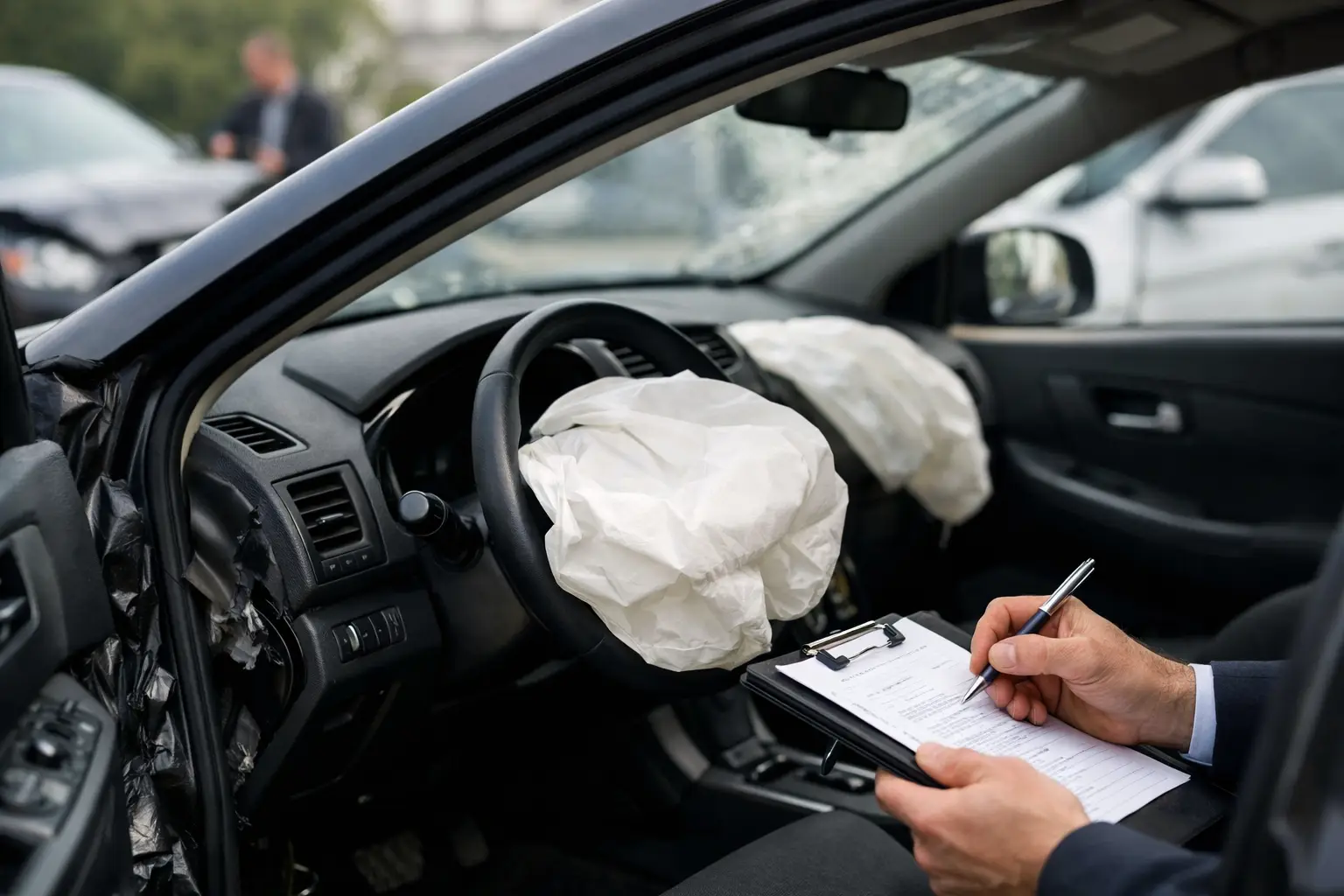
A deployed airbag is more than a warning light on the dash. It means your vehicle experienced a significant impact, and the repair may involve the airbags, seat belts, sensors, steering wheel, dashboard, and safety-control modules. So, will insurance cover airbags? In many cases, yes - but the answer depends on the type of coverage you carry, who caused the accident, your deductible, and whether the vehicle is repairable.
For drivers in Southwest Houston, Stafford, Sugar Land, and nearby communities, the practical next step is to have the vehicle inspected before assuming it is safe to drive or deciding whether it can be repaired. Airbag systems are not cosmetic parts. They are essential safety equipment that must be restored correctly after a collision.
Will Insurance Cover Airbags Under Your Policy?
If you have collision coverage, it will generally cover airbag replacement when the airbags deploy in a crash with another vehicle, a fixed object, or following a rollover. Collision coverage is the portion of an auto policy designed to pay for damage to your own vehicle, regardless of who caused the accident. Your deductible normally applies.
For example, if a collision repair estimate includes $5,500 for airbag-related repairs and your collision deductible is $1,000, the insurer may pay the covered amount above that deductible. The exact payment still depends on the vehicle's value, policy limits, prior damage, and the insurer's inspection.
Comprehensive coverage may apply when airbag deployment follows a non-collision event. This could include damage from a falling object, severe weather, vandalism, fire, or an animal strike. Again, comprehensive coverage usually comes with its own deductible.
Liability-only insurance is different. If you only carry liability coverage and you cause the accident, your policy typically will not pay to replace airbags or repair your own vehicle. Liability coverage is meant to pay for injuries and property damage you cause to others. However, if another driver caused the crash, their liability insurance may cover the airbag and collision repairs to your vehicle.
Why Airbag Repairs Can Be More Involved Than Expected
Many drivers expect airbag replacement to mean installing a new steering-wheel airbag and getting back on the road. A proper repair often requires more than that. Modern vehicles use several connected restraint-system components that need inspection and, in some cases, replacement after deployment.
Depending on the vehicle and impact, the repair may involve the driver airbag, passenger airbag, side-curtain airbags, seat-mounted airbags, seat belt pretensioners, impact sensors, clock springs, dashboard panels, headliners, and the supplemental restraint system control module. Some vehicles also need wiring repairs, diagnostic scanning, calibration, or programming once new components are installed.
That is why an airbag claim can grow quickly. Even when exterior body damage looks limited, the safety system behind the panels may have sustained significant damage. A qualified collision repair estimate should account for visible damage as well as diagnostic findings and manufacturer repair procedures.
Airbags and seat belts should never be treated as used parts to swap in casually. The goal is not simply to turn off a warning light. The goal is to restore the vehicle's safety systems so they can function as designed in a future accident.
When the Insurance Company May Total the Vehicle
Insurance coverage does not always mean the insurer will approve a full repair. If the cost to repair the vehicle approaches or exceeds its actual cash value, the insurance company may declare it a total loss.
This is common with older vehicles, vehicles with high mileage, or cars that need multiple airbags, seat belts, interior panels, and structural repairs. A vehicle can look fairly normal from the outside while the cost of restoring its safety systems pushes the estimate beyond a reasonable repair threshold.
A total loss settlement is generally based on the vehicle's actual cash value immediately before the accident, not what you originally paid for it or what it would cost to buy a newer replacement. The adjuster will consider the vehicle's year, make, model, mileage, condition, options, and local market values. Your deductible may be subtracted if you are using your own collision or comprehensive coverage.
If you have a loan or lease, the settlement process may also involve your lender. Gap coverage can be helpful when you owe more than the vehicle's actual cash value, but it does not pay for repairs beyond what is covered under the policy.
What to Do After Airbags Deploy
First, make sure everyone involved receives medical attention if needed. Airbag deployment can cause soreness, burns, bruising, or injuries that are not obvious at the scene. Follow up with a medical professional if you have pain or concerning symptoms.
Next, do not continue driving the vehicle unless a qualified professional confirms it is safe. A deployed airbag, locked or damaged seat belt, exposed wiring, or warning lights can indicate that critical safety components need attention. If the vehicle was involved in a serious impact, towing it is usually the safer choice.
Document the damage with photos and keep the police report, claim number, tow information, and any communication from the insurer. Then arrange for a collision repair inspection. A shop can prepare an estimate, identify airbag-related damage, and communicate with the insurance company about the repairs needed.
You generally have the right to choose the repair shop that works on your vehicle. An insurer may recommend a network facility, but a recommendation is not the same as a requirement. Choose a shop that is willing to explain the repair plan, work directly with the insurer, and keep you informed when additional damage is found after disassembly.
Common Coverage Questions After an Airbag Deployment
Does insurance pay if airbags deploy without a major crash?
Possibly. If there was a covered event, such as a collision with a curb, an animal strike, vandalism, or damage from an object, the applicable collision or comprehensive coverage may pay. If the airbag deployed because of a mechanical defect or malfunction with no covered loss, auto insurance may not be the right source of payment. In that situation, a dealership, manufacturer warranty, recall, or product-related claim may be worth exploring.
Will filing an airbag claim raise your rates?
It can, but there is no one answer for every driver. Rate changes can depend on fault, prior claims, driving history, policy details, and the insurer's underwriting rules. If another driver is clearly at fault, their insurance may handle the claim. When in doubt, report the incident promptly and ask your insurer how the claim will be handled.
Can you replace only the deployed airbag?
Not always. The vehicle may also need new seat belt pretensioners, sensors, trim pieces, a control module, or other restraint-system components. Repair decisions should follow the vehicle manufacturer's procedures and the damage found during inspection. Cutting corners on safety equipment can create problems later, including an airbag warning light or a system that does not operate properly when it is needed.
What if the other driver's insurer delays or disputes the claim?
You may be able to use your own collision coverage, if you have it, and let your insurer seek reimbursement from the at-fault party's carrier. This can sometimes get repairs moving sooner, though you may need to pay your deductible upfront. Your insurer may reimburse that deductible if it recovers payment from the other carrier.
A Clear Repair Plan Makes the Process Easier
After an accident, it is understandable to focus on the visible damage and getting transportation back. But deployed airbags change the repair conversation. They signal that your vehicle's restraint system needs a careful, complete evaluation, not a quick cosmetic fix.
At Sosa Automotive Group, our team helps local drivers with free collision estimates and direct insurance coordination, so the repair process is easier to understand from the first inspection through final repairs. If your airbags deployed, start by getting the vehicle evaluated and asking clear questions about coverage, deductibles, repairability, and the safety components included in the estimate. That gives you the information needed to make a confident next decision.